
Solid Wood Farmhouse Table: Complete Buying Guide
Everything you need to know before choosing a solid wood farmhouse table — from wood species and construction to sizing, finishes, and daily care. Research with confidence and buy the right table for your home.
Explore Recommended OptionsWhy this guide matters: A solid wood farmhouse table is one of the most significant furniture investments for a dining space. It anchors family meals, holiday gatherings, and everyday routines for years. But not all solid wood tables are built the same. Understanding the wood species, joinery, finish, and dimensions helps you avoid costly mistakes and select a table that fits both your lifestyle and your room.
What Makes a Table a "Farmhouse" Table?
The farmhouse style draws from traditional rural American design — practical, sturdy, and warm. A solid wood farmhouse table typically shares these characteristics:
- Solid wood construction — the top and often the base are built from real wood rather than veneer or engineered panels.
- Substantial proportions — thicker tabletops and heavier legs or trestle bases give a grounded, architectural presence.
- Simple, honest lines — straight edges, visible joinery, and minimal ornamentation.
- Warm, natural finishes — matte or satin stains that highlight grain rather than conceal it.
- Practical detailing — breadboard ends, trestle bases, and turned or tapered legs that echo traditional craftsmanship.
The result is a table that feels welcoming and durable — equally suited to a casual weeknight dinner and a formal holiday spread. If you want to see how this style fits alongside other solid wood options, our solid wood dining table farmhouse overview provides additional context.
Choosing the Right Wood Species
The wood species affects hardness, grain appearance, color, weight, and how the table responds to seasonal humidity changes. Here is a practical comparison of the most common options:
| Wood Species | Character | Durability Tier | Best For |
|---|---|---|---|
| Pine | Soft grain, rustic knots, warm tone, visible character | Entry-level | Casual farmhouse looks, painted or distressed finishes, lighter weight |
| Oak | Hard, pronounced grain, excellent wear resistance | Mid-range to premium | High-traffic family tables, long-term durability, classic farmhouse |
| Maple | Dense, fine grain, smooth surface, light color | Mid-range to premium | Clean farmhouse styles, heavy daily use, smooth-top preferences |
| Walnut | Rich dark tone, elegant grain, dense and stable | Premium to luxury | Upscale farmhouse interiors, statement pieces, refined grain |
| Ash | Light color, prominent grain, good hardness | Mid-range | Bright farmhouse spaces, grain-forward designs |
| Rubberwood / Parawood | Uniform grain, moderate hardness, neutral color | Entry-level to mid-range | Balanced options for everyday family use |
Oak and maple are the most frequently recommended species for farmhouse tables because their hardness handles daily wear from plates, glassware, and kids' activities. Pine remains popular for its relaxed, rustic charm — but its softer surface will show dents and scratches more readily, which some homeowners embrace as part of the farmhouse aesthetic. If you are leaning toward oak, our solid oak dining table guide dives deeper into grain matching and finish choices.
Construction and Joinery: What to Inspect
A farmhouse table lives or dies by its construction. A beautiful top on a weak base will wobble, creak, and wear out prematurely. When researching or inspecting a table, focus on these elements:
Tabletop Construction
- Edge-glued planks — solid wood boards joined side by side with glue and sometimes dowels or biscuits. This is standard for solid wood farmhouse tops.
- Breadboard ends — end pieces attached with tongues and pins that allow the center of the table to expand and contract. This is a hallmark of well-built farmhouse furniture.
- Thickness — one inch is common; one and a half to two inches is typical of heavy-duty and premium builds. Thicker tops resist warping and feel more substantial.
- Floating top mounting — the top is attached with clips or slotted screws so the wood can move seasonally without cracking.
Base and Leg Construction
- Trestle bases — two A-frame or pedestal legs joined by a stretcher. Sturdy, traditional, and excellent for long tables.
- Apron-and-leg bases — four legs connected by aprons. Common on rectangular farmhouse tables; check for corner blocks and sturdy joinery.
- Joinery type — mortise-and-tenon and doweled joints are stronger than simple screws. Look for visible joinery pins or metal corner braces as signs of reinforcement.
- Leg thickness — thicker legs (3 inches or more) resist racking and match the visual weight of a solid wood top.
If you are comparing different table shapes and constructions, our solid wood dining tables hub covers round, rectangular, and extendable options side by side.
Choosing the Right Size for Your Room
Farmhouse tables come in a range of lengths and widths. The right size depends on how many people you seat regularly, the shape of your room, and how much clearance you need around the table for chairs and walking space.
| Table Length | Typical Seating | Best For |
|---|---|---|
| 60 inches | 4 to 6 people | Small dining rooms, breakfast nooks, apartments |
| 72 inches | 6 people | Standard family dining rooms, everyday use |
| 84 inches | 6 to 8 people | Larger families, frequent entertaining |
| 96 inches and above | 8 to 10 people | Formal dining rooms, holiday gatherings, large spaces |
Clearance rule of thumb: leave at least 36 inches between the table edge and walls or other furniture so chairs can pull out comfortably. For tight rooms, consider a solid wood round dining table or a solid wood extendable dining table that can shrink for daily use and expand for guests.
If you need a table for a specific headcount, these focused guides can help: solid wood dining table for 6 and solid wood dining table for 8. For a complete setup with seating included, see solid wood farmhouse dining table and chairs.
Understanding Finishes and Their Tradeoffs
The finish protects the wood and defines the table's look and feel. Each option balances appearance, durability, and maintenance differently:
- Matte or satin lacquer — smooth, even film with a factory-quality feel. Good water resistance and low maintenance. Popular on mid-range and premium tables.
- Hard-wax oil — penetrates the wood, leaving a natural, tactile surface. Easy to spot-repair but requires periodic re-oiling. Favored on high-end pieces where grain feel matters.
- Polyurethane — a tough, clear film that handles heavy family use well. Glossier than oil but highly protective; repairs can be trickier if deep scratches occur.
- Painted or distressed finishes — common on entry-level pine tables. Check that the finish is sealed properly so it resists moisture and staining.
For farmhouse tables used daily by families, a satin lacquer or polyurethane finish offers the most forgiving balance of protection and appearance. If you prefer a natural look and don't mind occasional maintenance, hard-wax oil delivers a beautiful, authentic feel.
Daily Care and Long-Term Maintenance
Solid wood is durable but responds to its environment. A few habits will keep your farmhouse table looking its best:
- Control humidity — keep indoor humidity around 35–55%. Avoid placing the table near radiators, heating vents, or direct sunlight.
- Use coasters and trivets — heat and moisture are the most common causes of ring marks and finish damage.
- Wipe spills promptly — a soft, slightly damp cloth followed by a dry cloth is usually enough.
- Dust regularly — a microfiber cloth prevents grit from acting like sandpaper under plates and hands.
- Re-oil or re-seal as needed — oil-finished tables benefit from a refresh every few months; lacquered tables may need professional touch-ups over the years.
For a deeper maintenance routine, see our dining care and maintenance section, and if you pair the table with wooden seats, solid wood dining chairs have their own care considerations.
Recommended Solid Wood Farmhouse Tables
⚠️ AFFILIATE DISCLOSURE: This website contains affiliate links. As an affiliate Associate, we earn from qualifying purchases. If you make a purchase through these links, we may receive a small commission at no additional cost to you. Read our full affiliate policy.
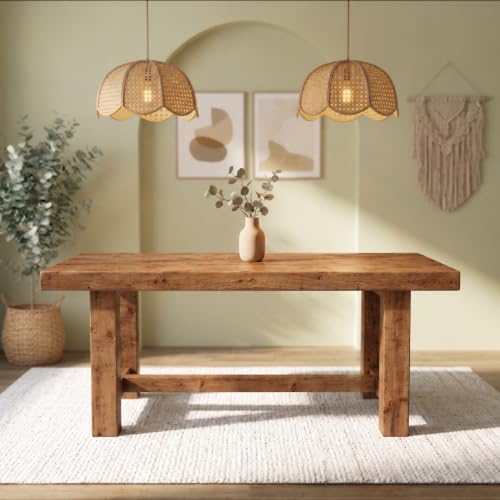
TRIBEWOOD 63-Inch Solid Wood Rectangular Dining Table for 4-6 People | Farmhouse Kitchen Table with Trestle Base, Real Wood Dining Tables for Dining Room,Apartment ,Elegant Details, Easy Assembly
Check price on Amazon
Plank+Beam Classic 72 Inch Dining Table, Rectangular, Pecan Wirebrush | Non-Toxic Finishes, Versatile Design, Farmhouse Design, Elegant Details, Easy Assembly, Quick Setup, Solid Wood
Check price on Amazon
LITTLE TREE 63" Long Large Wood Desks, Farmhouse Office Desk | Solid Wood Executive Computer Desk, Large Work Writing Table, Rustic Brown Business Furniture for Home
Check price on Amazon
Merax Farmhouse 59" L Narrow Console Table with 3 Drawers & Shelf, Natural | Wood Entryway Sofa Table, Storage Table for Living Room, Hallway & Entryway, Easy Assemble
Check price on Amazon
LITTLE TREE 63-Inch Solid Wood Office Desk, Live Edge Wood Desk | Executive Computer Desks, Large Writing Workstation for Home Office, Rustic Farmhouse Study Table with Natural Wood Grain
Check price on Amazon
TRIBEWOOD Solid Wood Console Table, 63-Inch Farmhouse Sofa Table Behind Couch for Entryway, Living Room, Foyer, Easy Assembly (Rustic Brown)
Check price on Amazon
TRIBEWOOD Solid Wood Dining Table for 6, 63-Inch Farmhouse Kitchen Table with Heavy Duty Legs, Rectangular Wood Dinner Table for Dining Room, Living Room, Natural Brown (Only Table)
Check price on Amazon
HOKYHOKY Reclaimed Solid Wood Console Table, 59" Long Entryway Table | Rectangular Couch Tables Behind Sofa, Farmhouse Accent Tables, Hallway, Entrance, Foyer, Living Room
Check price on AmazonA Practical Buying Decision Framework
When you are comparing solid wood farmhouse tables across different retailers and brands, organize your evaluation around these four questions:
- Will the table fit my room and seat my regular guests? Confirm dimensions against your measured space, allowing 36 inches of clearance. Consider an extendable model if your headcount varies.
- Does the wood species match my lifestyle? Choose oak or maple for maximum durability, pine for rustic charm, or walnut for a premium statement. Consider how much visible wear you are comfortable with.
- Is the construction solid where it matters? Look for breadboard ends, floating tabletop mounting, sturdy trestle or apron bases, and reinforced joinery. Ask about the base material as well as the top.
- Does the finish suit my maintenance habits? Lacquer and polyurethane are lower-maintenance; hard-wax oil is repairable and tactile but needs periodic care.
If you are still weighing table styles, our guides to solid wood dining tables, solid wood dining room sets, and solid wood dining sets can help you compare complete setups versus a standalone table. For a broader farmhouse perspective, explore solid wood farmhouse table options and extendable farmhouse dining tables.
Frequently Asked Questions
What is the best wood for a farmhouse table?
Oak and maple are excellent choices for their hardness and durability. Pine offers a softer, rustic character at an entry-level tier. Walnut provides a premium look with rich grain. The best wood depends on your desired aesthetic, durability needs, and tolerance for seasonal movement.
How thick should a solid wood farmhouse tabletop be?
A standard tabletop is around one inch thick. Heavy-duty and premium farmhouse tables often use thicker tops of one and a half to two inches for a chunkier, more substantial look and greater stability. Thicker tops are heavier and require stronger bases.
Does solid wood furniture expand and contract?
Yes. Solid wood is a natural material that responds to humidity changes by expanding and contracting. Well-built tables use breadboard ends, proper joinery, and floating tabletop mounting to allow this movement without cracking or warping.
How many people can sit at a farmhouse table?
As a general rule, allow about 24 inches of width per person. A 60-inch table seats four to six, a 72-inch table seats six, and an 84-inch or larger table seats eight or more. Extendable models offer flexibility for larger gatherings.
What finish is best for a farmhouse table?
A matte or satin lacquer, hard-wax oil, or polyurethane finish all offer protection with different looks. Hard-wax oil gives a natural feel, polyurethane offers high durability for family use, and lacquer provides a smooth factory-style finish. Choose based on maintenance preference and daily use.
Ready to Choose Your Farmhouse Table?
Review the recommended options above and compare features, tier positioning, and construction details to find the solid wood farmhouse table that fits your home and lifestyle.
View Recommended Tables