
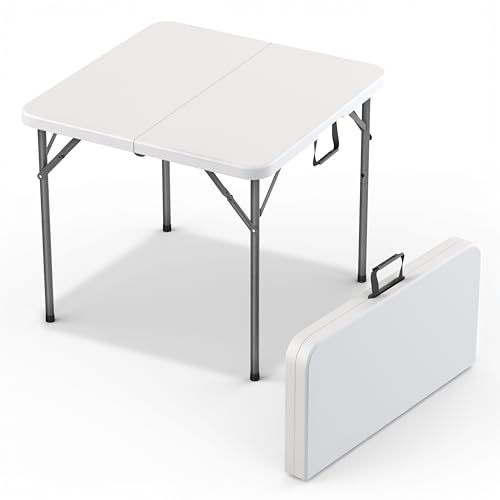


What Makes a Square Folding Table Worth Choosing
A square folding table is one of the most versatile pieces of furniture you can own. Unlike rectangular folding tables that dominate a room lengthwise, a square model distributes seating evenly on all four sides. That symmetry makes conversation easier, gives every diner the same amount of elbow room, and allows the table to slot into corners where a longer table would not fit.
For households that host occasionally, a folding square table is a practical companion to a permanent dining setup. It can serve as an overflow table during holidays, a buffet station against a wall, a craft or game surface, or a dedicated dining table in a compact apartment. When folded, it stores in a closet or behind a door — an advantage that fixed furniture cannot match.
If your space is genuinely tight, it is worth comparing a folding square table against a fixed compact option such as a small kitchen table or a space-saving dining table. Folding models win on storage flexibility; fixed models win on long-term stability and finish quality. Many buyers end up owning both — a permanent table for daily meals and a folding square table for guests and projects.
Square Folding Table Sizes and Seating Capacity
Most square folding tables fall into a few recognizable size families. Knowing what each size can realistically handle prevents the most common buying mistake: choosing a table that looks right in the photo but is too small once plates, glasses, and serving dishes are on it.
| Tabletop Size | Typical Seating | Best For |
|---|---|---|
| Around 30 inches square | 2 to 4 people | Card games, laptop work, tight breakfast corners, kids' activities |
| 34 to 36 inches square | 4 people comfortably | Everyday dining for a small household, apartment kitchens, patios |
| 40 to 48 inches square | 4 to 8 people depending on layout | Holiday overflow seating, buffet service, craft and hobby rooms |
A useful rule of thumb is to allow roughly 24 inches of table edge per seated person. On a 34-inch square table, each side provides just under that figure, which is why four adults fit but feel snug. Moving up to a 36-inch square gives noticeably more breathing room without changing the room footprint much. If you regularly seat more than four, consider two smaller square tables pushed together rather than one oversized model — the configuration adapts better to different rooms.
For very compact living situations, a small kitchen table for two may be a better daily solution, with the folding square table reserved for guests. Buyers planning a permanent four-seat arrangement may prefer a square dining table for four, which offers the same footprint with sturdier construction. And if you need to seat a larger group permanently, a square dining room table for eight shows how far the format can scale.
Frame Construction and Stability
The frame is where folding tables differ most dramatically, and it is the single best predictor of how the table will feel in daily use. Three broad tiers describe the market clearly:
Entry-Level Tier
Light tubular frames, simple cross-brace locking, and thinner tabletops. Fine for occasional use, card games, and short events. Expect some wobble if leaned on heavily.
Mid-Range Tier
Reinforced steel legs, dual locking mechanisms, and thicker tops. Stable enough for regular family meals and reliable for repeated setup and takedown.
Commercial-Grade Tier
Heavy-duty frames, powder-coated rust-proof finish, and rated weight capacities. Built for venues, rental fleets, and households that host frequently.
Two stability details deserve attention during research. First, check whether the legs lock in both the open and folded positions — tables that lock only when open can swing loose during carrying. Second, look for a table with adjustable glides or leveling feet, which matter on uneven patio surfaces and older floors. A mid-range table with a well-designed locking system will usually feel steadier than an entry-level table with a thicker top.
Weight capacity is worth confirming from the manufacturer rather than assuming. Commercial-grade square folding tables commonly support a few hundred pounds evenly distributed, while lighter models are rated lower. If the table will hold serving dishes, appliances, or equipment, stay within the rated figure and distribute weight toward the center.
Tabletop Materials Compared
The surface determines how the table looks, how it cleans, and whether it can live outdoors. Each material suits a different buyer.
| Material | Characteristics | Best For |
|---|---|---|
| High-density polyethylene (blow-molded) | Weather-resistant, easy to wipe down, lightweight, resists scratching | Patios, camping, events, households with children |
| Laminate over engineered wood | Furniture-like appearance, smooth finish, indoor-only | Dining rooms, apartments, home offices |
| Solid wood or wood veneer | Warm appearance, heavier, needs care and protection from moisture | Permanent dining corners, decorative setups |
| Powder-coated steel or aluminum | Very durable, industrial look, rust-proof when finished properly | Commercial use, workshops, outdoor events |
Blow-molded tops are the workhorse choice for anyone who needs a table that can move between indoors and outdoors without worry. Laminate tops look more like furniture and suit a dining room or apartment where the table stays up most of the time. Solid wood tops — the same material philosophy found in solid wood furniture — add warmth but require coasters, trivets, and prompt drying after spills. Steel tops are the most rugged option and pair well with industrial interiors.
Practical tip: If the table will double as a dining surface and a project surface, choose a top with a matte or lightly textured finish. Glossy surfaces show fingerprints and fine scratches quickly, while textured polyethylene hides wear far better over years of use.
Where a Square Folding Table Works Best
Small Dining Areas
A 34-inch square folds out to seat four in a corner that a rectangular table cannot use efficiently. Ideal for studio apartments and breakfast nooks.
Holiday Overflow
Slide a folding square table beside the main dining table during holidays to add four seats without rearranging the room permanently.
Buffet and Serving Station
Push the table against a wall and use it as a serving surface for party food, drinks, or a dessert display.
Games and Crafts
The symmetrical shape is ideal for card games, board games, puzzles, and sewing projects where everyone needs equal reach.
Patio and Outdoor Events
Weather-resistant models handle backyard gatherings, farmers markets, and camping trips, then fold away for storage.
Home Office Overflow
A temporary desk for guests, remote work days, or exam study sessions that disappears when the workday ends.
For outdoor use, pair a folding table with matching seating. A small outdoor table and chairs set works for permanent patios, while a folding table shines for temporary setups. If you are furnishing a compact balcony, the ideas in this small patio design guide translate well to a folding table arrangement. Picnic-style buyers may also want to compare small picnic tables for a more permanent outdoor fixture.
How a Square Folding Table Fits Into a Full Dining Setup
A folding table rarely lives alone. Most buyers pair it with folding or stackable chairs, and the chair choice affects both comfort and storage. Stackable options such as stackable dining room chairs nest together when not in use and complement the fold-flat table philosophy. If the table will live indoors and appearance matters, solid wood dining chairs elevate the look — provided the table height matches standard dining chair height.
Height compatibility is easy to overlook. Standard dining tables sit around 30 inches high, which matches standard dining chairs. Folding tables usually follow the same standard, but some event models are taller or shorter. Confirm the table height before pairing it with chairs you already own, and check the standard kitchen table height reference if you are unsure.
In a compact room, layout matters as much as the table itself. The layout principles in this small space kitchen table guide apply directly to folding tables: keep at least 30 inches of clearance on the sides used for seating, and leave a clear walking path to the kitchen. If the dining area shares space with a living zone, the arrangement advice in this sofa and dining table in the same small room guide helps prevent the two zones from crowding each other.
Storage accessories make a folding table more practical day to day. A small sideboard near the dining area holds linens and serving pieces within reach, while a storage bench for the entryway or a small storage bench can hold folded chairs and table linens when the table is packed away.
Durability, Care, and Long-Term Use
A well-chosen square folding table can last many years if it is stored and maintained sensibly. A few habits make a real difference:
- Store it dry. Wipe down the top and frame before folding, especially after outdoor use. Moisture trapped between folded surfaces can damage laminate and wood cores.
- Fold and unfold on a clear floor. Forcing the legs while the table is tilted can bend hinges and locking tabs.
- Use coasters and trivets. Heat and condensation are the two most common causes of surface damage on folding tables used for dining.
- Check the locking mechanism periodically. A quick inspection before each use takes seconds and prevents accidents.
- Keep the frame clean and dry. On steel frames, a rust-proof finish lasts longer when dirt and moisture are not left sitting on the joints.
For buyers who want a permanent table with the same compact footprint, a square table for dining or a square table for four offers a more furniture-like finish and heavier construction. A folding table remains the better choice whenever portability and storage are priorities. Many households treat the folding table as the flexible second surface and the fixed table as the daily anchor.
Common Mistakes to Avoid When Buying
Buyers researching a square folding table tend to run into the same handful of issues. Avoiding these saves a return and a frustrating setup:
- Underestimating the footprint when open. A 36-inch square needs a clear 36-inch area plus chair pull-out space. Measure the room, not just the table.
- Ignoring the folded dimensions. Some models fold flat but remain wide. Check the stored size against your closet or storage nook.
- Overlooking the weight. Commercial-grade tables are stable but heavy to carry. If the table will move often, check the carry weight.
- Assuming all tops are outdoor-safe. Laminate and wood tops are indoor-only. Confirm weather resistance before leaving a table outside.
- Skipping the locking check. Read reviews for comments about leg wobble and locking reliability — these are the most common complaints.
- Mismatching table and chair height. Confirm the table height matches your existing chairs before buying.
Frequently Asked Questions
What size square folding table seats four people?
A 34 to 36 inch square folding table comfortably seats four adults, one per side. Larger models around 48 inches can seat up to eight when placed in a row or used as a buffet surface.
Are square folding tables stable enough for everyday dining?
Mid-range and top-tier square folding tables with reinforced locking legs and high-grade steel frames are stable enough for daily dining. Entry-level models are better suited to occasional use and events.
What is the weight capacity of a typical square folding table?
Most commercial-grade square folding tables support between 200 and 500 pounds evenly distributed. Always confirm the rated capacity from the manufacturer before using a table for heavy serving or equipment.
Can a square folding table be used outdoors?
Yes, if the tabletop is weather-resistant and the frame has a rust-proof finish. Indoor-only models with particle board tops should not be left outdoors because moisture can damage the core.
Final Buying Checklist
Before deciding, confirm each of the following against the product listing and your room measurements:
- Tabletop size matches the number of people you need to seat.
- Folded dimensions fit your storage space.
- Frame tier matches how often the table will be used.
- Tabletop material suits indoor, outdoor, or dual use.
- Locking mechanism secures the legs in both positions.
- Table height matches your chairs.
- Weight capacity covers what you plan to place on the table.
- Surface finish resists the wear you expect — dining, crafts, or events.
With those checks complete, a square folding table becomes one of the most useful pieces in the home: a dining surface for four, a buffet station for guests, and a project table that disappears when the day is done.