
Table Behind Couch With Stools: The Complete Buying Guide
Turn the empty space behind your sofa into a functional, stylish zone. Learn how to size, choose, and style a sofa-back table with stools that works for your room, your seating needs, and your interior style.
Explore Buying FactorsWhy a sofa-back table with stools deserves your attention: In many living rooms, the area behind the couch is dead space. A slim console table with stools converts it into a multi-purpose zone: a landing spot for drinks and lamps, a casual perch for guests, a compact workspace, or a breakfast bar in an open-plan layout. For homes where floor area is limited, this setup delivers seating and storage without demanding a separate room.
This guide walks you through the exact measurements, materials, stool types, and layout rules you need before buying. By the end, you will know precisely which configuration fits your space and how to style it so it looks intentional rather than improvised.
Recommended Sofa-Back Tables & Stools
⚠️ AFFILIATE DISCLOSURE: This website contains affiliate links. As an affiliate Associate, we earn from qualifying purchases. If you make a purchase through these links, we may receive a small commission at no additional cost to you. Read our full affiliate policy.

Karl home 83.8" Bar Table and Chairs Set, 4 Adjustable PU Stools, Brown | High Top Counter Height Table with 24‑26" Stools for Kitchen Breakfast, Bistro, Dining Room, Living Room
Check price on Amazon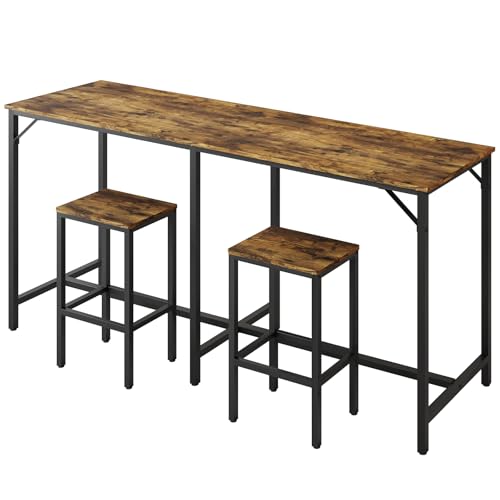
YATINEY 70.9" Bar Table and Chairs Set, Dining Table and Chair Sets, 3 Piece Counter Height Table and 2 Stools, Kitchen Table for Home Restaurant, Bar, Rustic Brown BT09BR
Check price on Amazon
KEIKI 4-Piece Bar Table Set with Charging Station - 59" Industrial Kitchen Table & 3 Upholstered Stools, USB/Type-C/AC Outlets, Solid Wood Frame - for Dining Room, Apartment, Living Room (Brown)
Check price on Amazon
HOMYSHOPY Bar Table Set for 3, 4 Piece Console Table with 3 Stools, Counter Height Sofa Table Set with 3 Chairs for Breakfast Nook, Living Room and Apartment (Brown)
Check price on Amazon
KEIKI 4 Piece Bar Table Set with USB Port, Kitchen Table with 3 Upholstered Stools, Dining Bar Table and Chairs Set, Industrial Breakfast Table for Small Space, Apartment, Dinette, Brown
Check price on Amazon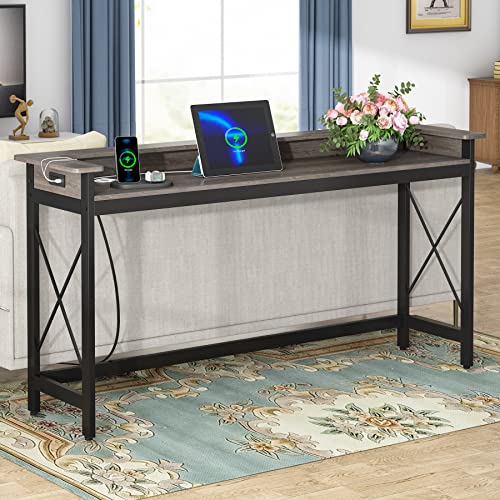
Tribesigns Sofa Table with Outlets and USB Ports, 70.9 inch Extra Long Console Table Behind Couch with Charging Station, Industrial Narrow Entryway Hallway Accent Table for Living Room
Check price on Amazon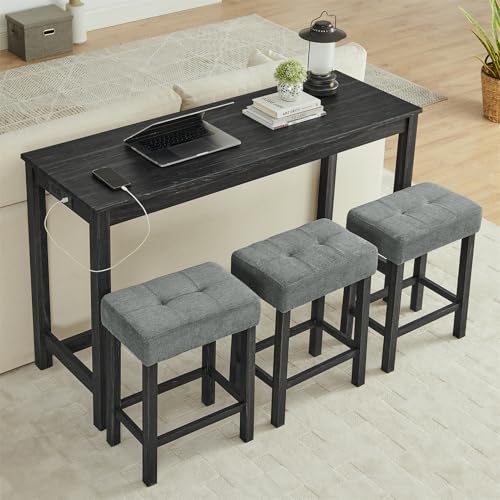
YWUFUART 59" Industrial 4 Piece Bar Table Set with Built-in Power Outlet, Behind Couch Sofa Table with 3 Linen Upholstered Stools, Bar Table and Chairs Set for Living Room, Dining Room, Lounge, Black
Check price on Amazon
KEIKI 60.24” Long Bar High Top Dining Table and 3 Stools Chairs Set, Wood Behind Couch Sofa Counter Height Pub Furniture for Breakfast, Kitchen Living Party Room, Dark Brown
Check price on AmazonWhat Is a Table Behind a Couch With Stools?
A table behind a couch with stools is a narrow console-style table placed against the back of a sofa, paired with two to four stools that tuck underneath or sit alongside it. It is sometimes called a sofa table, a console bar table, or a behind-the-sofa table. The table itself is typically taller and narrower than a standard console, because it must serve as a usable surface while doubling as a seating counter.
The concept borrows from two familiar furniture categories. It shares the footprint of a space-saving dining table and the display function of a slim storage console. Combining both, it becomes a hybrid piece that supports everyday living in compact and open-plan homes.
Core benefits of the setup
Reclaims dead space
The strip of floor behind a sofa often goes unused. A slim table turns it into a functional surface without consuming additional room.
Adds flexible seating
Stools give you extra seats for gatherings, casual meals, or quick conversations. Slide them out when needed and tuck them away when not.
Defines open-plan zones
In a combined living and dining area, the table creates a subtle visual divider between the lounge and the eating zone.
Supports everyday habits
Use it as a laptop perch, a breakfast counter, a drink station, or a display shelf for books and ceramics.
Improves traffic flow
Backless stools stow completely underneath, keeping walkways clear behind the sofa in narrow rooms.
Anchors sofa placement
A table behind a floating sofa gives the piece visual weight and prevents it from looking adrift in a large room.
Key Buying Factors: Measurements First
Measurements decide whether a sofa-back table works at all. Get these wrong, and you end up with a table that blocks circulation, a surface too shallow to use, or stools that collide with the sofa frame. Work through the four dimensions below before you consider style or material.
1. Table height relative to the sofa back
A standard sofa back measures roughly 30 to 34 inches from the floor. A console table that sits slightly above or level with the sofa back reads as intentional and hides the back panel. If the table sits noticeably lower, it disappears behind the sofa and loses its purpose. If you plan to seat people on stools, choose a counter-height table around 34 to 36 inches so legs and knees clear comfortably under the surface.
2. Table depth
Depth should fall between 12 and 18 inches. This range provides enough surface for a lamp, a tray of drinks, and a small stack of books while preserving walkway clearance. Anything deeper than 18 inches starts to feel like a dining table pushed against the couch, and it can choke circulation in a room where the sofa faces a TV or fireplace.
3. Table length and stool count
Plan roughly 18 to 24 inches of table length per stool. That means a 60-inch table comfortably seats two to three stools, and a 72-inch table seats three to four. Match the table length to your sofa: a table that runs about two-thirds to three-quarters of the sofa width looks balanced. A table shorter than half the sofa width tends to look accidental.
4. Clearance behind the table
Leave at least 24 inches between the back edge of the table and the nearest wall or furniture. When someone pulls out a stool and sits down, they need room to move their legs and push the stool back. In tight rooms, backless stools that tuck fully underneath reduce the required clearance to about 18 inches.
| Measurement | Recommended Range | Why It Matters |
|---|---|---|
| Table height (display use) | 30–32 inches | Sits level with or just above the sofa back for a clean sightline. |
| Table height (seating use) | 34–36 inches | Counter height gives legroom for stools and doubles as a casual eating surface. |
| Table depth | 12–18 inches | Enough surface for daily items while keeping walkways open. |
| Length per stool | 18–24 inches | Prevents elbow collisions and gives each sitter a defined spot. |
| Clearance behind table | 18–24 inches | Allows stools to pull out and people to pass comfortably. |
Materials and Construction: What to Look For
The material you choose affects durability, visual weight, and how well the piece blends with your sofa and flooring. There is no single best option; each suits a different interior style and level of daily use.
Solid wood
Solid wood offers the most durable construction and the strongest long-term investment value. Hardwoods such as oak, maple, and walnut resist dents and hold up to daily use. Wood suits traditional, farmhouse, and mid-century interiors. Look for joinery details such as mortise-and-tenon or dovetail construction, which signal a solid build. If you want to understand how wood ages and how to maintain it, our guide to sustainable wood care covers finishes and seasonal upkeep.
Metal frames
Powder-coated steel and iron frames bring an industrial or modern edge. Metal is typically lighter than solid wood, which makes it easier to reposition, and a rust-proof finish keeps it looking sharp for years. Metal pairs well with leather or fabric sofas and works in loft-style rooms. Check that the frame is reinforced at the joints, since thin tubular legs can wobble under lateral pressure.
Glass tops
A glass top over a metal or wood frame creates an airy look that keeps a small room feeling open. Tempered glass is the safer choice because it breaks into small, blunt pieces rather than sharp shards. Glass requires more frequent cleaning, but it reflects light and visually expands tight spaces. Pair it with a solid frame to keep the piece grounded.
Mixed materials
Combining a wood top with metal legs, or a stone surface with a metal base, produces a balanced look that bridges styles. Mixed-material pieces are often the most versatile, because they echo multiple finishes already present in the room. Check that the connection points between materials are mechanically sound, since dissimilar materials expand and contract at different rates.
Choosing the Right Stools
The stools matter as much as the table. They determine comfort, how much floor space the setup consumes, and whether the arrangement looks deliberate. Three decisions shape the choice: seat height, backrest style, and seat material.
Seat height
Match stool seat height to table height. For a 34- to 36-inch counter-height table, choose stools with a seat height of 24 to 26 inches. For a standard 30-inch console used mainly for display, stools around 18 to 20 inches work for occasional perching. A useful rule: the gap between the seat and the underside of the table should be about 10 to 12 inches.
Backless vs. backed stools
Backless stools tuck fully under the table, keep sightlines open, and suit small rooms. They are ideal when the table is primarily a surface with occasional seating. Stools with a low backrest offer more comfort for longer sitting and work well when the table doubles as a casual dining spot. If you want a broader comparison of seating styles, our guide to swivel bar stools explains how rotation and back support affect usability. For a closer look at upholstered options, see upholstered bar stools with backs.
Seat material and comfort
Wood and metal seats are durable and easy to clean, but they become uncomfortable after long periods. Upholstered seats add cushioning and warmth, and they soften the look of a hard-surfaced table. Leather wipes clean easily and develops a patina over time; fabric offers more color and texture variety but needs spot cleaning. For leather options, review our leather swivel bar stool guide before deciding.
Stool count and spacing
Two stools suit a 48- to 60-inch table and cover most household needs. Three stools fit a 60- to 72-inch table and make the setup feel like a genuine counter. Avoid crowding: stools placed too close together force sitters to angle their bodies, which is uncomfortable for eating. Leave at least 4 inches between adjacent stool seats.
Product Tiers: Matching the Setup to Your Needs
Sofa-back tables and stools span a wide range of construction quality. Rather than fixating on any single figure, classify products by tier. This framework stays useful over time and helps you compare like with like.
-
Entry-Level
Essential Tier
Engineered wood tops with basic metal legs. Suitable for light use, rentals, and temporary setups. Expect simple assembly and fewer finish options.
-
Mid-Range
Balanced Tier
Solid wood veneers, reinforced frames, and better hardware. A solid choice for daily use in most homes, with smoother finishes and more style variety.
-
Premium
High-End Tier
Solid hardwood construction, precision joinery, and premium upholstery on stools. Built for long-term daily use and designed to age well.
Within each tier, look for specific signals of quality. Reinforced corner blocks, adjustable leveling feet, and smooth-glide hardware indicate careful construction. On stools, check that the legs are joined with braces rather than screws alone. A mid-range piece with strong joinery often outperforms a higher-tier piece with weak connections.
Layout and Placement Rules
Placement determines whether the setup feels integrated or awkward. Follow these rules to get it right the first time.
Floating sofa in an open-plan room
When the sofa floats in the middle of the room, a table behind it anchors the piece and creates a boundary between zones. This is the ideal scenario for a counter-height table with stools, because the seating faces the living area and supports conversation. Keep the table aligned with the sofa back and centered along its length.
Sofa against a wall
If the sofa sits against a wall, there is no room behind it for a table and stools. In this case, place the table along a side wall or behind a second sofa. Alternatively, use a narrow console in a hallway or entry for the same storage and display benefits without the seating function.
Small rooms
In compact rooms, choose a table no deeper than 14 inches and backless stools that tuck completely underneath. This keeps the walkway clear and preserves the sense of openness. A glass top reflects light and reduces visual bulk. Our guide to tables for small spaces covers additional tricks for tight floor plans.
Open-concept living and dining
Use the sofa-back table to separate the lounge from the eating zone. Stools on the dining side signal that the table is a seating counter, not just a display surface. This arrangement works especially well in apartments where a full dining table would overwhelm the room.
Pre-Purchase Checklist
- Measure the sofa back height and the available floor space behind the couch.
- Confirm the table depth leaves at least 18 to 24 inches of clearance to the nearest wall or furniture.
- Decide between display use and seating use, then choose table height accordingly.
- Calculate stool count from table length: one stool per 18 to 24 inches.
- Check that stool seat height matches table height with a 10- to 12-inch gap.
- Choose backless stools for small rooms and low-back stools for longer sitting.
- Inspect joinery, leg braces, and leveling feet before buying.
- Confirm the finish resists scratches and spills if the table will see daily use.
- Plan the styling arrangement so the surface stays at least one-third clear.
Ready to put the space behind your sofa to work?
Browse our hand-picked selection of sofa-back tables and stools. Compare sizes, materials, and seating configurations to find the setup that fits your room.
View Recommended ProductsFrequently Asked Questions
What height should a table behind a couch with stools be?
How deep should a console table behind a sofa be?
How many stools can fit under a sofa-back table?
What is the best material for a table behind the couch?
Do stools under a sofa-back table need a backrest?
Final Thoughts
A table behind the couch with stools is one of the most efficient furniture decisions you can make in a space-conscious home. It recovers dead floor area, adds flexible seating, and gives the sofa a deliberate placement. The key is measurement: height, depth, length, and clearance decide whether the setup feels natural or cramped. Once those numbers align, material and stool choice become straightforward style decisions.
Before you commit, read product descriptions carefully, check assembly requirements, and confirm that the stool seat height matches the table height. If you are still weighing seating styles, our guides to swivel counter stools with backs and upholstered counter stools offer deeper comparisons. With the right measurements and a clear plan, the space behind your sofa becomes one of the most-used spots in the room.