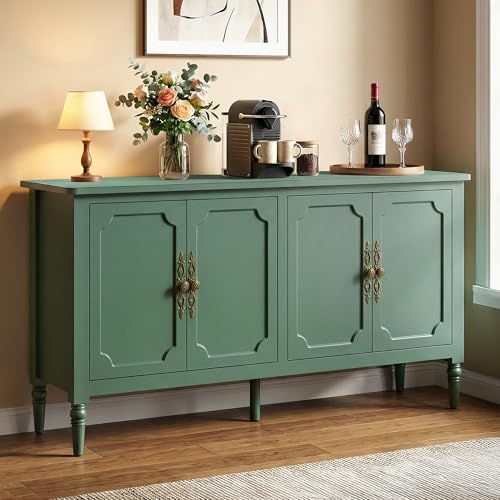
Thin Buffet Cabinet: The Complete Buying Guide for Slim Dining Storage
A thin buffet cabinet gives you display space, concealed storage, and a serving surface without swallowing your walkway. This guide explains how to choose a slim sideboard that fits your room, matches your style, and holds up to daily use.
Explore Recommended OptionsWhat Is a Thin Buffet Cabinet?
A thin buffet cabinet is a shallow-depth sideboard designed to provide storage and a display surface in rooms where a standard 18- to 20-inch-deep buffet would crowd the space. Most thin models sit between 11 and 16 inches deep, which keeps them visually light while still offering two or three shelves behind closed doors.
Unlike a full-size buffet or sideboard, a slim cabinet is usually narrower in proportion and taller in relation to its width. That vertical emphasis lets it hold dinnerware, linens, and glassware without projecting far into the room. Many buyers use one as a secondary storage piece in an open-concept dining area, a hallway, or a compact apartment.
The term overlaps with several related product categories. A thin buffet cabinet is sometimes marketed as a slim console, a narrow sideboard, or a shallow storage credenza. If you are comparing heights, tall buffet cabinets and tall sideboard cabinets offer more vertical storage but usually demand a deeper footprint. If you want a more conventional proportion, a unique sideboard or buffet design may suit a larger room better.
Why Slim Storage Works in Small Dining Rooms
Floor space in a dining room is not just about the table. Clearance around chairs, walkways to the kitchen, and door swing all compete for the same square footage. A shallow cabinet can sit against a wall or in a niche without blocking circulation, which is why it is one of the most practical storage solutions for compact homes.
There are three situations where a thin buffet cabinet consistently outperforms a full-depth sideboard:
- Narrow dining nooks. When the distance between the table edge and the wall is limited, a shallow cabinet preserves the 36-inch minimum clearance recommended for pulling out chairs.
- Open-plan living and dining. A slim cabinet reads as a console from the living area, so it does not create a visual wall between zones.
- Hallways and entryways. A shallow piece can hold table linens and serving pieces near the dining space without reducing the walkway width.
If your dining area is genuinely tight, it helps to review layout strategies for tables for small spaces and small dining room design before committing to a cabinet size. The cabinet and the table need to be planned together, not separately.
For a space that also serves as a hosting area, a slim cabinet doubles as a staging surface for drinks and desserts. Pair it with a compact bar cart or a wine rack when you need extra serving capacity only during gatherings.
Depth, Height, and Width: Getting the Dimensions Right
Depth is the defining dimension of a thin buffet cabinet, but height and width matter just as much for usability. Measure the wall space, the walkway width, and the height of nearby furniture before you compare models.
| Dimension | Typical Range | What It Affects | Best For |
|---|---|---|---|
| Depth | 11–16 inches (ultra-slim: 8–10 inches) | Walkway clearance, visual weight, serving surface | Narrow rooms, hallways |
| Height | 28–40 inches | Counter usability, top display area | Standard dining rooms |
| Width | 30–60 inches | Storage capacity, wall coverage | Accent walls, niches |
| Counter height | 30–36 inches from floor | Comfort when serving food or drinks | Hosting and buffet service |
Depth: the number that matters most
A 12-inch-deep cabinet is the sweet spot for most dining rooms. It is shallow enough to keep a walkway open but deep enough to hold dinner plates upright on a shelf. Models under 11 inches tend to have limited shelf depth and may only accommodate small bowls, glassware, or folded linens.
If the cabinet will double as a serving station, confirm that the top depth is at least 12 inches. A 10-inch top leaves little room for a platter and a stack of plates at the same time.
Height: counter versus tall
Counter-height models around 30 to 36 inches are the most versatile. They align with the typical dining table height, which makes them feel integrated rather than dominant. Taller models between 36 and 40 inches add storage but can visually overpower a small room. If you prefer a taller profile, compare dedicated tall buffet cabinets before deciding.
Width: match the wall, not the room
Measure the specific wall segment you plan to use, including baseboards and outlets. Leave at least 6 inches of breathing room on each side if the cabinet sits between two walls or doorways. A cabinet that spans wall to wall looks intentional; one that nearly touches both sides looks cramped.
Materials and Build Quality
Material choice affects durability, weight, and how the cabinet ages. Because a thin buffet cabinet has a smaller footprint, the construction quality of the frame and back panel matters more than the surface finish alone.
| Material | Tier | Durability | Best For |
|---|---|---|---|
| Solid hardwood (oak, walnut, teak) | premium | Excellent; repairable and refinishable | Long-term investment pieces |
| Wood veneer over engineered wood | mid-range | Good; stable and consistent finish | Balanced option for most homes |
| Lacquered or painted MDF | entry-level | Moderate; susceptible to chipping at edges | Modern minimalist interiors |
| Metal frame with wood or glass shelves | mid-tier | High structural strength; shelf surface varies | Industrial and loft styles |
Frame and back panel
A thin cabinet has a narrower base, so the frame needs to resist racking. Look for corner blocks, dowel joints, or metal corner brackets. A rigid back panel adds significant stability; a flimsy cardboard back does not. If the listing does not mention the back panel material, check the product images and customer reviews for clues.
Doors and hardware
Soft-close hinges are a worthwhile feature on any cabinet you will open daily. On a slim model, door thickness affects internal depth, so confirm the usable shelf depth rather than relying on the exterior depth measurement. If you prefer open storage, consider a table with stools or an open shelving unit instead of a closed cabinet.
Finishes and care
Wood finishes benefit from periodic conditioning, especially in dry climates. For natural care routines, see our guide to sustainable wood care. Painted finishes should be cleaned with a damp cloth and mild soap; avoid abrasive cleaners that dull the surface.
Storage Layout and Door Configurations
The interior layout determines what you can actually store. A thin buffet cabinet typically offers two or three shelves, sometimes with a drawer above. The door configuration shapes how easily you can reach the contents.
Common configurations
- Two-door cabinet with two shelves. The most common layout. Good for dinnerware, serving bowls, and folded linens.
- Two doors plus a top drawer. The drawer is useful for cutlery, napkins, and small serving tools. Confirm the drawer glide quality.
- Sliding doors. Space-efficient because the doors do not swing into the room. Ideal for narrow hallways.
- Open shelving with a closed lower section. Offers display space on top and concealed storage below.
- Glass-front doors. Good for displaying china and glassware, but require tidier organization.
Adjustable versus fixed shelves
Adjustable shelves give you flexibility as your collection changes. On a shallow cabinet, an adjustable shelf can be raised to fit tall vases or lowered to hold stacked plates. Fixed shelves limit options but are usually more structurally rigid.
Matching storage to your collection
If you collect dinnerware sets, measure the diameter of your largest plates. Standard dinner plates are 10 to 11 inches, which fits comfortably on a 12-inch-deep shelf. If you store glassware and stemware, check the interior height between shelves; stemmed glasses often need 8 to 9 inches of clearance.
For linens, a shallow shelf works well for folded tablecloths and table runners. Deep cabinets encourage stacking, which creases fabric; a slim cabinet naturally limits pile height.
Matching Your Interior Style
A slim cabinet is a visible piece of furniture, so the style should complement the room rather than compete with it. The good news is that thin buffets are made in nearly every aesthetic, from rustic farmhouse to polished modern.
Modern minimalist
Look for handleless doors, a matte lacquer finish, and clean lines. A floating or tapered-leg base adds visual lightness. Pair it with a tempered glass dining table for a cohesive contemporary look.
Farmhouse and rustic
Reclaimed wood finishes, X-brace details, and black metal hardware suit farmhouse interiors. A slim cabinet works well beside a trestle dining table or a table and benches setup.
Industrial loft
Metal frames with exposed rivets and wood shelves define the industrial look. A slim metal-and-wood cabinet pairs naturally with a marble-top table or a tall bar table in an open loft.
Traditional and transitional
Raised panel doors, turned legs, and warm wood tones fit traditional dining rooms. If you already own a traditional dining room table, a matching wood-tone cabinet keeps the room harmonious.
Coastal and light
Whitewashed finishes, rattan inserts, and light oak tones suit coastal interiors. A slim cabinet in a pale finish keeps a small room feeling airy.
Safety, Assembly, and Placement
A narrow cabinet has a higher center of gravity relative to its base, which makes anti-tip anchoring essential. This is especially true in homes with young children or large pets.
Anchoring
Use the anti-tip kit included with the cabinet, or a wall anchor rated for the cabinet's loaded weight. Anchor into a stud where possible. If no stud is available, use a heavy-duty toggle anchor appropriate for your wall material. Never rely on the cabinet's own weight to keep it stable.
Placement
- Keep at least 36 inches of clearance between the cabinet and the dining table for chair pull-out.
- Leave 6 inches on each side if the cabinet sits between walls or doorways.
- Avoid placing it directly in front of heating vents, radiators, or baseboard heaters.
- Keep the top surface clear of heavy items if the cabinet is not anchored.
Assembly
Most thin buffet cabinets ship flat-packed. Assembly typically involves attaching legs or a base, installing hinges, and fitting the back panel. A back panel that is nailed or screwed on adds rigidity, so do not skip that step. Allow 60 to 90 minutes for assembly and have a second person available for lifting.
For care after installation, our dining furniture care section covers cleaning routines for wood, metal, and glass surfaces.
Buying Checklist
Use this checklist before you finalize a purchase. It covers the practical details that are easy to overlook when browsing online.
- Measure depth first. Confirm the cabinet depth leaves at least 36 inches of clearance to the table edge.
- Confirm usable shelf depth. Exterior depth is not the same as interior shelf depth, especially on models with thick doors.
- Check shelf weight ratings. Look for at least 20 pounds per shelf for dinnerware storage.
- Verify door swing or slide direction. Swinging doors need clearance; sliding doors do not.
- Look for soft-close hinges and quality glides if the cabinet has a drawer.
- Confirm the anti-tip kit is included. If not, budget for one separately.
- Review the finish material and how it will age in your climate.
- Check the return policy before ordering a flat-packed item that is difficult to repack.
- Plan the top surface use. If you will serve food from it, confirm the top depth is at least 12 inches.
- Compare against related categories. Review tall sideboard cabinets and unique sideboards and buffets if a conventional depth is also an option.
Recommended Thin Buffet Cabinets for Slim Dining Spaces
⚠️ AFFILIATE DISCLOSURE: This website contains affiliate links. As an affiliate Associate, we earn from qualifying purchases. If you make a purchase through these links, we may receive a small commission at no additional cost to you. Read our full affiliate policy.

VASAGLE Storage Cabinet, Sideboard with Adjustable Shelves | Mid-Century Modern Buffet Cabinet, 55.1 x 15.7 x 29.5 Inch, for Living Room, Walnut, MIRIANA Collection ULSC631KX01
Check price on Amazon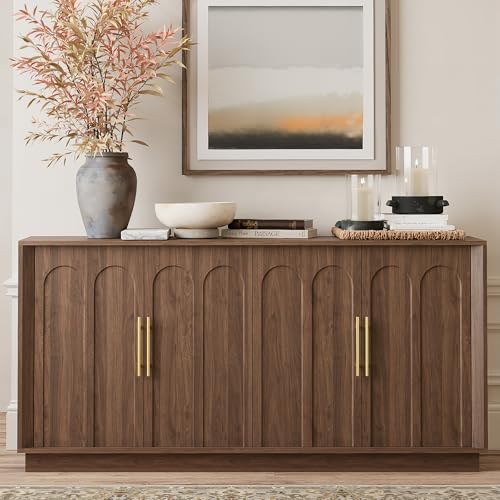
FORTUNETEC 67" Sideboard Buffet Cabinet with Storage, Arched Doors, Walnut | Mid Century Modern Accent Cabinet with Wood Gain, Modular Media Console, Credenza for Living Dining Room Kitchen Entryway
Check price on Amazon
HOSTACK 71"W Farmhouse Kitchen Sideboard Buffet Cabinet with Storage, White | Large Coffee Bar Cabinet with 3 Wide Drawers, Long Buffet Table with Shelves, Kitchen Storage Cabinet for Dining Room
Check price on Amazon
FINETONES Buffet Cabinet with Storage, Kitchen Storage Cabinet for Home | 55.1" Large Sideboard Buffet, Farmhouse Kitchen Cabinet, Wood Coffee Bar Table for Kitchen, Black
Check price on Amazon
HOSTACK 60" W Sideboard Buffet Cabinet with Storage, Kitchen Cabinet, White | 36 Tall Kitchen Buffet Storage Cabinet with 4 Drawer, Large Coffee Bar Cabinet, Modern Buffet Table for Dining Living Room
Check price on Amazon
WLIVE 67" Large Buffet Sideboard Cabinet with Storage, Walnut Fluted Doors | Mid-Century Wood Credenza with Adjustable Shelves for Living Room, Dining Room, Kitchen & Coffee Bar, TV Stand for 75'' TVs
Check price on Amazon
VASAGLE Farmhouse Buffet Cabinet, Coffee Bar with 2 Drawers | Honey Brown Sideboard, 55.1 x 15.7 x 31.5 in, Adjustable Shelves, Honey Brown, LIRY Collection, UBBK381K01V1
Check price on Amazon