
Wooden Dining Tables: The Complete Buying Guide
Learn how to choose a solid wood dining table that fits your space, your lifestyle, and your design vision — from wood species and finishes to shape, size, and long-term care.
START THE GUIDEWhy a wooden dining table? A wooden table is the heart of the dining room — it anchors the space, sets the tone for every meal, and grows more characterful with time. Whether you are furnishing a first apartment or upgrading a family dining room, understanding the fundamentals of wood furniture will help you make a confident, lasting decision.
Why Choose a Wooden Dining Table?
Wood has been the material of choice for dining tables for centuries, and for good reason. It is warm, tactile, and endlessly versatile. Unlike glass or metal, wood develops a patina over time, turning small marks and signs of use into part of its story. For many households, a solid wood table becomes a family heirloom — the setting for holiday dinners, homework sessions, and everyday conversations.
A well-built wooden table also offers practical advantages. It is repairable and refinishable, meaning a scratched surface can be restored rather than replaced. It dampens sound better than hard surfaces, contributing to a calmer dining environment. And because wood pairs naturally with almost any design style — from rustic to modern — it integrates easily into both traditional and contemporary interiors.
If you are still exploring the broader category, our guide to dining tables covers the full spectrum of materials, shapes, and configurations to help you compare wood against glass, stone, and composite options.
Understanding Wood Types: Hardwood vs. Softwood
The first decision is the wood species itself. Wood falls into two broad categories: hardwoods and softwoods. Hardwoods come from deciduous trees and generally offer denser grain, greater durability, and a more refined appearance. Softwoods come from coniferous trees and are lighter, more workable, and often used in entry-level furniture or painted finishes.
Common Hardwoods for Dining Tables
- Oak: Dense, durable, and widely available. Oak has a pronounced grain pattern that suits rustic and farmhouse styles. White oak is especially resistant to moisture.
- Walnut: A premium hardwood with rich, dark tones and a smooth, straight grain. Walnut is prized for formal dining rooms and modern interiors.
- Maple: Hard and fine-grained with a light, uniform appearance. Maple takes stains well and is an excellent choice for contemporary spaces.
- Cherry: Warm reddish-brown tones that deepen with age. Cherry is softer than oak or maple but offers a classic, elegant look.
- Teak: Naturally oily and highly weather-resistant. Teak is a top-tier choice for indoor-outdoor dining and long-term durability.
- Ash: Light-colored with a bold, open grain. Ash is a solid mid-range option that resembles oak but is slightly lighter in tone.
Softwoods and Engineered Options
Pine and spruce are common softwoods used in starter-tier furniture. They are lighter and more prone to dents, making them better suited to casual or occasional-use tables. Veneered MDF and engineered wood offer consistent surfaces at an entry-level position in the market, but they cannot be refinished as many times as solid hardwood. For a deeper look at responsible sourcing, see our guide to sustainable wood.
| Wood Species | Tier | Best For | Character |
|---|---|---|---|
| Oak | Mid-range | Family dining, farmhouse, everyday use | Bold grain, heavy-duty, durable |
| Walnut | Premium | Formal dining, modern interiors | Rich dark tone, smooth grain |
| Maple | Mid-range | Contemporary spaces, light palettes | Fine grain, hard surface, uniform |
| Cherry | Premium | Traditional dining, heirloom pieces | Warm tone that deepens with age |
| Teak | Luxury | Indoor-outdoor dining, humid climates | Oily, weather-resistant, golden-brown |
| Pine | Entry-level | Casual dining, starter homes | Light, soft, rustic knots |
Finishes and Their Role in Durability
The finish is the protective layer that determines how well your table handles daily life. It also affects the visual character of the wood, from a matte, natural look to a high-gloss sheen.
Polyurethane and Lacquer
These film-forming finishes create a hard, protective surface that resists moisture and stains. They are the most practical choice for busy family tables and require minimal maintenance. The trade-off is that deep scratches can be harder to spot-repair.
Hardwax Oil
Hardwax oil penetrates the wood rather than sitting on top of it, leaving a natural, tactile surface. It is easier to repair in small areas and preserves the wood's texture. It requires periodic re-oiling, making it a good fit for households that appreciate a hands-on approach.
Varnish and Conversion Varnish
These are among the most durable finishes, often found on professional-grade and commercial-grade furniture. Conversion varnish offers excellent chemical and moisture resistance, making it a long-term investment for high-use dining rooms.
Whatever the finish, protecting the surface matters. Using table pads under linens and trivets for hot dishes will extend the life of any finish considerably.
Choosing the Right Shape and Size
Shape and size are where function meets form. A table that is too large will crowd the room; one that is too small will leave guests uncomfortable. Start by measuring your space and planning circulation — aim for at least 36 inches of clearance between the table edge and walls or other furniture to allow chairs to pull out comfortably.
Rectangular Tables
The most versatile and space-efficient shape for most dining rooms. Rectangular tables seat more people per square foot than round or square tables and work well in narrow or open-plan spaces. For larger gatherings, look for models with a table leaf or retractable legs.
Round Tables
Round tables encourage conversation and work beautifully in compact or square rooms. A tall circle table can suit a breakfast nook, while a standard-height round table fits four to six diners comfortably.
Square and Oval Tables
Square tables suit intimate settings and small families. Oval tables offer the softness of a round table with the seating capacity of a rectangular one, making them a refined choice for traditional dining rooms.
For compact spaces, our guides to tables for small spaces and tables for two offer layout-specific recommendations. If you prefer a bench-style arrangement, explore table and benches configurations.
Matching Your Wooden Table to Your Dining Room Style
The right wooden table should feel at home in your space. Here is how different wood finishes and silhouettes map to popular design styles:
- Farmhouse and Rustic: Oak or reclaimed pine with a distressed or matte finish. Trestle bases and turned legs reinforce the look. A trestle dining table is a natural fit.
- Modern and Minimalist: Walnut or maple with clean lines and a hardwax oil finish. Slim, tapered legs and turned-leg silhouettes both work depending on the mood.
- Traditional: Cherry or mahogany with a polished finish. Look for carved details and a traditional dining table profile that pairs with formal seating.
- Mid-Century Modern: Walnut with splayed legs and a warm, satin finish. Pair with unique dining chairs for visual interest.
- Coastal and Light: Ash or white oak with a pale wash. Light wood tones reflect natural light and suit summer table settings beautifully.
For a deeper dive into coordinating your table with the rest of the room, browse our dining room styles collection.
Wooden Dining Table Buying Checklist
Before you commit, run through this practical checklist. It will help you avoid the most common regrets — a table that wobbles, a finish that chips, or a size that never quite fit.
- Measure twice: Confirm the table's footprint plus chair clearance in your actual room. Tape the dimensions on the floor if possible.
- Check the construction: Look for joinery details such as mortise-and-tenon or dowel joints. A solid build will feel stable with no wobble when lightly rocked.
- Inspect the base: A wide, weighted base or sturdy trestle prevents tipping and distributes weight evenly.
- Understand the finish: Ask whether the finish is film-forming or penetrating. This determines how you will maintain it over the years.
- Confirm seating capacity: Allow 24 inches of table width per diner. A table with 6 chairs is a common family configuration.
- Consider extendability: If you host holidays, an extendable table with a leaf adds flexibility without a larger footprint.
- Review the warranty and returns policy: A solid warranty signals confidence in the build quality.
Pro Tip: Weight Is a Signal
A heavy table is not automatically better, but significant weight usually indicates solid wood construction rather than a hollow core. Ask for the product weight and compare it against similar-sized tables in the same category.
Caring for a Wooden Dining Table
Wood is forgiving but not indestructible. A few simple habits will keep your table looking its best for decades:
- Wipe spills promptly with a soft, damp cloth and dry immediately.
- Use coasters and trivets for hot or wet items — never place a hot pan directly on the surface.
- Keep the table away from direct sunlight and heating vents to prevent uneven drying and fading.
- Maintain indoor humidity between 40 and 60 percent to reduce seasonal movement and cracking.
- Re-oil penetrating finishes once or twice a year, depending on use.
For a complete maintenance routine, visit our care and maintenance section, which covers polishing, scratch repair, and protective accessories.
Recommended Wooden Dining Tables & Matching Seating
⚠️ AFFILIATE DISCLOSURE: This website contains affiliate links. As an affiliate Associate, we earn from qualifying purchases. If you make a purchase through these links, we may receive a small commission at no additional cost to you. Read our full affiliate policy.

Stakmore Classic Straight Edge Square Wood Folding Table, 32 in, Fruitwood | Foldable for Storage in Small Spaces, Wooden Tabletop Furniture, for Cards, Board Games, Dining, and Extra Seating
Check price on Amazon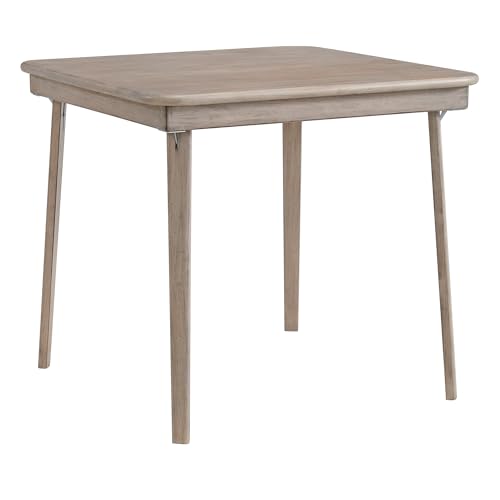
Stakmore Classic Straight Edge Square Wood Folding Table, 32 in, Driftwood | Foldable for Storage in Small Spaces, Wooden Tabletop Furniture, for Cards, Board Games, Dining, and Extra Seating
Check price on Amazon
Stakmore Classic Straight Edge Square Wood Folding Table, 32 in, Cherry | Foldable for Storage in Small Spaces, Wooden Tabletop Furniture, for Cards, Board Games, Dining, and Extra Seating
Check price on Amazon
VASAGLE 47-Inch Round Dining Table for 4-6 People, Pedestal Kitchen Table | Contemporary, with Wooden Pedestal Base and 3-Height Adjustable Storage Shelf, Thickened Tabletop, Oak Beige
Check price on Amazon
Stakmore Classic Straight Edge Square Wood Folding Table, 32 in, Oak | Foldable for Storage in Small Spaces, Wooden Tabletop Furniture, for Cards, Board Games, Dining, and Extra Seating
Check price on AmazonFrequently Asked Questions
What is the most durable wood for a dining table?
How do I choose the right size wooden dining table?
Are wooden dining tables worth the investment?
How do I protect a wooden dining table from water rings and scratches?
What finish is best for a wooden dining table?
Ready to Find Your Perfect Wooden Dining Table?
Browse our curated selection of wooden dining tables and matching seating, all chosen for build quality and timeless design.
EXPLORE RECOMMENDED OPTIONS