
Table and Benches: The Complete Dining Bench Buying Guide
Discover how table and bench seating can transform your dining space. Learn about sizes, materials, styles, comfort, and practical tips to choose the right bench for your home.
EXPLORE BENCH OPTIONSWhy choose table and benches? Bench seating offers a casual, space-efficient, and family-friendly alternative to traditional dining chairs. It maximizes seating along one side of the table, tucks neatly underneath, and creates a relaxed, communal feel that works beautifully in kitchens, breakfast nooks, and modern dining rooms.
Understanding Table and Bench Seating
The combination of a table and benches has grown from a farmhouse staple into a versatile design choice for nearly every interior style. Whether you are outfitting a compact breakfast nook or a long family dining table, benches deliver a distinctive blend of function and aesthetic appeal.
A bench can seat more people than individual chairs along the same span, making it a smart solution for growing families and frequent entertainers. It also creates a clean sightline, since the bench back typically sits lower than chair backs, keeping the dining area visually open. For those exploring flexible seating, many homeowners pair a bench on one side with chairs on the other — a balanced approach that combines comfort and sociability.
This guide walks you through the key decisions: how to match bench height to your table, which materials and finishes suit your lifestyle, how to style benches for different rooms, and how to care for them over the long term. By the end, you will have a clear framework for choosing bench seating with confidence.
Key Benefits of Dining Bench Seating
- Space efficiency: Benches tuck completely under the table, freeing floor space in compact rooms. This is especially valuable in tables for small spaces setups.
- More seating: A single bench can comfortably seat two to four people, depending on length, often more than the equivalent chair count.
- Family-friendly: Children can slide along a bench easily, and there are no chair legs to trip over in tight corners.
- Design flexibility: From rustic wooden benches to upholstered designs with backs, bench styles range widely to suit farmhouse, industrial, coastal, and modern interiors.
- Visual openness: Lower backs keep sightlines clear, making a dining area feel larger and more connected to adjacent living spaces.
Bench Types and Styles
Wooden Benches
Solid wood benches are the classic choice for a table and bench arrangement. They bring warmth, natural grain, and exceptional durability. Hardwoods such as oak, maple, and teak resist daily wear, while pine and rubberwood offer a more relaxed, rustic character. A teak wood bench is an excellent long-term investment for both indoor and covered outdoor use, thanks to its natural moisture resistance. Wooden benches pair naturally with trestle dining tables and traditional dining tables alike.
Upholstered Benches
Upholstered benches add softness and comfort, making long dinners and homework sessions far more pleasant. Fabric or leather cushions provide gentle support, while the frame underneath determines durability. For households that want back support, upholstered dining benches with backs combine the best of chairs and benches. A bench with a back works especially well against a wall, where it can anchor the dining area without obstructing traffic flow.
Storage Benches
A bench with a lift-up seat or built-in drawers doubles as a storage solution for table linens, board games, or seasonal decor. This is a thoughtful choice for open-plan rooms where every piece of furniture should earn its place. An under window storage bench can extend the dining zone into a bay window or alcove.
Corner and Nook Benches
Corner benches are custom-made or modular units that wrap around a table in a breakfast nook. An upholstered corner breakfast nook with storage turns an awkward corner into the most inviting seat in the house. These designs are particularly effective in kitchens, where they create a dedicated eating zone without occupying the center of the room.
Outdoor Benches
For patios and decks, weather-resistant woods such as teak and cedar, or powder-coated metal frames, keep benches looking good through the seasons. An outdoor bench pairs beautifully with a teak outdoor dining set or a tiled outdoor dining table.
Choosing the Right Bench Dimensions
Getting the height and length right is the single most important factor in bench comfort. Use the following guidelines as a starting point, then confirm against your specific table.
| Dining Table Height | Recommended Bench Seat Height | Typical Table Type |
|---|---|---|
| 28–30 inches (standard) | 17–19 inches | Standard dining tables |
| 34–36 inches (counter height) | 24–26 inches | Counter height tables |
| 40–42 inches (bar height) | 28–30 inches | Tall bar tables |
As a rule of thumb, the bench seat should sit about 10 to 12 inches below the tabletop. For length, allow roughly 24 inches of bench width per adult diner so elbows and knees have room. A 60-inch bench comfortably seats two to three adults, while a 72-inch bench seats three to four.
Matching Benches to Your Dining Table
The relationship between table and bench determines both comfort and visual harmony. A few pairing principles to keep in mind:
- Rectangular tables: The most natural match. A bench along one long side, or both sides, creates a clean, symmetrical look. Pair with a table benches set for a coordinated finish.
- Round and oval tables: Curved benches are available but require careful measurement. A bench along one edge of a tall circle table can work in a corner.
- Farmhouse and rustic tables: Distressed wood benches with turned legs complement wooden tables beautifully.
- Modern tables: Sleek upholstered or metal benches maintain clean lines alongside a tempered glass dining table or a marble top table.
- Extendable tables: Choose benches that match the table's extended length, or use two smaller benches that can be separated for flexibility.
If your table is a convertible design, such as a table with leaf or a transformer dining table, consider two shorter benches instead of one long bench so you can rearrange seating as the table grows and shrinks.
Materials and Durability
The material you choose affects how the bench looks, feels, and ages over time. Here is a quick comparison using our tier system:
| Material | Position in Market | Best For |
|---|---|---|
| Engineered wood / particleboard with veneer | Entry-level | Occasional use, guest rooms, light traffic |
| Rubberwood / pine solid wood | Mid-range | Everyday family use, casual dining areas |
| Oak, maple, walnut hardwood | Premium | Daily use, high-traffic dining rooms, long-term ownership |
| Teak, mahogany, custom heirloom builds | Luxury | Indoor-outdoor living, heritage-style interiors, investment pieces |
Hardwood benches with reinforced joinery — such as mortise-and-tenon or dovetail construction — handle daily sliding and shifting far better than glued and stapled frames. For upholstered benches, look for high-density foam that holds its shape and a frame that is at least kiln-dried hardwood. A teak wood furniture bench is a standout choice if you want a natural material that weathers gracefully with minimal maintenance.
Bench Seating by Room and Lifestyle
Kitchen and Breakfast Nook
The kitchen is where benches shine brightest. A bench along a wall or under a window turns a narrow galley end into a cozy eating spot. Pair a tall kitchen table with a matching height bench, or use a standard-height table with 6 chairs layout and swap one side for a bench to open up the walkway. For a compact option, a three-piece bistro set with a bench works in tight corners.
Dining Room
In a formal or semi-formal dining room, an upholstered bench with a low back adds a tailored, hotel-like feel. Pair it with a traditional dining room table or a tulip table for a sculptural contrast. The bench can sit against the wall when not in use, freeing floor space.
Open-Plan Living
In open-concept homes, a bench doubles as a divider between the dining and living zones. A table for behind couch with stools setup can incorporate bench seating to define the dining boundary without building a visual wall.
Outdoor Entertaining
For patios, a teak outdoor dining chair set plus a matching bench creates a resort-like arrangement. A table for picnic with a long bench is a classic park-style pairing that works just as well in a backyard. When the sun is strong, add a table umbrella with base for shade.
Comfort and Ergonomics
A bench can be every bit as comfortable as a chair — if it is specified correctly. Keep these points in mind:
- Seat depth: Aim for 15–18 inches. Deeper benches encourage slouching; shallower ones feel perchy.
- Cushioning: A 2–3 inch high-density foam cushion is a comfortable middle ground. Removable, washable covers are a practical bonus for families.
- Back support: If the bench is not against a wall, consider a bench with a low back. Many upholstered bench with back for dining table designs are available.
- Footrest: For counter-height benches, a built-in footrest significantly improves comfort during longer meals.
- Edge profile: Rounded or eased edges are gentler on the back of the thighs than sharp square edges.
If you are choosing between benches and chairs, note that chairs offer independent adjustability and easier access in tight spaces, while benches reward you with more seating per linear foot. Many households find the ideal mix is a bench on one side and chairs on the other.
Styling Your Bench Seating
Benches are a blank canvas for table styling. A few ideas to make the arrangement feel intentional:
- Layer a table runner down the center of the table for a tailored look.
- Use a table place setting that echoes the bench material — stoneware for rustic wood, porcelain for upholstered designs.
- Add a tablecloth that complements the bench upholstery for a cohesive palette.
- For seasonal refresh, follow summer tables styling with lightweight linens and natural textures.
- On a storage bench, top the lid with a tray of condiments or a small plant to make it feel purposeful.
Care and Maintenance
Benches are low-maintenance when cared for properly:
- Wood: Dust weekly and apply a furniture conditioner every 3–6 months. Keep benches out of direct sunlight to avoid uneven fading. Follow sustainable wood care principles for natural finishes.
- Upholstery: Vacuum fabric weekly and blot spills immediately. Rotate removable cushions to distribute wear.
- Outdoor benches: Clean teak with mild soap and water; re-oil annually if you want to maintain the golden tone, or let it weather to a silvery gray.
- Hardware: Check bolts and brackets every few months, especially on benches that see daily use.
For longer-term upkeep, a little attention goes a long way. Refinishing a wooden bench is a straightforward weekend project that can extend its life by years.
Budget and Value Tiers
When comparing bench options, think in terms of tier rather than exact figures. Entry-level benches use engineered wood or softwoods and suit occasional use. Mid-range benches in solid rubberwood or pine deliver dependable everyday performance. Premium benches in oak, maple, or walnut offer superior joinery and years of daily service. Luxury and heirloom tiers, including teak and custom builds, represent long-term investments that can be handed down.
A well-constructed mid-range wooden bench often provides the best balance of durability and design flexibility for most households — it is a solid choice for the tier and efficient in the long run compared with replacing an entry-level bench every few years.
Common Mistakes to Avoid
- Ignoring seat height: A bench that is too tall or too low is uncomfortable no matter how good it looks.
- Forgetting clearance: Leave 12–18 inches between a wall-side bench and the wall for easy entry.
- Overcrowding: Do not exceed the comfortable seat count. Two adults per 48 inches is a safe guide.
- Skipping the frame check: On upholstered benches, the frame quality matters more than the fabric.
- Neglecting the finish: Untreated wood in a kitchen or bath-adjacent area will stain and warp.
Frequently Asked Questions
Is a bench better than dining chairs?
A bench is better for flexible seating, saving space, and creating a casual look, while chairs offer individual back support and easier movement. Many homes combine both — a bench on one side and chairs on the other.
How much space do you need between a bench and a wall?
Allow at least 12 to 18 inches between the bench edge and the wall so diners can slide in and out comfortably without squeezing.
Can a bench be used with any dining table?
Most benches pair well with rectangular tables, but the bench seat height should match or sit slightly below the chair seat height of your table for proper comfort. Always measure before buying.
How many people fit on a bench?
Allow roughly 24 inches of width per adult. A 48-inch bench seats two, a 60-inch bench seats two to three, and a 72-inch bench seats three to four comfortably.
Are benches comfortable for long dinners?
Yes, with the right seat depth (15–18 inches), a supportive cushion, and a backrest or wall behind them. Counter-height benches benefit from a footrest for longer meals.
Final Checklist Before You Buy
- Measure your table height and width, and the available floor space.
- Confirm the bench seat height sits 10–12 inches below the tabletop.
- Decide between a backless bench, a bench with a back, or a storage bench.
- Choose a material that matches your traffic level and indoor/outdoor use.
- Check the frame construction and joinery for durability.
- Plan styling with linens, runners, and tableware that complement the bench.
- Set a care routine for cleaning and conditioning.
With these factors in mind, you are ready to choose table and bench seating that fits your home, your family, and your style — and to enjoy the relaxed, sociable dining experience that bench seating is known for.
Recommended Table and Bench Products
⚠️ AFFILIATE DISCLOSURE: This website contains affiliate links. As an affiliate Associate, we earn from qualifying purchases. If you make a purchase through these links, we may receive a small commission at no additional cost to you. Read our full affiliate policy.

Azomabox Dining Table Set for 4, 3-Piece Kitchen Table with 2 Benches, Grey | Modern Dining Table Set for Space-Saving, Apartment, Breakfast Nook, Samll Space, Kitchen, Easy Assembly
Check price on Amazon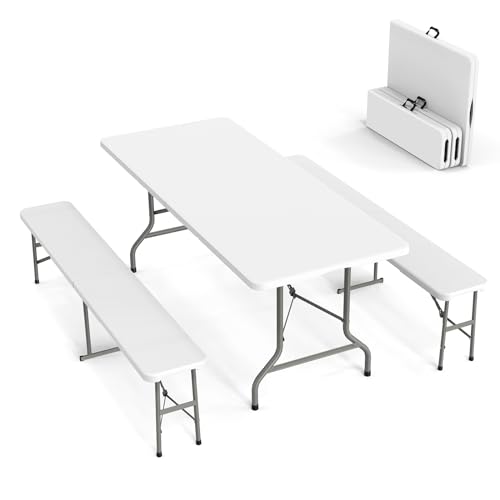
VINGLI Picnic Table Set with 2 Benches, 6 Feet Camping Table Chair Set,3-Piece Folding Furniture for Indoor or Outdoor Use, Smooth Tabletop, White
Check price on Amazon
EconoHome 6 Ft White Plastic Folding Table Set with 2 Benches – Heavy-Duty Picnic Table & Bench Set, Space-Saving, Indoor/Outdoor, Seats 6-8, Easy Storage & Transport
Check price on Amazon
HUAHUU 63" Farmhouse Dining Table Set for 4-6, Kitchen Table with 2 Benches, Space Saving 3-Piece Rectangle Wooden Dinette Table Set for Dining Room, Breakfast Nook, Small Space, Brown & White
Check price on Amazon
COSTWAY Dining Table Set for 4 w/Bench & 2 Chairs, Storage Racks, Brown | 4-Piece Kitchen Table Set, Metal Frame, Anti-Slip Foot Pads, Industrial Dinette Set for Small Space, Apartment, Home Office
Check price on Amazon
LUXOAK 3-Piece Wood Corner Dining Table Set for 4, Black & Walnut | Breakfast Nook, L-Shaped Corner Bench, Hidden Storage, Space-Saving Design for Small Spaces, Farmhouse Kitchen & Dining
Check price on Amazon
VECELO 43.3" Kitchen Dining Table Set for 4, Heavy-Duty Steel Frame & Wood-Grain Tabletop, Space-Saving Dinette Sets with 2 Benches for Breakfast Nook and Small Space, Walnut Brown
Check price on Amazon