
Upholstered Bar Stools With Backs Set of 4: Complete Buyer's Guide
Choosing a matching set of four upholstered bar stools with back support is one of the smartest ways to make a kitchen island or breakfast bar feel finished. This guide explains seat height, frame quality, upholstery tiers, and comfort details so you can buy with confidence.
Explore Recommended SetsIf you have been searching for upholstered bar stools with backs set of 4, you already know the basic product you want. The real questions are about fit: will the seat height work with your counter, will the backrest clear the overhang, will the fabric survive daily use, and will four matching stools look cohesive in your space? This guide answers those questions in practical terms.
A set of four is the most common configuration for kitchen islands and breakfast bars because it fills a typical three to four-seat run evenly. Buying as a set usually means matched frames, identical upholstery batches, and a consistent look that is hard to achieve when mixing separate purchases.
Quick summary: Match seat height to your counter first, then choose the frame material, then the upholstery tier. Getting the height right is the single most important decision, because a stool that is too tall or too short will be uncomfortable no matter how good the upholstery is. You can confirm height conventions in our guide to counter height versus bar height.
Best Upholstered Bar Stools With Backs Set of 4
⚠️ AFFILIATE DISCLOSURE: This website contains affiliate links. As an affiliate Associate, we earn from qualifying purchases. If you make a purchase through these links, we may receive a small commission at no additional cost to you. Read our full affiliate policy.

VATROS Counter Height Bar Stools Set of 4, 360° Swivel Upholstered Barstools with Backs and Metal Legs, 26" H Seat Height, Linen Fabric in Beige
Check price on Amazon
VATROS Counter Height Bar Stools Set of 4, 360° Swivel Upholstered Barstools with Backs and Metal Legs, 26" H Seat Height, Linen Fabric in Redish Sand
Check price on Amazon
GIANTEX 24" Farmhouse Bar Stools Set of 4, Cross Back Counter Height Chairs with Padded Linen Upholstered Seat & Footrest, Wooden Barstools for Kitchen Island, Dining Room, Cafe, Dark Brown & Cream
Check price on Amazon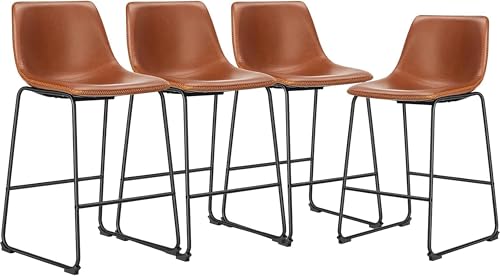
DUMOS Counter Height Bar Stools Set of 4, Faux Leather Metal Bar Chairs | Barstools with Back, Leg, Armless, Upholstered, Kitchen Island, Modern Design, 26 Inch, Brown
Check price on Amazon
FIRAVOE Counter Height Bar Stools Set of 4, Upholstered Barstools with Back, Bar Chairs with Thickened Metal Legs, PU Leather Counter Stools for Kitchen Island (Coffee Brown, 4Pcs 26" Counter Stools)
Check price on Amazon
VATROS Counter Height Bar Stools Set of 4, FSC Certified Upholstered Faux Leather Barstools with Back, Metal Base, 27" Seat Height, Modern Upholstered Counter Stools for Kitchen Island,Walnut Brown
Check price on Amazon
LUE BONA 26''H Swivel Bar Stools Set of 4, Counter Height Bar Stools with Backs, Lumbar Pillow and Black Metal Frames, Upholstered Modern Barstools for Kitchen Island, Linen Farbic, Linen Color
Check price on AmazonWhy Buy Upholstered Bar Stools in a Set of Four?
Four is the natural number for most residential kitchen islands. A typical island runs between 72 and 96 inches, which comfortably seats three or four people with 24 to 30 inches of space per person. Buying four stools together delivers several practical advantages:
- Matched upholstery: Fabric from the same production run means consistent dye lot and texture across all four seats.
- Uniform frame finish: Wood stains and metal powder coats can vary between batches, so a set keeps the color consistent.
- Simpler assembly: One instruction set, one hardware pack, and one shipping delivery.
- Cohesive design: A matching row of stools reads as intentional design rather than a collection of odds and ends.
- Easier replacements: Sets are often sold in standardized configurations, which simplifies future matching if one stool needs replacing.
If your seating run is shorter, consider a set of three counter stools instead, and if you need a taller seat for a pub-style table, our guide to extra tall bar stools with 32-inch seat height covers that category.
Seat Height: The Decision That Determines Comfort
Upholstered bar stools with backs are sold in two main height families, and choosing the wrong one is the most common buying mistake.
- Counter height stools: typically 24 to 26 inches from floor to seat top. These pair with kitchen islands and counters that are 34 to 36 inches tall.
- Bar height stools: typically 28 to 30 inches from floor to seat top. These pair with bar counters and pub tables that are 40 to 42 inches tall.
The rule of thumb is to leave 9 to 12 inches of clearance between the top of the seat and the underside of the counter or table. That gap gives knees room to move and lets you slide in and out comfortably. Measure your counter height first, then subtract that clearance range to find your target seat height.
Backrest height also matters. A backrest that rises above the countertop can look bulky from the living area, so in open-plan homes many buyers prefer a low or mid-back profile that tucks below the counter line. If you are still comparing categories, our article on counter height bar stools with back explains how the shorter format behaves in real kitchens.
Frame Construction and Build Quality
The upholstery gets the attention, but the frame determines how long the stool lasts. Upholstered bar stools with backs are typically built on one of three frame types:
- Solid hardwood frames: The most durable option, with mortise-and-tenon or doweled joints. Heavy-duty and stable, and the best choice for households with children or frequent guests.
- Metal frames: Steel or iron legs with welded or bolted joints. High-grade steel with a rust-proof finish is common in industrial and modern styles, and metal frames often include a built-in footrest.
- Engineered wood and composite frames: Common in entry-level sets. Adequate for light use, but check the weight rating and joint construction carefully.
Look for a weight capacity stated per stool, a footrest that is welded or bolted rather than glued, and floor glides that protect hard flooring. A reinforced apron under the seat is a good sign of solid build quality. If you prefer a mixed-material look, our guide to metal dining table legs shows how metal bases are finished and paired with other materials.
Upholstery Tiers: Matching Fabric to Real Life
Upholstered bar stools with backs are available across a wide range of fabric quality. Rather than thinking in terms of figures, it helps to classify sets by tier and match the tier to how the stools will actually be used.
| Tier | Typical Upholstery | Best For |
|---|---|---|
| Entry-level | Polyester blend, basic faux leather | Occasional seating, rental kitchens, low-traffic breakfast nooks |
| Mid-range | Performance fabric, bonded leather, linen blend | Everyday family use, open-plan kitchens, homes with pets |
| Premium | Top-grain leather, high-resilience foam, tailored seams | Daily use, formal kitchen islands, long-term investment |
| Luxury | Full-grain leather, velvet, designer performance textiles | Statement seating, high-end kitchens, design-led interiors |
Foam density is the hidden variable. A mid-range or premium set usually uses high-resilience foam that holds its shape for years, while entry-level sets often use lower-density foam that softens more quickly. If the stools will be used daily for meals, step up at least one tier from entry-level. For a broader look at how upholstered seating is specified, our page on a linen upholstered rolling dining armchair illustrates the material choices involved.
Back Design: Low, Mid, and Full Profiles
The backrest is what separates upholstered bar stools with backs from backless alternatives. There are three common profiles:
- Low back: Rises a few inches above the seat. Keeps sightlines open and looks unobtrusive from the living room. Good for open-plan layouts.
- Mid back: Reaches roughly to mid-back height. Offers noticeably better support for long meals while still fitting under many counter overhangs.
- Full back: Extends higher toward the shoulder line. The most supportive option for lounging and conversation, but visually heavier in a small room.
A backrest with a slight curve is more supportive than a flat panel. If you want arms as well, our guide to swivel bar stools with backs and arms explains how armrests affect clearance and rotation.
Footrests, Swivel Seats, and Other Comfort Features
On a stool, your feet rarely touch the floor, so the footrest does most of the support work. A footrest that sits 7 to 9 inches below the seat is comfortable for most adults. A padded or wide footrest is a meaningful upgrade for long meals.
Swivel seats are convenient for getting in and out of an island run without pushing the stool back, and a full 360-degree swivel is especially useful in tight corners. Some sets add a memory return, which rotates the seat back to a neutral position. If you like the swivel format, compare it against the fixed option in our swivel bar stools guide.
Pre-Purchase Measurement Checklist
- Counter or table height from floor to top: ______ inches
- Target seat height (counter minus 9 to 12 inches): ______ inches
- Clearance between seat top and counter underside: ______ inches
- Available width along the island or bar: ______ inches
- Width per stool including armrests: ______ inches
- Backrest height relative to counter overhang: ______
- Distance from stool to nearest wall or cabinet: ______ inches
- Floor type and glide compatibility: ______
Allow at least 6 inches between adjacent stools so elbows do not collide, and more if the stools have arms. If your space is tight, a small kitchen island may only take two or three stools, and a white kitchen island with seating often benefits from a lighter visual profile. For a wider look at seating formats, browse dining room chairs in a set of four.
Matching Stools to Your Kitchen Style
Upholstered bar stools with backs work across many interior styles. The frame and fabric should echo the room rather than compete with it.
- Modern and minimalist: Slim metal legs, a clean rectangular back, and a neutral performance fabric.
- Farmhouse and rustic: Wood frames in warm stains paired with linen-look upholstery. A wooden kitchen stool in a similar tone keeps the palette consistent.
- Industrial loft: Blackened steel frames, exposed stitching, and faux or top-grain leather.
- Coastal and light: Light oak or white frames with off-white or pale blue upholstery.
If your island is white, a white countertop stool set can blend into the cabinetry, while a darker upholstery adds contrast. For a broader layout discussion, our guide to kitchen island tables covers how seating position affects circulation.
Care and Maintenance for Upholstered Seating
Upholstered bar stools with backs are easy to maintain when you match the cleaning method to the fabric:
- Performance fabric and faux leather: Wipe with a damp cloth and mild soap. Avoid abrasive cleaners.
- Linen and cotton blends: Vacuum with a soft brush attachment and spot clean promptly.
- Velvet: Brush in one direction and keep away from direct sunlight to prevent fading.
- Leather: Use a leather conditioner a few times a year and keep the stools out of direct heat.
Tighten bolts after the first week of use and again every few months. Rotate the stools along the island so wear is spread evenly. For added protection in busy households, consider a waterproof seat cover on the seats most used by children.
Delivery and Assembly Expectations
Most sets of four arrive flat-packed or partially assembled. Typical assembly involves attaching the legs or base to the seat, fitting the footrest, and tightening the hardware. Allow 30 to 60 minutes for the full set with a second person helping to hold the frame upright.
Check the box for hardware count before starting, and tighten bolts in stages rather than fully securing one leg at a time. After the first week, re-tighten everything, since upholstered seats can settle slightly as the foam compresses.
Frequently Asked Questions
What seat height should upholstered bar stools with backs be?
Match the stool to the counter or table. For a standard bar counter around 40 to 42 inches tall, a 28 to 30-inch seat height is typical. For a 34 to 36-inch kitchen island, a 24 to 26-inch counter height seat works best. Leave 9 to 12 inches between the seat and the underside of the counter.
Are upholstered bar stools with backs comfortable for long meals?
Yes. A padded seat with a medium-density foam core and a supportive backrest is far more comfortable than a backless wooden stool. Look for high-resilience foam and a backrest that reaches at least mid-back for long dinners.
How do I clean upholstered bar stool fabric?
Check the fabric code first. Performance fabrics and faux leather wipe clean with a damp cloth and mild soap. Linen and velvet need gentle vacuuming and spot cleaning. Rotate the stools so wear is distributed evenly.
Do a set of four bar stools need assembly?
Most sets of four ship partially assembled or flat-packed. Typical assembly involves attaching legs, footrests, and the seat to the frame. Allow 30 to 60 minutes and check all bolts after the first week of use.
Can upholstered bar stools with backs fit under a counter overhang?
It depends on backrest height. Low and mid-back profiles often fit under a standard overhang, while full-back stools may sit proud of the counter line. Measure the overhang and the backrest height before ordering.
How much space do I need between four stools?
Allow at least 6 inches between adjacent stools, and more if they have arms or swivel seats. For four stools, a seating run of roughly 72 to 96 inches is comfortable.
Final Thoughts
Buying an upholstered bar stools with backs set of 4 comes down to three decisions in order: seat height, frame quality, and upholstery tier. Get the height right and the stools will feel natural at every meal. Choose a solid frame and a tier that matches daily use, and the set will hold its shape and appearance for years.
Use the product section above to compare recommended sets, then confirm your counter height and available width against the measurement checklist before ordering. If you are still weighing seating formats, our guide to dining room chairs with arms in a set of four offers a useful comparison for formal dining spaces.