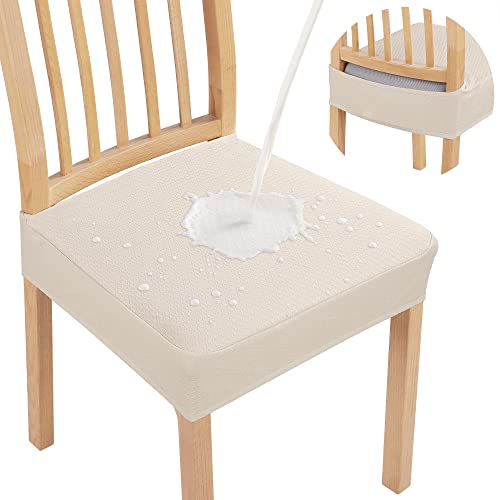
Why Waterproof Seat Covers Are Worth Considering
Dining chairs take more punishment than almost any other seat in the home. Between spilled drinks, dropped food, craft projects, and pets that claim the best chair, the upholstery faces a constant stream of small accidents. Waterproof seat covers for dining room chairs create a removable barrier that absorbs the impact of daily life while keeping the original fabric underneath intact.
The practical benefits go beyond spill protection. A well-chosen cover extends the useful life of your upholstered dining chairs by shielding them from fading, friction, and the gradual compression that builds up in high-use seats. If you have children, pets, or a busy household, a cover is often the simplest way to keep a formal dining room usable without constant anxiety.
- Blocks liquids from soaking into foam and fabric
- Reduces staining from oils, sauces, and dark beverages
- Protects against pet claws and general abrasion
- Makes cleaning a quick swap instead of a deep-clean project
- Lets you refresh the look of a chair without reupholstering
If your chairs have delicate upholstery or you have already invested in upholstery fabric for chairs that you want to preserve, a cover is a sensible layer of insurance. For anyone considering a longer-term refresh, pairing covers with a reupholstery project is covered in our guide to upholstering a chair.
Waterproof Materials Explained
The term "waterproof" covers a range of constructions, and the material you choose has the biggest effect on comfort, fit, and long-term performance. Most covers fall into one of four material families.
Polyester with Polyurethane Backing
The most common construction. The fabric face feels soft while the laminated backing blocks liquids. Durable, easy to wash, and widely available in stretch and fitted styles.
Stretch Spandex Blends
Thin, form-fitting, and comfortable. Stretch blends hug the seat shape closely, which makes them ideal for curved or padded chairs. Water resistance depends on the coating quality.
Quilted or Padded Covers
Add a layer of cushioning on top of the existing seat. Popular in family homes because they soften hard chairs and absorb impact. Slightly bulkier and can shift the seat height feel.
Vinyl and Faux Leather
Fully impermeable and wipe-clean. The most protective option for heavy spill zones, but they feel firmer and warmer than fabric. Often used in commercial-grade settings.
If you want a fabric cover that still blocks liquids, look for a laminated polyurethane backing rather than a spray-on treatment. Spray treatments fade after washing cycles, while laminated backing holds up to repeated laundering. For chairs that sit near windows or in humid rooms, a waterproof cover also pairs well with broader care routines like the ones in our dining care and maintenance resources.
Seat-Only Covers vs Full Slipcovers
The second big decision is coverage. Seat-only covers protect the cushion you actually sit on, while full slipcovers wrap the entire chair including the back and sometimes the arms. Each has a clear use case.
Seat-Only Covers
These are the simplest and most forgiving option. They slip over the seat cushion, tuck between the seat and backrest, and secure with elastic or ties. Because they do not need to accommodate the backrest shape, they fit a wider range of chair designs, including mid-century modern upholstered dining chairs and other chairs with distinctive silhouettes.
- Best for protecting the high-wear seating surface
- Works well with chairs that have arms or unusual backrests
- Less fabric to wash and dry
- Leaves the chair's visual character mostly intact
Full Slipcovers
Full slipcovers cover the seat and backrest, giving a more uniform look and protecting the entire upholstered surface. They are a good fit for dining chairs with simple shapes, such as upholstered dining room chairs with plain backs. Chairs with tufting, wings, or pronounced curves are harder to cover well and may show pulling or bunching.
- Protects the backrest from oils and friction
- Creates a more uniform look across a mismatched set
- Requires a more precise fit to look intentional
- More fabric means more washing volume
For households that only worry about the seat surface, seat-only covers are usually enough. For chairs with light-colored fabric or a formal dining room that sees occasional use, full slipcovers offer more complete protection. If you have a set of upholstered dining chairs set of 4 or a larger six-chair set, matching seat-only covers are often the most practical way to protect the whole group.
Market Tiers Compared
Waterproof seat covers range from basic protective layers to high-end fitted covers designed for daily life. The table below compares the tiers using consistent, relative descriptors so you can match a tier to your needs without relying on transient figures.
| Tier | Best For | Material Character | Durability | Fit & Feel |
|---|---|---|---|---|
| Entry-Level | Occasional protection, rentals, short-term use | Thin polyester with basic backing | Moderate; may wear at seams over time | Loose fit; noticeable fabric movement |
| Mid-Range | Family dining rooms, daily use with children | Reinforced polyester or stretch blend with laminated backing | Solid; holds up to repeated washing | Snug fit; comfortable for long meals |
| Premium | Formal dining rooms, high-quality upholstery | High-grade stretch fabrics with durable waterproof membrane | Excellent; reinforced seams and elastic | Tailored look; minimal bulk |
| Luxury / Commercial-Grade | Heavy daily use, hospitality-style durability | Dense woven fabric or premium faux leather | Outstanding; long-term investment | Precision fit; stays in place under heavy use |
Mid-range covers are usually the sweet spot for most homes. They are feature-rich for their class, hold their shape after washing, and offer a comfortable balance between protection and the original feel of the chair. Premium and luxury tiers make sense when the underlying chair is a long-term investment or when the cover needs to look nearly invisible.
How to Measure and Install Covers Properly
A waterproof cover only works as well as its fit. Gaps at the edges let liquids run underneath, and loose fabric bunches and wears faster. Before ordering, take three measurements: seat width at the widest point, seat depth from front edge to backrest, and seat thickness including any existing cushioning.
- Measure the seat surface. Use a soft tape and note the widest width and the deepest depth. Add a small margin for tuck-in.
- Check the seat-to-back join. Some covers tuck into the crease between seat and back; others wrap around the backrest. Confirm the cover type matches your chair construction.
- Test the anchoring method. Elastic bands, ties, and hook-and-loop straps all behave differently. Elastic is easiest to install but can roll on slick surfaces; ties hold firmer but need anchor points.
- Install front to back. Slide the cover over the front edge first, then work it toward the backrest. Smooth out wrinkles as you go rather than pulling everything tight at once.
- Let it settle. Fabric covers relax slightly after a day of use. Re-tuck the edges after the first meal to lock in the final fit.
If your chairs are part of a larger refresh, the same measurement discipline applies to other surfaces, such as a waterproof cover for table protection. Matching protection across seats and tabletop keeps the whole dining area consistent and easier to clean.
Care and Maintenance Tips
Waterproof covers are low-maintenance, but a few habits keep them performing longer. Shake off crumbs after meals, wipe liquid spills promptly, and wash covers before stains set. Most fabric covers can be machine washed on a gentle cycle and air dried; high heat breaks down waterproof laminates faster than anything else.
- Wash fabric covers on a gentle cycle with mild detergent
- Air dry whenever possible; avoid high-heat tumble drying
- Wipe vinyl and faux leather covers with a damp cloth
- Rotate covers between chairs to even out wear
- Check elastic and seams periodically for stretching
For chairs with original upholstery you want to preserve, combine covers with routine care such as the guidance in our upholstery cleaning article. If you are also protecting the table itself, see our tips on table pads and protectors.
Frequently Asked Questions
Are waterproof seat covers for dining room chairs machine washable?
Most fabric-based waterproof covers are machine washable on a gentle cycle. Mid-range and premium tiers with laminated backing tolerate repeated washing well, while entry-level covers may need hand washing to preserve the coating.
Will waterproof covers fit chairs with arms or tufted backs?
Seat-only covers fit most armchairs because they wrap only the seat cushion. Full slipcovers for armchairs require arm-specific or stretch designs. Tufted backs need stretch fabrics with generous elasticity to avoid pulling at the buttons.
Do waterproof seat covers change the feel of the chair?
Entry-level covers add noticeable thickness, while mid-range and premium stretch fabrics sit closer to the original upholstery. Quilted and padded tiers add cushioning but slightly change the seat height.
How long do waterproof dining chair covers last?
Starter-tier covers typically last one to two years of daily use. Mid-range covers with reinforced seams last three to five years, and premium or commercial-grade tiers can last many years with proper care.
Can I use the same covers on outdoor or patio chairs?
Dining chair covers are designed for indoor upholstery. Outdoor seating needs weather-resistant covers made for sun and rain exposure. If you are furnishing a patio, explore our outdoor dining table and outdoor bar furniture guides for appropriate protection.
What if my chair has a very rounded or unusual seat shape?
Stretch covers are the most forgiving option for rounded seats. For highly unusual shapes, seat-only covers with elastic edges generally fit better than full slipcovers. If you are comparing chair styles before buying, our upholstered mid-century modern dining chairs guide covers common seat profiles.