What Is a Bar Height Stool? Complete Guide to Bar Stool Height
Everything you need to know about bar height stools — seat height ranges, clearance rules, counter versus bar height, and how to pick the right stool for your kitchen island or home bar.
Quick answer: A bar height stool is a stool with a seat height of roughly 28 to 33 inches (71–84 cm), designed to pair with a bar surface or counter that stands about 40 to 42 inches (102–107 cm) tall. It is taller than a counter height stool and is the standard seating choice for home bars, pub tables, and raised bar counters.
What Exactly Is a Bar Height Stool?
A bar height stool is a tall seat built specifically to match the elevation of a bar-height surface. In residential and commercial settings, "bar height" refers to a work or dining surface that stands around 40 to 42 inches from the floor — noticeably taller than a standard kitchen counter, which typically sits at 36 inches.
Because the surface is higher, the stool must be higher too. A bar height stool usually has a seat that sits between 28 and 33 inches off the ground. This range gives the seated person enough legroom under the bar top while keeping their arms at a comfortable resting angle on the surface. If you are still comparing the two main stool categories, our guide on bar height vs counter height stools breaks down the differences side by side.
Bar height stools appear in many forms — backless, with a low back, with a full backrest, swivel, stationary, upholstered, metal, wood, and rattan. The height standard stays the same regardless of style, which makes it easy to shop once you know your surface height.
Bar Height Stool Seat Height Ranges
The table below summarizes the three common stool height categories so you can match a stool to your surface at a glance. The "clearance" figure is the gap between the top of the seat and the underside of the counter or bar — the space your legs need to sit comfortably.
| Stool Category |
Typical Seat Height |
Pairs With Surface Height |
Typical Clearance |
Best For |
| Standard / Dining Height |
17–19 in (43–48 cm) |
28–30 in (71–76 cm) |
9–12 in |
Standard dining tables |
| Counter Height |
24–27 in (61–69 cm) |
34–36 in (86–91 cm) |
9–12 in |
Kitchen counters, counter height islands |
| Bar Height |
28–33 in (71–84 cm) |
40–42 in (102–107 cm) |
9–12 in |
Home bars, pub tables, raised bar counters |
| Extra Tall / Spectator |
34–36 in (86–91 cm) |
44–46 in (112–117 cm) |
9–12 in |
Commercial bars, standing-height counters |
The 9-to-12-inch clearance rule is the single most useful measurement when shopping. If the gap is too small, your knees hit the underside of the counter. If it is too large, the stool feels disconnected from the surface and you end up leaning awkwardly. Aim for about 10 inches of clearance as a starting point, then adjust based on your body height and the thickness of the countertop.
Bar Height vs Counter Height: How to Tell Them Apart
The most common confusion in stool shopping is mixing up bar height and counter height. The difference is about four inches at the seat and about six inches at the surface, but those few inches change how a space functions.
- Counter height is the standard kitchen counter elevation — typically 36 inches. It is comfortable for food prep, casual meals, and working while standing. Counter height stools usually have seats of 24 to 27 inches.
- Bar height is taller — typically 40 to 42 inches. It is designed for social seating, drinks, and standing-level conversation. Bar height stools usually have seats of 28 to 33 inches.
- Mixed-height islands sometimes combine a lower prep counter with a raised bar ledge. In that case, the raised ledge needs bar height stools while the lower counter needs counter height stools.
If you are unsure which category your surface belongs to, measure from the floor to the top of the counter — not to the underside — and compare it to the table above. For a deeper comparison of the two standards, read our breakdown of counter height vs bar height stools and our guide on the difference between counter height and bar height.
The 10-Inch Rule of Thumb
Whichever stool you choose, the seat should sit roughly 9 to 12 inches below the surface you are sitting at. This single rule prevents most fit problems, whether you are outfitting a home bar, a kitchen island, or a pub-style dining table. When in doubt, measure the surface first and pick the stool second.
Where Bar Height Stools Are Typically Used
Bar height stools are versatile, but they are most at home in a few specific setups. Knowing where they fit helps you decide whether your project calls for bar height or counter height seating.
- Home bars and wet bars: Built-in or freestanding bars are usually constructed at 40 to 42 inches, making bar height stools the natural match. If your bar includes a sink or prep area, our guide on wet bar with sink layouts covers how seating height affects the surrounding flow.
- Pub-style dining tables: Taller-than-standard dining tables, sometimes called pub tables, are often designed at bar height. Pair them with bar height stools for a cohesive set, as shown in our overview of a pub style dining table and chairs.
- Raised kitchen islands: Some islands feature a two-tier design where the raised ledge is bar height while the working counter is standard height.
- Outdoor bar counters: Patio bar setups and outdoor bar furniture frequently use bar height seating. Our guide to outdoor bar furniture explains how weather-resistant materials pair with the taller seat height.
- Basement and game-room bars: Entertainment spaces often include a bar-height counter for socializing and watching screens.
Types of Bar Height Stools
Bar height stools come in several construction styles, and the right choice depends on how you use the space, how much back support you want, and the design language of the room.
Backless Bar Height Stools
Backless stools tuck completely under the counter, which keeps sightlines open and makes small spaces feel larger. They work well at pass-through counters and in open-concept kitchens where you do not want visual clutter. The trade-off is less support for long sitting sessions.
Bar Height Stools With Backs
Stools with backrests offer more comfort for lingering meals and conversation. Low-back designs keep the silhouette light, while full-back designs feel closer to a bar chair. Our guide to swivel bar stools with backs and arms covers how back and arm support change the footprint and comfort of a bar stool.
Swivel Bar Height Stools
Swivel mechanisms let you turn toward the kitchen, the TV, or a conversation partner without getting up. They are popular at home bars and game rooms. Sets are common for larger counters — see our overview of a swivel bar stool set with backs for a sense of how they are typically bundled.
Rattan and Woven Bar Height Stools
Woven and rattan styles bring a relaxed, coastal or boho feel to a bar area. They pair especially well with light-filled kitchens and covered patios. Our article on rattan bar stools with backs explores how the material handles different environments.
Wood and Metal Bar Height Stools
Wood stools suit farmhouse, traditional, and mid-century interiors, while metal stools lean industrial or modern. Walnut finishes add warmth and pair well with wood dining tables. For a closer look at materials and finishes in this category, browse our notes on walnut bar stools and vintage bar stools.
Western and Statement Bar Height Stools
For themed spaces, ranch-style or lodge interiors, western bar stools add character with leather, nailhead trim, and rustic wood. They are a strong fit for cabins and country kitchens.
Bar Height Stool Construction Tiers
Bar stools are built across a wide range of construction quality. Instead of focusing on numeric figures, it helps to think in terms of market tiers, which describe where a stool sits relative to others in the category.
Entry-Level Tier
Basic frames, simple hardware, and lightweight materials. Suitable for occasional seating, rentals, or short-term setups where the stool is not used daily.
Mid-Range Tier
More consistent frame welds, smoother swivel mechanisms, and better upholstery. A solid choice for daily household use in kitchens and home bars.
Premium Tier
Heavier frames, reinforced joints, higher-grade upholstery, and more refined finishes. Built for frequent use and longer sitting sessions.
Commercial-Grade Tier
Designed for high-traffic hospitality environments, with heavy-duty construction, replaceable components, and stricter durability standards.
For a typical home bar or kitchen island, the mid-range tier usually balances comfort, durability, and design choice well. Premium and commercial-grade options make more sense when the stools will be used every day by a large household or in a rental property. Entry-level stools are often a reasonable fit for seasonal outdoor seating or short-term arrangements.
How to Measure for Bar Height Stools
Measuring correctly takes only a few minutes and prevents the most common stool-buying mistakes. Follow these steps before you shop.
- Step 1 — Measure the surface height. Run a tape measure from the floor straight up to the top of the bar or counter. Do this in the exact spot where the stool will sit, since floors are not always perfectly level.
- Step 2 — Subtract 9 to 12 inches. The result is your target seat height range. If your bar top is 42 inches, for example, aim for a seat around 30 to 33 inches.
- Step 3 — Check the countertop overhang. Stools need knee room under the counter. A shallow overhang limits how far the stool can tuck in; a deeper overhang allows more flexibility.
- Step 4 — Consider the stool footprint. Backless stools need less depth than full-back stools, which matters if the bar is close to a wall or walkway.
- Step 5 — Account for the user. Taller users may prefer the upper end of the bar height range, while shorter users may prefer the lower end or a stool with a footrest placed higher up.
If your setup is still being planned, the type of surface you choose matters as much as the stool. For example, a marble top dining table or a solid wood extendable farmhouse dining table may be set at a different height than a dedicated bar counter, and the stool should follow the surface rather than the other way around.
Comfort and Safety Considerations
Because bar height stools place the user higher off the ground, a few comfort and safety details matter more than they do at dining height.
- Footrest placement: A footrest should let the user rest their feet without dangling. A well-placed footrest reduces pressure on the legs and makes longer sitting sessions comfortable.
- Stability: Look for a wide base or splayed legs that resist tipping. Swivel stools should have a stable, centered pivot.
- Back support: If the stool will be used for meals rather than quick drinks, a backrest is worth prioritizing.
- Floor protection: Glides and felt pads protect hard floors and reduce noise in open-plan homes.
- Weight capacity: Check the stated capacity against the intended users, especially for stools in shared or guest spaces.
For households with young children or pets, backless stools are easier to clean and less likely to be climbed, while stools with backs offer more support for older users.
Matching Bar Height Stools to Your Space
Bar height stools can either blend into a space or act as a design accent. A few principles help the seating feel intentional rather than added on.
- Echo the room's materials. Wood stools in a warm-toned kitchen, metal stools in an industrial loft, and rattan stools in a coastal home all feel more cohesive than mixed signals.
- Consider the countertop. A tempered glass table top or a stone bar counter reads differently with wood versus metal stools. Warmer stools soften cool surfaces; cooler stools keep a crisp, modern look.
- Watch the sightline. Backless stools keep views open between the kitchen and living areas, which matters in open-concept homes.
- Coordinate with dining seating. If the bar is visible from the dining table, tie the stool finishes to the dining chairs. Our guides on walnut dining chairs and upholstered dining chairs show how finishes can carry across a room.
Recommended Bar Height Stools and Bar Seating
⚠️ AFFILIATE DISCLOSURE: This website contains affiliate links. As an affiliate Associate, we earn from qualifying purchases. If you make a purchase through these links, we may receive a small commission at no additional cost to you.
Read our full affiliate policy.

GRUSIGN Bar Stools Set of 2, Modern Swivel Adjustable Bar Chairs, Faux Leather Upholstered Counter Height Bar Stools with Backrest, Comfort Barstools for Kitchen Island, Home Bar, Black
Check price on Amazon
⚠️ Note: The purchase links above are affiliate links. As an Amazon Associate, we earn from qualifying purchases at no additional cost to you.
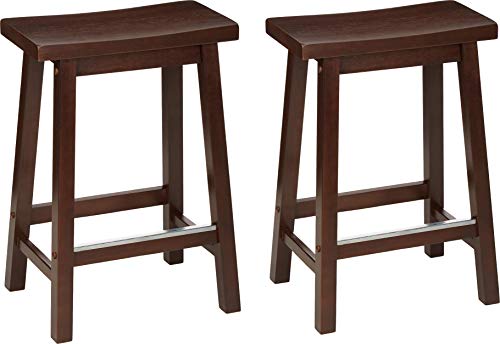
Amazon Basics Solid Wood Saddle-Seat Counter Height Bar Stools for Kitchen Island with Footrest, 24-Inch Height, Walnut, Set of 2
Check price on Amazon
⚠️ Note: The purchase links above are affiliate links. As an Amazon Associate, we earn from qualifying purchases at no additional cost to you.

HOOBRO Bar Stools, Set of 2 Bar Chairs, 23.6 Inch Saddle Stools, Kitchen Counter Seat with Footrests, Industrial Barstools for Dining Room, Kitchen, Counter, Rustic Brown and Black BF02MD01
Check price on Amazon
⚠️ Note: The purchase links above are affiliate links. As an Amazon Associate, we earn from qualifying purchases at no additional cost to you.

DUMOS 24 Inch Counter Height Bar Stools Set of 4, Kitchen Island, Brown | Backless Saddle Seat, PU Leather, Metal Base Footrest for Dining Room, Kitchen
Check price on Amazon
⚠️ Note: The purchase links above are affiliate links. As an Amazon Associate, we earn from qualifying purchases at no additional cost to you.

VATROS 26" H Counter Height Bar Stools Set of 4, Modern Barrel Counter Stools with Backrest and Arms, Linen Fabric Upholstered Accent Barstools for Kitchen Island,Support 450 LBS (Beige)
Check price on Amazon
⚠️ Note: The purchase links above are affiliate links. As an Amazon Associate, we earn from qualifying purchases at no additional cost to you.

Nalupatio Modern Bar Stools Set of 2, Faux Leather Upholstered Swivel Bar Stools, Adjustable Counter Height Bar Chairs with Back for Kitchen Island, Rust
Check price on Amazon
⚠️ Note: The purchase links above are affiliate links. As an Amazon Associate, we earn from qualifying purchases at no additional cost to you.

PrimeZone Swivel Bar Stools Set of 2, 34 Inch Extra Tall Bar Height | Black Faux Leather, High Backrest, Solid Rubberwood Frame, Wrap-around Footrest, Barstools for Kitchen Island, Pub
Check price on Amazon
⚠️ Note: The purchase links above are affiliate links. As an Amazon Associate, we earn from qualifying purchases at no additional cost to you.

Signature Design by Ashley 30" Swivel Bar Height Bar Stool, Antiqued Black | Solid wood and metal frame, Easy-clean black faux leather seat with 360 swivel, Valebeck Series
Check price on Amazon
⚠️ Note: The purchase links above are affiliate links. As an Amazon Associate, we earn from qualifying purchases at no additional cost to you.
Frequently Asked Questions About Bar Height Stools
What is the standard seat height for a bar height stool?
Most bar height stools have a seat height between 28 and 33 inches (71–84 cm). The exact number within that range depends on the bar top height and the user's body proportions. A bar top of 42 inches typically calls for a seat around 30 to 33 inches, while a 40-inch bar may pair well with a 28 to 30-inch seat.
How do I know if my counter needs bar height or counter height stools?
Measure from the floor to the top of the counter. If it is about 36 inches, you need counter height stools with seats around 24 to 27 inches. If it is about 40 to 42 inches, you need bar height stools with seats around 28 to 33 inches. If your counter is somewhere between, measure carefully and choose the stool that leaves about 10 inches of clearance.
Can I use bar height stools at a kitchen island?
Yes, but only if the island has a raised bar ledge at bar height. Standard-height islands are designed for counter height stools. Mixing bar height stools with a standard counter leaves too little clearance and makes sitting uncomfortable.
Are bar height stools comfortable for everyday use?
Bar height stools can be comfortable for daily use if they have a good footrest, a supportive seat, and — for longer meals — a backrest. Backless stools are better suited to short sessions like drinks and snacks, while stools with backs and arms are more comfortable for full meals.
What is the difference between a bar stool and a bar chair?
The terms are often used interchangeably. In general, a "stool" refers to a backless or low-back seat, while a "chair" implies a taller backrest and sometimes arms. Both can be built at bar height, so the distinction is about back support and styling rather than height.
How many bar height stools fit at a bar?
A common rule is to allow about 24 inches of width per stool for comfortable seating, and at least 26 to 30 inches for stools with arms. A 6-foot bar comfortably seats three backless stools, while a 8-foot bar can often seat four. Always leave a little breathing room at the ends of the bar.
Related Guides for Bar and Counter Seating
If you are outfitting a bar area, these related guides can help you finish the space:
