
White Tulip Table: The Complete Buying & Styling Guide
Everything you need to know about the iconic pedestal dining table — from material choices and sizing to styling tips and long-term care, so you can choose with confidence.
In This Guide
- What Is a White Tulip Table?
- Why the Tulip Silhouette Works in Modern Dining Rooms
- Materials & Construction: What to Look For
- Quality Tiers: From Entry-Level to Luxury
- Sizing & Seating Capacity Guide
- Choosing the Right Size for Your Space
- Styling a White Tulip Table
- Care & Maintenance
- Frequently Asked Questions
What Is a White Tulip Table?
A white tulip table is a pedestal-style dining table characterized by a smooth, rounded tabletop supported by a single sculptural base that flares at the bottom like a tulip stem. The design eliminates the four corner legs found on conventional dining tables, creating an uninterrupted, fluid form that has become a hallmark of mid-century modern interiors.
The white tulip table is inspired by the celebrated Tulip Table designed by Eero Saarinen in the 1950s. Saarinen sought to free dining spaces from the "slum of legs" that cluttered the area beneath tables. The result was a pedestal base that delivers both structural stability and visual lightness — a design language that remains relevant in contemporary homes today.
Modern white tulip tables are available in a wide range of sizes, finishes, and materials. Round versions are the most recognizable, but oval and rectangular tulip tables also exist to accommodate larger dining groups. The white colorway is especially popular because it reflects light, blends with nearly any palette, and amplifies the table's sculptural quality.
Why the Tulip Silhouette Works in Modern Dining Rooms
The tulip silhouette offers practical and aesthetic advantages that explain its enduring popularity:
- Seating flexibility: Without corner legs, chairs can be positioned from any angle. This is particularly useful for round tables, where guests can slide in and out without negotiating a leg.
- Space efficiency: The absence of protruding legs means the table footprint is more compact. In small dining rooms, this can translate into meaningful square footage saved.
- Visual lightness: The tapered pedestal draws the eye upward and outward, making the table feel airy rather than bulky — even in white, a color that might otherwise feel heavy in a large mass.
- Clean sightlines: In open-plan homes, a pedestal table allows sightlines to flow from the kitchen to the living area without interruption.
- Timeless appeal: The tulip form has remained in production for more than six decades. It is not a trend piece; it is a design classic that adapts to changing decor.
White, in particular, amplifies these qualities. It reflects ambient light, pairs effortlessly with wood tones, natural fibers, and bold accents, and serves as a neutral canvas for seasonal styling. For homeowners researching pedestal alternatives, a white dining table in the tulip style often becomes the anchor of the room's design story.
Materials & Construction: What to Look For
The quality of a white tulip table depends heavily on its materials and construction. Understanding the trade-offs helps you match the table to your household's needs and aesthetic goals.
Tabletop Materials
- Laminate: Common in entry-level and mid-range models. Laminate tops are easy to clean, resistant to stains, and offer consistent white color. They are not heat-resistant, so trivets are essential. High-pressure laminate (HPL) is more durable than standard laminate.
- Marble and engineered stone: Found in premium and luxury tiers. Genuine marble delivers unmatched depth and coolness, but requires sealing and careful maintenance. Engineered stone (quartz composite) offers similar visual appeal with greater stain resistance.
- Glass: Tempered glass tops create an even lighter visual effect. They are scratch-resistant but show fingerprints and require more frequent cleaning. Glass tulip tables are often paired with metal bases.
- Wood veneer: Less common in white tulip tables, but some models use white-painted or whitewashed wood veneer over engineered wood. These offer a warmer feel than laminate.
Pedestal Base Materials
- Cast aluminum: The classic choice for authentic tulip designs. Cast aluminum is heavy, stable, and resistant to rust when properly coated. Mid-range and premium models typically use this material.
- Steel: Often used in entry-level models. Powder-coated steel is durable but can be lighter than cast aluminum, which may affect stability in larger table sizes.
- Fiberglass and composite: Used in some mid-range reproductions. These can mimic the look of cast aluminum at a lower weight, but quality varies significantly between manufacturers.
Construction Details to Inspect
- Weighted base: A heavy base prevents tipping, especially in round tables where guests may lean on one side. Look for models that specify a weighted or ballasted pedestal.
- Base-to-top connection: The joint between the pedestal and tabletop should be reinforced with a metal plate or sturdy bracket. This is a common failure point in low-quality models.
- Finish quality: Powder-coated finishes resist chipping better than painted finishes. Check that the coating is uniform, with no thin spots or drips.
- Floor protection: A felt or rubber ring at the base protects flooring and adds stability. Some models include adjustable glides for uneven floors.
Quality Tiers: From Entry-Level to Luxury
White tulip tables span a broad spectrum of quality and craftsmanship. To help you orient your research, we use a four-tier classification system based on materials, construction, and finish quality. No numerical figures are involved — these descriptors reflect relative market positioning.
| Tier | Typical Materials | Best For | What to Expect |
|---|---|---|---|
| Entry-Level | Laminate top, powder-coated steel base | First apartments, casual dining, temporary setups | Lightweight construction, basic finish, adequate for light use. Verify base stability before purchase. |
| Mid-Range | HPL or glass top, cast aluminum base | Family dining, everyday use, style-conscious buyers | Better weight distribution, smoother finish, improved base-to-top connection. A solid choice for the tier. |
| Premium | Engineered stone or marble top, weighted cast aluminum base | Design-focused homes, frequent entertaining | Refined details, durable surfaces, stable pedestal. Feature-rich for its class with long-term reliability. |
| Luxury | Genuine marble, designer-grade cast base, artisanal finishing | High-end interiors, collector-grade furniture | Exceptional material depth, precision joinery, signature design provenance. A long-term investment. |
When comparing tiers, consider that mid-range models often deliver the most balanced combination of durability and design fidelity. Entry-level tables can work well in low-traffic settings, while premium and luxury tiers justify their positioning through material quality and construction refinement. For those exploring broader pedestal options, our round dining table set with upholstered chairs guide offers complementary perspective.
Sizing & Seating Capacity Guide
White tulip tables are most commonly round, but oval and rectangular variants exist. The right size depends on your room dimensions, household size, and entertaining habits.
Round Tulip Tables
- 36-inch diameter: Seats 2–4 people. Ideal for breakfast nooks, apartments, and compact kitchens.
- 42–48-inch diameter: Seats 4 people comfortably, 5 in a pinch. A versatile size for most dining rooms.
- 54–60-inch diameter: Seats 6–8 people. Suitable for larger dining areas and families that host regularly.
Oval and Rectangular Tulip Tables
- Oval tables: Typically 60–84 inches long, seating 6–8. The oval form softens the pedestal silhouette and works well in narrow rooms.
- Rectangular tables: Less common in true tulip designs but available in some collections. Check that the pedestal is reinforced for the longer span.
Clearance and Room Fit
Allow at least 36 inches of clearance between the table edge and walls or other furniture to permit comfortable chair movement. For a round table, measure the diameter plus 72 inches (36 inches on each side) to estimate the minimum room dimension. In tight spaces, a smaller diameter with a pedestal base often outperforms a larger rectangular table because chairs can tuck in from any side.
Choosing the Right Size for Your Space
Beyond raw dimensions, consider how the table will function in your daily life and how it interacts with surrounding furniture.
Small Dining Rooms and Apartments
In compact spaces, a 36–42-inch round white tulip table is often the sweet spot. The pedestal base eliminates visual clutter, and the white finish reflects light, making the room feel larger. Pair with modern dining chairs set of 4 that can tuck fully beneath the tabletop.
Open-Concept Kitchens and Living Areas
A 48–54-inch round tulip table serves as a natural transition zone between kitchen and living space. The clean silhouette does not block sightlines, and the white surface reads as an extension of the room rather than an obstacle. Consider a kitchen table with chairs that fit underneath for maximum floor efficiency.
Formal Dining Rooms
For dedicated dining rooms, a 54–60-inch round or an oval tulip table accommodates six to eight guests. Pair with upholstered dining chairs with arms set of 2 for a polished, cohesive look. The white tabletop provides a neutral backdrop for centerpieces and table linens.
Multi-Purpose and Family Spaces
If the table doubles as a homework station or craft surface, prioritize a laminate or engineered stone top that resists scratches and stains. A mid-range tier model with a weighted base offers the stability needed for daily family use. For households that frequently reconfigure furniture, a tall folding table can serve as a flexible auxiliary option.
Recommended White Tulip Table Products
⚠️ AFFILIATE DISCLOSURE: This website contains affiliate links. As an affiliate Associate, we earn from qualifying purchases. If you make a purchase through these links, we may receive a small commission at no additional cost to you. Read our full affiliate policy.
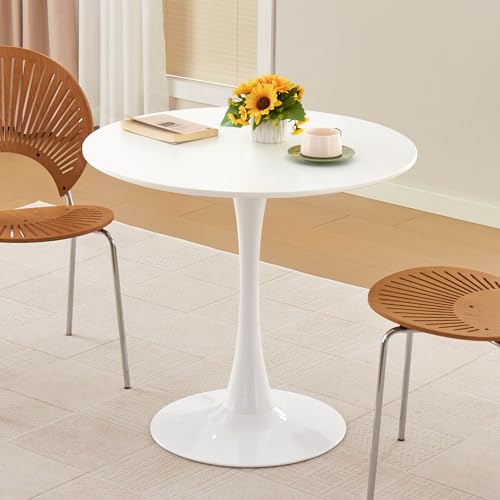
Hansweld Round Dining Table, 31.5" Tulip Table (White) | with Thickened Tabletop & Metal Pedestal, Mid Century Modern Bistro Circle Table for Kitchen, Small Places, Dinner Room, Cafe
Check price on Amazon
MIHUIPINH Modern White Round Dining Table 24 inch, White Tulip Round Table for Two People, Mid Century Round Coffee Table for Living Room and Kitchen
Check price on Amazon
TRUNBACK 31.5" Modern Round Table, Tulip Base, Dining Coffee Table, White | Seats 2-4, Sturdy Base, Easy Assembly, Versatile, Home Office, Living Room, Kitchen, Leisure, Durable, Chic Design
Check price on Amazon
Hansweld Round Dining Table, 24" Tulip Table (White) | with Thickened Tabletop & Metal Pedestal, Mid Century Modern Bistro Circle Table for Kitchen, Small Places, Dinner Room, Cafe
Check price on Amazon
HYYTEIBL 31.2" Tulip Dining Table, White, Perfect for 2-4 People, Mid-Century Modern Style, Round MDF Top with Sturdy Base for Dining Room, Living Room, Cafe
Check price on Amazon
Elepbear 27.5" Tulip Round Dining Table with Metal Pedestal White | Mid-Century Modern Circle Table for 2-4 People for Small Kitchen Living Room, Cafe, Bistro
Check price on Amazon
Round Dining Table White with Pedestal Base,31.5" Modern Tulip Dining Room Table for 1-4 People,Pedestal Dining Table with Round Top for Kitchen Living Room (Tulip Dining Table White)
Check price on Amazon
GIANTEX White Round Dining Table, 31.5" Modern Tulip Kitchen Table with 0.7” Thickened Tabletop & Sturdy Metal Pedestal, Mid-Century Leisure Table for Small Places, Dining Room, Living Room, Cafe
Check price on AmazonStyling a White Tulip Table
The white tulip table is a versatile canvas. Its neutral surface and sculptural form support a range of styling directions, from minimalist to layered and eclectic.
Centerpieces and Table Decor
Because the tabletop is uninterrupted, centerpieces read as intentional focal points. A low bowl of seasonal fruit, a pair of tapered candles, or a simple ceramic vase with branches can anchor the table without overwhelming it. Avoid tall arrangements that block conversation; the tulip table's open profile invites low, horizontal compositions.
Linens and Textiles
A white table benefits from texture contrast. Natural linen runners in oatmeal or sage, woven placemats, and cloth napkins in muted tones add warmth. For formal occasions, a vinyl tablecloth with flannel backing 60 x 84 offers protection with a clean drape. Keep the palette restrained so the table's silhouette remains the star.
Seating Pairings
The tulip table pairs well with a variety of chair styles. For a cohesive mid-century look, choose molded shell chairs or upholstered seats with tapered legs. For contrast, white dining table chairs can create a monochromatic effect, while woven or rattan options add warmth. A upholstered storage bench on one side can maximize seating in narrow rooms.
Lighting and Ambiance
A pendant or chandelier hung 30–36 inches above the tabletop completes the composition. The round shape of the tulip table naturally centers a circular fixture. Dimmer switches allow the same table to transition from bright breakfasts to intimate dinners.
Care & Maintenance
Proper care extends the life of your white tulip table and preserves its appearance. The approach depends on the tabletop material.
Laminate and Glass Tops
- Wipe daily with a soft, damp cloth and mild dish soap.
- Avoid abrasive pads and harsh chemicals that can dull the surface.
- Use trivets for hot dishes; laminate can scorch under direct heat.
- For glass, use a glass cleaner and a microfiber cloth to prevent streaks.
Marble and Stone Tops
- Clean with a pH-neutral stone cleaner; avoid acidic products like vinegar or lemon juice.
- Seal the surface periodically according to the manufacturer's guidance.
- Blot spills immediately to prevent staining, especially red wine, coffee, and oils.
- Use coasters and felt-backed decor to prevent scratches.
Pedestal Base
- Dust weekly with a soft cloth or microfiber duster.
- For powder-coated bases, wipe with a damp cloth; avoid abrasive cleaners that can chip the coating.
- Check the base-to-top connection periodically and tighten any fasteners as needed.
- Inspect the floor-protection ring or glides for wear and replace if necessary.
Long-Term Upkeep
Avoid placing the table in direct, prolonged sunlight, which can yellow white finishes over time. If the table must sit near a window, rotate it periodically to ensure even exposure. For households with pets, trim claws and use placemats to reduce surface wear. With routine care, a quality white tulip table can remain a centerpiece for many years.
Ready to Choose Your White Tulip Table?
Explore our curated selection of pedestal dining tables, filtered by size, material, and style. Compare features and find the one that fits your space.
Explore OptionsFrequently Asked Questions
A white tulip table is a pedestal-style dining table featuring a sculptural, tulip-shaped base and a smooth, white tabletop. It is inspired by mid-century modern design and is known for its clean, uninterrupted silhouette that eliminates the need for corner legs.
White tulip tables typically feature a cast aluminum, steel, or fiberglass pedestal base with a laminate, marble, glass, or wood-veneer tabletop. Entry-level models often use laminate tops with coated metal bases, while premium tiers may offer genuine marble or engineered stone tops with weighted, powder-coated pedestals.
Seating capacity depends on the tabletop diameter. Round tulip tables typically range from 36 to 60 inches in diameter, comfortably seating 2 to 8 people. Oval and rectangular versions offer additional seating flexibility for larger gatherings.
Yes, the single-pedestal design makes the white tulip table an excellent choice for compact dining areas. Without corner legs, chairs can tuck in from any angle, maximizing floor space and creating a visually open feel in small rooms.
Care depends on the tabletop material. Laminate and glass tops can be wiped with a damp cloth and mild detergent. Marble and stone tops require pH-neutral cleaners and periodic sealing. The pedestal base should be dusted regularly and checked for stability; avoid harsh abrasives that can scratch the finish.