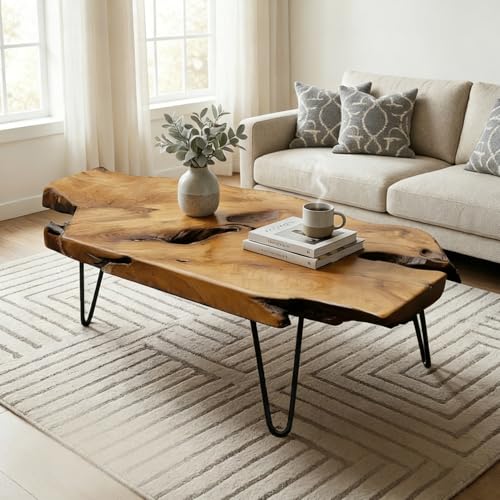
What Is a Wood Slab Table?
A wood slab table is a dining table made from a thick, single piece of solid wood — the "slab" — rather than from joined planks or veneered panels. The slab is typically milled from a large tree trunk, kiln-dried, and finished with protective oil, wax, or a hard-wearing sealant. Many slab tables retain the tree's natural edge (live edge), preserving the undulating contour of the bark line for a distinctly organic look.
Because the slab comes from one continuous section of wood, the grain flows uninterrupted across the entire surface. This is what gives slab tables their signature visual continuity and makes them a favorite for designers seeking a statement piece that feels grounded in nature.
If you are exploring broader solid wood options, our guide to a solid wood dining table covers construction types, joinery, and durability comparisons that help put slab tables in context.
Slab Table vs. Traditional Plank Table
Traditional tables are built by edge-gluing multiple narrower boards together. Slab tables use one wide section, which reduces visible glue lines and creates a more dramatic grain display. The trade-off: slab tables are heavier, require more careful handling during delivery, and may be more sensitive to humidity changes if not properly sealed. For a balanced look at construction styles, see our six-seat dining table overview.
Key Benefits of a Wood Slab Table
One-of-a-Kind Character
No two slabs share the same grain, knots, or edge profile. Your table is genuinely unique.
Natural Edge Aesthetic
Live edge contours bring texture and warmth, softening modern and minimalist interiors.
Substantial Presence
Thick tops and solid bases give a sense of permanence and architectural weight.
Long-Term Durability
Dense hardwoods resist daily wear and can be refinished over time, extending the table's life.
Conversation Piece
The story of the tree and the craftsmanship invites conversation at every meal.
Versatile Styling
Slab tables work across rustic, modern, industrial, and organic-modern interiors.
Wood Species: Which Slab Is Right for You?
The species you choose affects color, grain character, hardness, and long-term behavior. Here is how the most common slab woods compare:
| Wood Species | Character | Best For |
|---|---|---|
| Walnut | Rich chocolate-brown tones, smooth grain, naturally stable | Premium and luxury interiors; formal dining rooms |
| White Oak | Pale golden hues, pronounced grain, excellent hardness | Modern farmhouse, coastal, and Scandinavian styles |
| Maple | Light, creamy color with subtle grain; very hard | Bright, airy spaces and minimalist schemes |
| Cherry | Warm reddish-brown that deepens with age and light | Traditional and transitional dining rooms |
| Ash | Light tone, bold grain pattern, good shock resistance | Rustic and industrial-inspired settings |
| Elm | Distinctive interlocking grain, warm mid-brown | Statement live edge pieces with dramatic figure |
For homeowners prioritizing environmental responsibility, look for slabs sourced from responsibly managed forests or reclaimed timber. Our article on sustainable wood explains certification labels and sourcing questions worth asking.
Sizing Your Wood Slab Table
Slab tables tend to feel visually heavier than plank tables of the same footprint, so sizing deserves extra attention. Use these guidelines:
- Seating allowance: Plan roughly 24 inches of table width per diner for comfortable elbow room.
- Length by seat count: A 60–72 inch slab suits four diners; 84–96 inches suits six to eight.
- Chair clearance: Leave at least 36 inches between the table edge and walls or other furniture for chair pull-out and walkways.
- Room proportion: A slab table should occupy roughly one-third to one-half of the dining room's floor area to feel balanced.
If your room is compact, a smaller slab or a round variant may work better — compare options in our small wood dining table guide. For larger gatherings, a dining room table set of 8 offers generous seating without sacrificing style.
Base and Leg Options
The base you pair with a slab top dramatically affects the table's visual weight and style:
- Trestle bases: Classic for farmhouse and rustic slab tables; distribute weight well and leave legroom at the ends.
- Pedestal bases: Ideal for round or oval slabs; keep the look airy and allow flexible seating.
- Metal U- or hairpin legs: Add industrial contrast and visually lighten a heavy top. See metal dining table legs for compatible options.
- Live edge "waterfall" bases: The slab continues down the sides for a sculptural, contemporary statement.
If you prefer a more traditional silhouette, our wood table base guide compares joinery and stability across styles.
Finish Options Explained
The finish protects the wood and defines the final look. Common choices include:
- Oil and wax: Penetrates the wood for a natural, matte feel; requires periodic reapplication but is easy to spot-repair.
- Hardwax oil: Combines the natural look of oil with better water resistance; popular for dining tables.
- Polyurethane or lacquer: Builds a protective film on the surface; more resistant to spills but can show scratches and is harder to repair locally.
- Conversion varnish: Professional-grade finish with strong chemical and moisture resistance; often found on commercial-grade slab tables.
For busy households with children, a hardwax oil or professional-grade film finish offers the best balance of protection and repairability.
Styling a Wood Slab Table
Slab tables are visually dominant, so restraint in styling works best. A few principles:
- Let the wood lead: Choose chairs in complementary tones — leather, woven rattan, or painted wood — rather than competing patterns.
- Mix textures, not colors: Pair the warm wood with linen, ceramic, and matte metal for depth.
- Keep centerpieces low: A simple bowl, a cluster of candles, or a single sculptural vase preserves sightlines across the table.
- Consider seasonal swaps: Neutral linens for everyday use, richer tones for holiday settings — see summer tables for warm-weather inspiration.
For chair pairings that complement natural wood tones, browse wood dining chairs and upholstered options alike. A white tablecloth creates a crisp contrast against dark walnut slabs.
Care and Maintenance
A well-cared-for slab table can last for generations. Follow these routines:
- Daily: Dust with a soft, dry cloth. Wipe spills immediately with a slightly damp cloth, then dry.
- Weekly: Wipe with a mild wood-safe cleaner if needed; avoid harsh chemicals and abrasive pads.
- Every 3–6 months: Reapply food-safe oil or hardwax oil according to the manufacturer's guidance, especially in high-use areas.
- Protect: Use coasters, trivets, and placemats under hot dishes and glasses. Avoid direct sunlight and heat sources that can cause uneven drying and cracking.
- Humidity: Keep indoor humidity relatively stable (roughly 35–55%) to minimize seasonal movement.
For deeper refreshes, our guide on solid wood table care covers sanding and refinishing steps for long-term restoration.
Where a Slab Table Fits in Your Home
Slab tables suit a range of spaces:
- Formal dining rooms: A walnut slab with a trestle base anchors the room and pairs beautifully with a wood sideboard for serving.
- Open-concept kitchens: A slab island hybrid works as prep space and gathering spot — compare kitchen island table designs.
- Modern farmhouse: Live edge oak or ash slabs with painted or blackened bases complement rustic farmhouse dining sets.
- Compact apartments: A smaller slab or a round version seats four without overwhelming the room — see round wood dining table options.
Common Buying Mistakes to Avoid
- Ignoring humidity: Slabs can crack if moved between drastically different climates without acclimation. Ask the seller about drying and sealing.
- Underestimating weight: A thick hardwood slab can weigh well over a hundred pounds. Confirm delivery access and assembly requirements.
- Skipping the base check: Ensure the base is rated for the slab's weight and that attachment points are reinforced.
- Choosing purely on looks: Consider grain stability, finish type, and seating ergonomics alongside appearance.
- Overlooking clearance: Measure twice — a slab that looks right in photos may crowd a narrow room.
Ready to Compare Slab Table Styles?
Browse our curated selection of wood slab and live edge dining tables, then check availability and options on Amazon.
View Recommended Slab TablesFrequently Asked Questions
What is a wood slab table?
A wood slab table is a dining table crafted from a single, thick section of solid wood, often retaining the natural edge and grain patterns of the original tree. These tables celebrate organic form and are typically finished with protective oils or sealants.
How do I choose the right size wood slab table for my dining room?
Measure your dining space and leave at least 36 inches of clearance on all sides for chair pull-out and walkways. Allow roughly 24 inches of table width per seated diner. For a family of four, a slab table around 60 to 72 inches long works well; for six to eight, consider 84 to 96 inches.
Are wood slab tables durable?
Yes. High-quality wood slab tables made from dense hardwoods such as walnut, oak, or maple are extremely durable and can last generations when properly maintained. Regular oiling and protecting the surface from heat and moisture will preserve the finish and prevent cracking.
How do I care for a live edge wood slab table?
Dust weekly with a soft cloth, wipe spills promptly, and reapply a food-safe oil or furniture wax every three to six months depending on use. Avoid placing the table near direct heat sources or in rooms with extreme humidity swings, and always use coasters and trivets.
Can a wood slab table be refinished?
Yes. Solid slab tables can be sanded and refinished to remove scratches and refresh the surface. Oil-finished tables are the easiest to spot-repair; film finishes may require professional refinishing for a uniform result.