
Bar Stools with Backs and Arms: The Complete Buying Guide
Supportive seating meets everyday functionality. Learn how to choose bar stools with backs and arms that combine comfort, durability, and design for kitchens, islands, and home bars.
Explore Recommended ModelsWhy this guide matters: A bar stool is more than an extra seat. When you add a supportive back and integrated arms, it becomes a genuine place to sit for breakfast, work, or long conversations. This guide walks you through height, frame construction, upholstery, arm design, and safety so you can choose with confidence.
What Defines a Bar Stool with Backs and Arms?
Bar stools with backs and arms sit at the intersection of dining chair comfort and counter-height practicality. Unlike backless stools, they provide lumbar support and a place to rest your arms, which makes them suitable for longer sitting sessions. The design typically combines a tall frame, a footrest, an upholstered or molded seat, a supportive backrest, and armrests that connect the backrest to the front of the seat.
These stools are especially common in transitional and traditional kitchens, home bars, and open-plan spaces where seating doubles as dining. They also work well alongside bar stools with a back only when you want a mix of supportive and minimalist seating.
Key Components of a Well-Built Stool
- Frame: Solid wood, metal, or a combination. Metal frames with reinforced joints are common in high-traffic settings.
- Seat: Upholstered foam, molded plastic, or wood. Upholstered seats improve comfort during extended use.
- Backrest: Low, mid, or high back. Mid and high backs offer more support for the lumbar region.
- Arms: Integrated arms add structure and comfort, but they also affect how the stool tucks under a counter.
- Footrest: A reinforced bar or ring that supports posture and reduces strain on the legs.
Bar Height vs. Counter Height: Getting the Measurement Right
The single most important decision is height. A stool that is too tall or too short creates discomfort and can be a safety concern. The rule of thumb is to leave 9 to 12 inches of clearance between the seat and the underside of the counter or table.
| Stool Type | Typical Seat Height | Pairs With | Best For |
|---|---|---|---|
| Counter-height stool | 24–26 inches | 36-inch counters | Kitchen islands, breakfast bars |
| Bar-height stool | 28–32 inches | 40–42-inch bars | Home bars, pub tables, high counters |
| Extra-tall stool | 33+ inches | 44+ inch surfaces | Commercial bars, raised islands |
If you are still deciding between the two main categories, our guide to counter-height bar stools with backs explains how to match seat height to island depth and overhang. For taller setups, the bar-height stools with backs collection covers the 28–32 inch range in more detail.
Backrest Styles: Low, Mid, and High Back
The backrest is what separates these stools from backless designs. Each height serves a different purpose, and the right choice depends on how long people will sit and how much visual weight you want in the room.
Low Back
A subtle backrest that guides posture without dominating the silhouette. Ideal for compact kitchens and casual seating where the stool is used for short meals.
Mid Back
The most versatile option. It supports the lower back and works well for breakfast bars and islands where people sit for 30–60 minutes at a time.
High Back
Maximum support, closer to a dining chair experience. Best for home bars, work-from-kitchen setups, and anyone who needs firmer lumbar support.
If you want the support of a full backrest without arms, the bar stools set of 2 with back format is a practical starting point. When arms are added, the stool becomes a more complete seating solution, similar to a compact barrel chair for dining.
Arm Design: Fixed, Curved, and Upholstered
Arms change how a stool feels and how it fits under a counter. Understanding the main arm types helps you avoid a common mistake: buying a stool with arms that cannot tuck under the overhang.
- Fixed wooden arms: Classic and sturdy. They usually sit higher than the seat and can interfere with deep counter overhangs.
- Curved metal arms: Common on industrial and retro styles. They wrap around the sitter and feel supportive without adding much visual bulk.
- Upholstered arms: Padded arms integrated into the backrest. These offer the highest comfort level but add width and visual weight.
- Low-profile arms: Short arms that stop before the counter edge. These are the most flexible for tight spaces.
Measure the counter overhang before choosing arms. A stool with fixed arms typically needs at least 12 inches of overhang to slide under comfortably. If your overhang is shallow, consider a bar stool armrest design with a lower profile, or compare with bar stools without backs for a cleaner tuck.
Materials and Upholstery: Matching Durability to Daily Use
The material you choose determines how the stool ages and how much maintenance it needs. There is no single best material; the right answer depends on traffic, climate, and cleaning habits.
| Material | Tier Position | Durability | Best For |
|---|---|---|---|
| Solid wood frame with upholstered seat | Mid-range to premium | High with proper care | Traditional kitchens, family dining |
| Metal frame with faux leather | Essential to mid-range | High, easy to wipe clean | Busy households, industrial styles |
| Metal frame with velvet or fabric | Mid-range to high-end tier | Moderate, requires spot cleaning | Statement seating, formal bars |
| Rattan or woven seat and back | Mid-tier | Moderate, breathable | Coastal, boho, and sunroom settings |
| Commercial-grade steel with reinforced joints | Professional-grade | Very high | Home bars with heavy daily use |
For leather-look finishes, our faux leather bar stools guide explains how different finishes handle spills and wear. If you prefer natural woven textures, the rattan bar stools overview covers weave patterns and frame pairing.
Comfort Features That Actually Matter
Marketing language can be vague. These are the comfort features that make a measurable difference in daily use:
Seat Cushion Density
High-density foam resists flattening. A firm seat with a slight give is more supportive than a soft seat that bottoms out quickly.
Footrest Position
The footrest should sit where your feet land naturally when seated. A misplaced footrest causes pressure on the thighs.
Arm Height Relative to Seat
Arms set roughly 8–10 inches above the seat allow a relaxed elbow position without lifting the shoulders.
Swivel Option
A swivel seat makes it easier to get in and out. Models like adjustable bar chairs combine swivel with height flexibility.
If you are furnishing a kitchen island specifically, the bar stools for kitchen island guide covers clearance, overhang, and seat-count planning in more depth. For rounded seating that pairs well with arms, see the barrel dining room chairs collection.
Style Directions: From Farmhouse to Modern Luxury
Bar stools with backs and arms are available across most design languages. Matching the stool to your room's style keeps the seating looking intentional rather than added on.
- Modern farmhouse: Wood frames, slatted backs, and neutral upholstery. Pair with a bar height kitchen table for a cohesive look.
- Industrial: Metal frames, visible rivets, and dark faux leather. The industrial bar stools guide explores frame finishes and weight ratings.
- Rustic: Reclaimed wood and distressed finishes. See the rustic bar stools overview for material pairings.
- Luxury: Velvet upholstery, brass or gold accents, and sculpted backs. The luxury bar stools collection covers premium detailing.
- Retro: Curved arms, chrome frames, and bold colors. Compare with the retro bar stools range.
Safety and Stability Checklist
Height and style matter, but stability is non-negotiable, especially in households with children or older adults. Use this checklist before purchasing:
- Weight capacity: Check the rated capacity and leave a margin above the heaviest expected user.
- Base spread: A wider base lowers the center of gravity. Four legs with splayed feet are generally more stable than a narrow pedestal.
- Non-slip feet: Rubber or felt glides protect floors and reduce sliding.
- Joint construction: Reinforced brackets and welded joints outperform stapled or glued joints over time.
- Footrest security: The footrest should be welded or bolted, not friction-fit.
For outdoor or covered patio use, verify that the finish is rated for moisture. The bar stools with cushion guide covers removable cushions that can be brought inside during bad weather.
How Many Stools Do You Need?
A practical rule is to allow 24 inches of width per stool at a counter. For a standard 6-foot island, that means two to three stools depending on arm width. Stools with arms take up more horizontal space than backless designs, so measure the total width including arms before committing to a count.
If you are mixing seating types, pair armed stools at the ends of an island with backless counter height bar stools in the middle to reduce visual clutter and improve tuck-under clearance.
Care and Long-Term Maintenance
Well-maintained stools last significantly longer. The care routine depends on materials, but a few habits apply across the board:
- Wipe upholstery weekly with a damp cloth to prevent grime buildup in seams.
- Check and tighten bolts every few months, especially on swivel models.
- Apply a wood conditioner to solid wood frames once or twice a year.
- Use felt pads under metal feet on hardwood floors.
- Keep fabric stools out of direct sunlight to slow fading.
For deeper cleaning guidance, the upholstery care section of our maintenance library covers fabric-specific methods.
Common Buying Mistakes to Avoid
- Ignoring the overhang: Arms that do not fit under the counter force an awkward seating angle.
- Choosing style before height: Always confirm seat height against the counter before falling for a design.
- Underestimating arm width: Armed stools need more spacing; a crowded row feels unstable.
- Skipping the weight rating: A stool rated below the user's weight wears out quickly and can be unsafe.
- Overlooking the footrest: A poorly placed footrest is one of the most common comfort complaints.
Frequently Asked Questions
Can bar stools with arms fit under a kitchen island?
Yes, if the overhang is deep enough. Aim for at least 12 inches of overhang for fixed arms. Low-profile arms need less clearance and are a safer choice for shallow overhangs.
Should I choose a swivel seat?
Swivel seats make it easier to get in and out and are convenient in open-plan spaces. They add a moving part, so check that the swivel mechanism is rated for daily use.
Are upholstered stools harder to clean?
It depends on the fabric. Faux leather and treated performance fabrics wipe clean easily. Velvet and textured weaves need more careful spot cleaning.
How do I match stools to an existing dining set?
Match the finish tone and the visual weight of the legs. You do not need an exact match; complementary materials often look more intentional than a perfect set.
What is the ideal seat height for a 36-inch counter?
A 24–26 inch seat height typically leaves the recommended 9–12 inches of clearance. Measure your specific counter before ordering.
Do armed stools work in small kitchens?
They can, but choose low-profile arms and confirm the tuck-under clearance. In very tight spaces, a backless or back-only design may be more practical.
Recommended Bar Stools with Backs and Arms
⚠️ AFFILIATE DISCLOSURE: This website contains affiliate links. As an affiliate Associate, we earn from qualifying purchases. If you make a purchase through these links, we may receive a small commission at no additional cost to you. Read our full affiliate policy.

BestOffice Modern Bar Stool Set of 2 Barstools Armrest Height Adjustable Counter Stools Bar Chairs Swivel Bar Stool PU Leather Hydraulic Dining Room Chairs Home Kitchen Stools (Black)
Check price on Amazon
MALOL Set of 4 Kitchen Bar Stools with Armrest and Back - Sillas para Barra de Cocina, Adjustable Barstools for Island Counter, Bar Chairs, Bancos para Barra de Cocina, Black Finish
Check price on Amazon
OLIXIS Swivel Bar Stools Set of 4, PU Leather Counter Height Stool with Arm | Upholstered Bar Chairs with Back, BarStools, Adjustable Height, Metal Legs, Kitchen Island, Cafe, Pub, Black
Check price on Amazon
VATROS 26" H Counter Height Bar Stools Set of 2, Modern Barrel Counter Stools with Backrest and Arms, Faux Leather Upholstered Accent Barstools for Kitchen Island,Support 450 LBS (Walnut Brown)
Check price on Amazon
VECELO Bar Stools Set of 2, Adjustable Counter Height Barstools with Back and Arm, Swivel Bar Chair Stools for Kitchen Counter Island Cafe Dining Room, Industrial Style, Brown
Check price on Amazon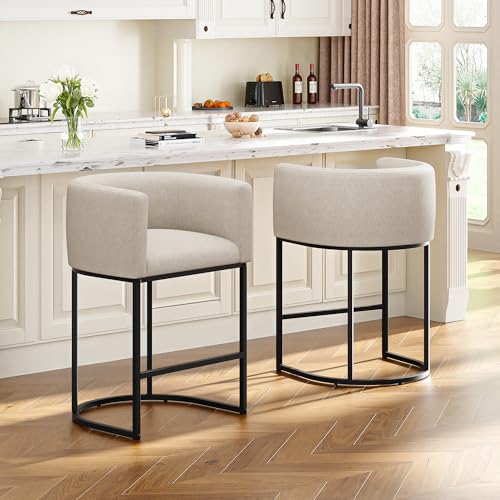
VATROS 26" H Counter Height Bar Stools Set of 2, Modern Barrel Counter Stools with Backrest and Arms, Linen Fabric Upholstered Accent Barstools for Kitchen Island,Support 450 LBS (Beige)
Check price on Amazon
FERFALDER Counter Height Bar Stools with Full Back – Swivel Counter Stools Set of 2 with Linen Padded Back, Metal Footrest, Modern Barstools for Kitchen Counter, Island, Dining Room, Grey 24 inch
Check price on Amazon
HAPPYMONT Bar Stools Set of 2, 24-26'' Adjustable Swivel Bar Chairs, Black | PU Leather Counter Height Barstool with Back Support & Armrest for Kitchen Island, Dining Room
Check price on AmazonReady to Choose Your Stools?
Review the recommended models above, confirm your seat height against your counter, and check arm clearance before you commit. A well-chosen stool with back and arm support turns an extra seat into a genuinely comfortable place to sit.
View Recommended Models