
Antique Buffet: The Complete Buyer's Guide
From mahogany sideboards to oak hunt boards, discover how to identify authentic antique buffets, understand their construction, and choose a piece that elevates your dining room for generations.
Explore the GuideWhy an antique buffet? An antique buffet is more than storage — it is a functional heirloom that anchors a dining room with history, craftsmanship, and character. This guide walks you through styles, materials, authentication, and practical considerations so you can buy with confidence.
What Defines an Antique Buffet?
In the strictest furniture trade sense, an antique is a piece at least 100 years old. A buffet (also called a sideboard or credenza depending on region and era) is a dining room storage piece typically featuring a flat serving surface, drawers for flatware and linens, and cabinets for larger items. When these two concepts combine, you get an antique buffet: a heritage piece built with period joinery and materials that has survived a century or more.
Buyers are drawn to antique buffets for several reasons. The wood — often mahogany, walnut, oak, or cherry — develops a patina that no modern finish can replicate. Hand-cut dovetails, mortise-and-tenon joints, and solid brass hardware speak to a level of craftsmanship that is increasingly rare. And because each piece has a story, an antique buffet brings a sense of continuity to a dining room that new furniture simply cannot match.
It is important to distinguish a true antique from a vintage piece or a modern reproduction. A vintage buffet might be 40 to 80 years old, often mid-century in style. A reproduction may imitate antique forms using modern materials and assembly methods. Knowing which category you are shopping in affects everything from care requirements to long-term investment potential.
Antique Buffet Styles Through the Eras
The style of an antique buffet is your first clue to its era and origin. Each period brought distinct proportions, ornamentation, and construction techniques.
- Georgian and Federal (18th–early 19th century): Refined proportions, mahogany construction, inlaid veneers, and brass pulls. These buffets often feature serpentine fronts and tapered legs.
- Victorian (mid-to-late 19th century): Heavier, more ornate pieces with carved details, marble tops, and extensive veneer work. Walnut and rosewood are common.
- Edwardian (early 20th century): Lighter and more restrained than Victorian, with satinwood inlays and elegant proportions.
- Arts and Crafts (late 19th–early 20th century): Quarter-sawn oak, exposed joinery, and honest construction. These buffets emphasize function and visible craftsmanship.
- French Provincial and Country: Painted or naturally finished woods, carved motifs, and a relaxed, rustic elegance.
- Art Deco (1920s–1930s): Geometric lines, exotic veneers, and bold hardware. These pieces bridge antique and modern sensibilities.
Understanding these styles helps you match a buffet to your dining room's architecture and your personal aesthetic. A Georgian buffet suits a traditional formal dining room, while an Arts and Crafts piece feels at home in a craftsman bungalow or a modern farmhouse setting. If you are exploring broader dining room directions, our guide to mid-century modern dining offers useful contrast points.
Woods and Materials in Antique Buffets
The wood species used in an antique buffet tells you a great deal about its origin, durability, and care needs.
- Mahogany: The hallmark of Georgian and Federal furniture. Dense, stable, and capable of taking a rich, deep finish. Mahogany buffets are among the most sought-after and hold their structural integrity well over centuries.
- Walnut: Favored in Victorian and Edwardian pieces. Walnut offers rich chocolate tones and intricate grain patterns, though it can be more susceptible to dryness and cracking if humidity is not controlled.
- Oak: The backbone of Arts and Crafts and country furniture. Quarter-sawn oak displays dramatic ray fleck and is exceptionally durable.
- Cherry: Prized for its warm color that deepens with age. Cherry buffets are common in American colonial and Federal styles.
- Pine and painted woods: Often found in French Provincial and country pieces. Painted surfaces may conceal repairs, so inspect carefully.
Beyond the primary wood, look at veneers, inlays, and secondary woods used for drawer bottoms and back panels. Authentic antiques often use secondary woods like poplar or chestnut in areas that are not visible, while reproductions may use uniform modern materials throughout. Hardware — brass, bronze, or iron — should be period-appropriate and show consistent wear patterns.
How to Authenticate an Antique Buffet
Before you commit to an antique buffet, verify its authenticity. These checks are essential whether you are shopping at an estate sale, an antique dealer, or an online marketplace.
- Examine the joinery: Hand-cut dovetails with irregular spacing indicate pre-industrial construction. Machine-cut dovetails are more uniform and suggest a later date or reproduction.
- Look for patina: Genuine age produces a warm, uneven patina on wood surfaces. Fresh, uniform finishes may indicate refinishing or a modern piece.
- Inspect hardware: Original brass pulls often show oxidation and wear around screw holes. Mismatched or shiny new hardware can be a warning sign.
- Check for hand tool marks: Plane marks, irregular saw cuts, and hand-carved details are positive signs of age.
- Assess wood shrinkage: Antique wood expands and contracts over time, often creating small gaps at joints or cracks in panels. Perfectly tight joints on a supposedly century-old piece warrant scrutiny.
- Consult a professional: For high-end acquisitions, a professional appraiser or conservator can confirm age and value.
If you are buying online, request detailed photographs of joints, drawer interiors, hardware backs, and the underside. Ask for provenance — receipts, family history, or dealer documentation. A reputable seller will welcome these questions.
Practical Buying Considerations
An antique buffet must fit your space, your lifestyle, and your long-term plans. Keep these factors in mind.
- Measure your space: Account for doorways, traffic flow, and the height of your dining table. A buffet should leave at least 36 inches of clearance for seating and movement.
- Consider storage needs: Do you need deep cabinets for platters, felt-lined drawers for flatware, or a wine rack? Antique buffets vary widely in interior configuration.
- Assess condition honestly: Minor wear is part of an antique's charm. Structural issues — loose joints, water damage, active woodworm — require professional attention and should factor into your decision.
- Plan for care: Antique wood needs stable humidity (40–60%), protection from direct sunlight, and gentle cleaning. Avoid silicone polishes and harsh chemicals.
- Think about longevity: A well-chosen antique buffet is a long-term investment. It can serve as a serving station, a display surface, and a family heirloom.
If your dining room is on the smaller side, explore our guide to dining room tables for small spaces to ensure your buffet and table work together harmoniously. For those building a complete formal dining setup, our article on 7-piece dining room sets provides complementary context.
Antique Buffet Tiers at a Glance
Antique buffets span a wide range of craftsmanship and rarity. The table below uses universal tier descriptors to help you frame your expectations without reference to specific figures.
| Tier | Typical Characteristics | Best For |
|---|---|---|
| Entry-level | Provincial or later pieces, possible refinishing, simpler construction, common woods | First-time antique buyers; casual dining rooms |
| Mid-range | Solid period construction, original hardware, moderate patina, minor restoration | Collectors seeking authentic character; formal dining rooms |
| Premium | Rare woods, exceptional joinery, documented provenance, excellent original condition | Serious collectors; heritage dining rooms |
| Luxury | Museum-quality pieces, signed or attributed makers, pristine original surfaces | Investment-grade acquisitions; curated interiors |
Caring for Your Antique Buffet
Proper care preserves both the beauty and the value of an antique buffet. Follow these principles.
- Dust regularly with a soft, lint-free cloth. Avoid abrasive pads and silicone-based polishes.
- Control humidity between 40% and 60%. Use a humidifier or dehumidifier as needed, and keep the buffet away from heating vents and radiators.
- Avoid direct sunlight, which can fade finishes and dry wood unevenly. Use curtains or UV-filtering window film.
- Use coasters and felt pads under lamps, vases, and serving pieces to prevent rings and scratches.
- Apply a gentle wood conditioner sparingly, no more than once or twice a year, and test on a hidden area first.
- Address repairs promptly. Loose joints, lifting veneer, and active woodworm should be treated by a qualified conservator.
For a deeper dive into furniture upkeep, our guide on dining chair ergonomics offers related insights into maintaining comfortable, functional dining furniture over time.
Frequently Asked Questions
How can I tell if a buffet is truly antique?
Look for hand-cut dovetail joints, aged wood patina, period-appropriate hardware, and signs of hand craftsmanship. Consult a professional appraiser for certainty before committing to a significant purchase.
What wood types are most common in antique buffets?
Mahogany, walnut, oak, cherry, and pine are the most frequently encountered. Each species offers distinct grain patterns, patina development, and care requirements.
How do I care for an antique buffet?
Dust with a soft cloth, avoid direct sunlight, maintain stable humidity, and apply a gentle wood conditioner sparingly. Avoid harsh chemical cleaners and silicone polishes.
Can an antique buffet be restored or refinished?
Yes, but refinishing can diminish historical character and market appeal. Consult a conservator before making structural or surface changes, especially on premium or luxury-tier pieces.
Where should I place an antique buffet in my dining room?
Place it against a wall with enough clearance for drawers and cabinet doors to open fully. Allow at least 36 inches of space for traffic flow and seating. Avoid direct sunlight and heat sources.
Explore Related Dining Guides
- Antique Buffet Guide
- Dining Table with 6 Chairs
- Solid Wood Dining Set
- Farmhouse Dining Table Set
- Modern Dining Sets
- Black Dining Room Ideas
- Mid-Century Modern Dining
- Dining Room Table Set of 8
- Kitchen Island with Seating and Storage
- Dining Chair Ergonomics
- 60-Inch Round Dining Table
- Expandable Dining Table for Small Spaces
- Outdoor Dining Furniture
- Linen Table Runner
- Dinnerware Set for 6
Recommended Antique Buffet & Dining Storage Products
⚠️ AFFILIATE DISCLOSURE: This website contains affiliate links. As an affiliate Associate, we earn from qualifying purchases. If you make a purchase through these links, we may receive a small commission at no additional cost to you. Read our full affiliate policy.
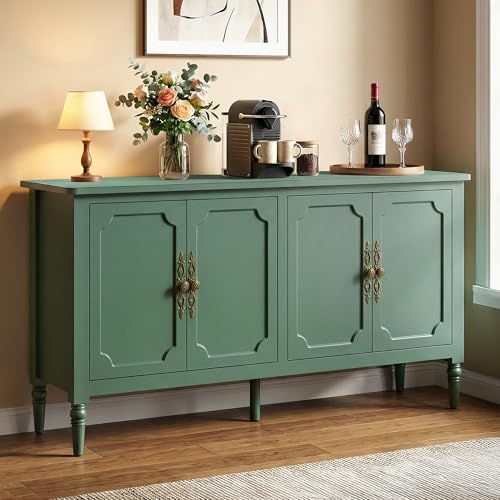
RoyalCraft Buffet Cabinet with Storage, 59" Painted Sideboard Coffee Bar | Vintage Kitchen Storage Cabinet with Adjustable Shelves, Mid Century Modern Credenza for Dining& Living Room, Entryway, Green
Check price on Amazon
FUSUNBAO 57" Fluted Sideboard Buffet,Retro Storage Cabinet, Walnut | 3 Drawers and 4 Doors, Vintage Fluted with Scalloped Base, Organic Modern Accent Cabinet, For Dining Room
Check price on Amazon
ARTPOWER 61.8" Hollow Carved Accent Cabinet with 4 Doors for Living Room | Vintage Sideboard Buffet with Adjustable Shelves, Credenza with Storage for Dining Room, Kitchen, Entryway, Hallway
Check price on Amazon
usikey Buffet Cabinet, 61” Large Sideboard Buffet Storage Cabinet with 3 Drawers, Farmhouse Coffee Bar with 4 Doors, Buffet Table for Kitchen, Living Room, Antique Oak
Check price on Amazon
RoyalCraft Sideboard Buffet Cabinet with Storage, Natural Solid Wood | Vintage Buffet Table Coffee Bar with Carved Patterns, Wine Bar Storage Cabinet with 3 Doors for Dining Room, Living Room
Check price on Amazon
WAMPAT Farmhouse Buffet Cabinet Sliding Barn Doors, Antique Black & Brown, | 59" Rustic Sideboard, Coffee Bar Storage Cabinet, Mesh Doors for Dining Room
Check price on Amazon
WAMPAT Sideboard Buffet Cabinets with Glass Door, Kitchen Storage Cabinets, Wood Coffee Bar Tables, Accent Sideboard Storage Cabinet for Dining Room, Living Room, Antique White
Check price on Amazon