
Buffet Sideboards: The Complete Buying Guide & Design Tips
Discover how to choose the perfect buffet sideboard for your dining room — comparing styles, storage configurations, materials, and sizing so you can buy with total confidence.
Why a buffet sideboard matters: A buffet sideboard is one of the most versatile pieces in a dining room. It provides a serving surface for meals and entertaining, organizes dinnerware and linens, and anchors the visual style of the entire space. This guide walks you through everything a research-stage buyer needs to know before choosing a sideboard, from storage layout and material durability to proportion and placement.
What Is a Buffet Sideboard?
A buffet sideboard is a long, low storage cabinet traditionally placed in a dining room against a wall. Its top surface functions as a serving station for food, drinks, and tableware during meals and gatherings, while its interior holds dishes, glassware, linens, and serving pieces. The terms "buffet," "sideboard," and "credenza" are often used interchangeably, though sideboards tend to be slightly taller and shallower, while buffets often feature a wider serving surface.
Modern buffet sideboards range from compact two-door cabinets suited to apartments to expansive buffet cabinets with hutches that combine closed storage with open display shelving. Understanding these configurations is the first step toward choosing a piece that fits both your space and your entertaining habits.
Types of Buffet Sideboards
Sideboards come in several structural formats, each with distinct advantages. Matching the type to your room layout and storage needs prevents buyer's remorse.
Standard Sideboard
A standard sideboard is a closed cabinet with doors and often drawers, typically 30 to 36 inches tall. It offers balanced closed storage with a flat serving top. This is the most common choice for dining rooms and works well in both formal and casual settings.
Buffet with Hutch
A buffet cabinet with hutch adds an upper shelving unit above the base cabinet. Hutches provide open display space for china, glassware, and decorative pieces, making them ideal for collectors and formal dining rooms. They require more vertical clearance and should be placed against a wall with adequate height.
Buffet with Drawers
A buffet cabinet with drawers prioritizes small-item organization. Drawers are excellent for flatware, napkins, placemats, and serving utensils, while doors below handle larger platters and bowls. This configuration suits households that entertain frequently and need quick access to table-setting essentials.
Buffet with Storage
A buffet cabinet with storage may combine adjustable shelves, wine racks, and felt-lined drawers in a single unit. These multi-functional designs are well-suited to open-concept homes where the dining area doubles as a serving and prep zone.
Buffet Server
A buffet server is typically shallower and may include a raised back or removable top tray. Servers are designed primarily for food and beverage service rather than bulk storage, making them a good fit for smaller dining rooms or as a secondary piece in a butler's pantry.
Antique Buffet
An antique buffet brings character and history to a dining room. When shopping for antique pieces, inspect joinery, drawer glides, and finish condition carefully. Antiques can be excellent long-term investments, but they require more maintenance and may need restoration.
How to Choose the Right Size
Proportion is the single most common mistake buyers make with sideboards. A piece that is too large overwhelms the room; one that is too small looks lost and provides inadequate storage.
- Width: A sideboard should generally span 50 to 75 percent of the wall it sits against. This leaves breathing room on both sides and prevents the piece from dominating the space.
- Depth: Standard sideboards are 15 to 20 inches deep. Deeper units offer more storage but can obstruct walking paths in narrow rooms.
- Height: Most sideboards stand 30 to 36 inches tall, which is a comfortable serving height. Hutches add 30 to 48 inches above the base.
- Clearance: Leave at least 36 inches of walking space between the sideboard and the dining table so chairs can pull out comfortably.
For smaller dining areas, a compact buffet sideboard or a narrow buffet table can provide service surface without crowding the room.
Materials and Durability
Material choice affects both appearance and longevity. The table below compares common constructions using tier-based descriptors rather than absolute figures.
| Material | Market Tier | Durability | Best For |
|---|---|---|---|
| Engineered Wood / MDF | Entry-level to mid-range | Moderate; sensitive to moisture | Apartments and temporary setups |
| Solid Pine / Rubberwood | Mid-range | Good; can dent under heavy impact | Casual dining rooms and family homes |
| Oak / Walnut / Maple | Premium | Excellent; repairable and long-lasting | Formal dining rooms and long-term use |
| Marble / Stone Top | Premium to luxury | Very high; stain-resistant but heavy | Statement pieces and formal entertaining |
| Burl Wood Veneer | Luxury | High; requires careful care | Designer interiors and collector pieces |
Solid hardwood sideboards are the most durable option and can be refinished over time, making them a worthwhile long-term investment. Engineered wood is a practical starter-tier choice but should be kept away from direct moisture. For a distinctive look, a burl wood sideboard offers rich grain patterns that function as a focal point, while a walnut buffet cabinet balances warm tones with durable construction.
Storage Features to Look For
The interior layout of a sideboard determines how well it supports your daily routine. Prioritize features based on what you store most often.
- Adjustable shelves: Essential for accommodating tall platters, pitchers, and stacked bowls.
- Felt-lined drawers: Protect flatware and delicate serving pieces from scratches.
- Wine storage: Integrated racks or cubbies keep bottles organized and accessible.
- Cable management: Important if you plan to use the top as a coffee or beverage station.
- Soft-close hinges: Reduce noise and protect doors in busy households.
- Interior lighting: A buffet table light or cabinet lighting helps display china and improves visibility.
If you need maximum storage in a compact footprint, look at buffet tables with storage that combine a serving top with deep cabinetry.
Style and Design Tips
A sideboard should feel intentional within the room rather than an afterthought. These design principles help you integrate it successfully.
- Match the wood tone to the table: A close match creates cohesion, while a deliberate contrast (e.g., a walnut sideboard with a painted table) can add visual interest.
- Keep the top curated, not cluttered: Reserve two-thirds of the surface for function and one-third for display.
- Use art above the sideboard: Hang a mirror or artwork so the bottom edge sits 6 to 10 inches above the cabinet top.
- Balance height with the room: In rooms with high ceilings, a hutch adds vertical presence; in low-ceiling rooms, keep the sideboard low and the wall art horizontal.
- Consider traffic flow: Place the sideboard away from the main path between the kitchen and table so guests can serve themselves without blocking movement.
For a cohesive dining room, coordinate the sideboard with your black dining room furniture or warm wood tables. A buffet dining room table pairing ensures the serving surface and dining surface share a compatible finish family.
Design tip: Measure the wall, then tape the sideboard's footprint on the floor before ordering. Seeing the actual footprint in the room prevents sizing mistakes that are hard to correct after delivery.
Buffet Sideboard vs Other Dining Storage
Sideboards are not the only dining storage option. Understanding how they compare helps you choose the right piece.
| Storage Type | Typical Height | Best For | Trade-off |
|---|---|---|---|
| Buffet Sideboard | 30–36 in | Serving + closed storage | Limited display space |
| Buffet Cabinet Sideboard | 30–40 in | Larger storage volume | Takes more floor space |
| Buffet Kitchen Cabinet | 32–36 in | Kitchen-adjacent serving | May look utilitarian in dining rooms |
| Buffet Hutch | 60–84 in | Display + storage | Requires wall height and anchoring |
If display is a priority, a hutch or china cabinet may serve you better. If closed storage and serving surface are the priority, a sideboard is the stronger choice.
Placement and Room Integration
Where you place the sideboard affects both function and visual balance. The most common placement is centered on the longest wall opposite the dining table. In open-concept homes, sideboards can also act as a subtle room divider between the dining and living zones.
- Anchor the piece: Use furniture glides or a wall strap for tall hutches, especially in homes with children or pets.
- Light it well: Add a table lamp or wall sconces to create a warm serving zone in the evening.
- Leave a serving buffer: Keep at least 12 inches of clear countertop on each side of a food station for plates and utensils.
- Coordinate with seating: In a dining room with black dining room chairs, a black or dark wood sideboard ties the palette together.
Care and Maintenance
Proper care extends the life of any sideboard. Wood finishes should be dusted with a soft cloth and conditioned periodically. Avoid placing hot dishes directly on the surface; use trivets. Keep the piece out of direct sunlight to prevent fading, and control humidity to reduce the risk of warping or cracking. For detailed routines, refer to our care and maintenance resources on wood polish and humidity control.
Common Buying Mistakes to Avoid
- Ignoring interior depth: A shallow cabinet may not fit dinner plates or platters.
- Buying before measuring: Always measure the wall, doorway, and walking path.
- Overlooking door swing: Doors that open outward need clearance in front of the cabinet.
- Choosing style over storage: A beautiful piece with inadequate shelves will frustrate you daily.
- Skipping anchoring: Tall hutches must be secured to the wall for safety.
Recommended Buffet Sideboards & Storage Cabinets
⚠️ AFFILIATE DISCLOSURE: This website contains affiliate links. As an affiliate Associate, we earn from qualifying purchases. If you make a purchase through these links, we may receive a small commission at no additional cost to you. Read our full affiliate policy.

WLIVE 67" Large Buffet Sideboard Cabinet with Storage, Walnut Fluted Doors | Mid-Century Wood Credenza with Adjustable Shelves for Living Room, Dining Room, Kitchen & Coffee Bar, TV Stand for 75'' TVs
Check price on Amazon
usikey 55" Buffet Cabinet with Storage and Drawers, Large Sideboard Buffet Cabinet with Adjustable Shelves and Doors, Modern Coffee Bar for Kitchen, Living Room, White
Check price on Amazon
HOSTACK 60" W Sideboard Buffet Cabinet with Storage, Kitchen Cabinet, White | 36 Tall Kitchen Buffet Storage Cabinet with 4 Drawer, Large Coffee Bar Cabinet, Modern Buffet Table for Dining Living Room
Check price on Amazon
HOSTACK 71"W Farmhouse Kitchen Sideboard Buffet Cabinet with Storage, White | Large Coffee Bar Cabinet with 3 Wide Drawers, Long Buffet Table with Shelves, Kitchen Storage Cabinet for Dining Room
Check price on Amazon
Joaxswe Sideboard Buffet Cabinet with Storage, 46" Arc-Shaped Credenza | 3 Doors & Adjustable Shelves, Stable Leg, Mid Century Modern Coffee Bar Cabinet for Kitchen, Living Room, Entryway, Dark Wood
Check price on Amazon
ONBRILL 48 Inch Buffet Cabinet with Storage, Walnut | Farmhouse Sideboard Buffet w/2 Drawers and 3 Doors, Wood Coffee Bar Cabinet with Adjustable Shelves for Kitchen, Living Room
Check price on Amazon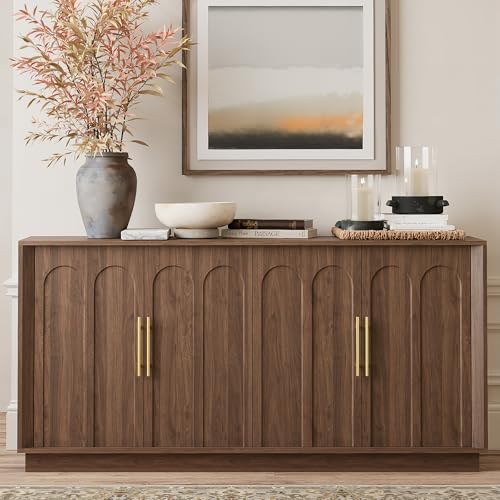
FORTUNETEC 67" Sideboard Buffet Cabinet with Storage, Arched Doors, Walnut | Mid Century Modern Accent Cabinet with Wood Gain, Modular Media Console, Credenza for Living Dining Room Kitchen Entryway
Check price on Amazon
VASAGLE Farmhouse Buffet Cabinet, Coffee Bar with 2 Drawers | Honey Brown Sideboard, 55.1 x 15.7 x 31.5 in, Adjustable Shelves, Honey Brown, LIRY Collection, UBBK381K01V1
Check price on AmazonFrequently Asked Questions
What is the difference between a buffet and a sideboard?
The terms are often used interchangeably. Traditionally, sideboards are slightly taller and shallower, while buffets emphasize a wide serving surface. In modern retail, both describe a long dining-room storage cabinet with a flat top.
How wide should a buffet sideboard be?
A common guideline is 50 to 75 percent of the wall width. For a typical dining room, sideboards between 48 and 72 inches wide work well. Always confirm walking clearance of at least 36 inches around the piece.
Can a buffet sideboard be used outside the dining room?
Yes. Sideboards work well in entryways, living rooms, and home offices as storage and display furniture. Choose finishes appropriate to the room's humidity and light exposure.
Should I choose a sideboard with a hutch?
Choose a hutch if you want open display space for china and glassware and have adequate wall height. Choose a flat-top sideboard if you need a clear serving surface and prefer a more minimalist look.
How do I protect the top of a buffet sideboard?
Use trivets under hot dishes, coasters under drinks, and a felt pad under decorative objects. For wood finishes, apply a quality furniture conditioner a few times per year and keep the piece out of direct sunlight.
Ready to Choose Your Buffet Sideboard?
Explore our hand-picked buffet sideboards and storage cabinets above, compare styles and storage layouts, and find the piece that fits your dining room perfectly.
Explore Buffet Sideboards