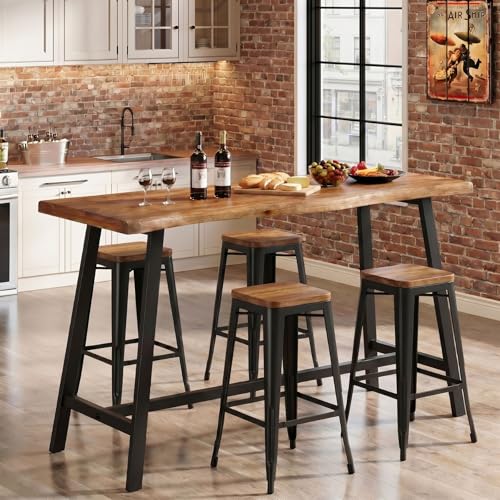
What Is a Counter Height Bar Table?
A counter height bar table is a dining or gathering surface that stands roughly 34 to 36 inches tall — noticeably higher than a standard 30-inch dining table but shorter than a full bar height table. This in-between height makes it comfortable for sitting on counter height stools while still feeling connected to the kitchen counter. It is a popular choice for open-concept homes, breakfast nooks, and casual entertaining areas where a traditional dining set might feel too formal or take up too much visual space.
Unlike bar height tables that can leave feet dangling, counter height models let most adults rest their feet on a footrest or the floor. That ergonomic advantage is one reason why counter height designs have become a mainstream favorite among homeowners who want a more relaxed dining setup without sacrificing style.
Counter Height vs Bar Height vs Standard Height
Understanding the height differences is the first step toward choosing the right table. The table below compares the three main categories so you can match your table to your stools and your space.
| Category | Table Height | Matching Stool Seat Height | Best For |
|---|---|---|---|
| Standard Dining | 28–30 inches | 17–19 inches | Formal dining rooms, family meals |
| Counter Height | 34–36 inches | 24–26 inches | Kitchens, breakfast nooks, casual dining |
| Bar Height | 40–42 inches | 28–30 inches | Home bars, high-top pub tables, standing socializing |
If you are still weighing your options, our detailed guide to counter height table how tall explains exact measurements and clearance rules in depth. For a broader overview of the category, the counter height table resource covers styles and configurations.
Key Dimensions and Seating Capacity
Getting the dimensions right ensures comfort for everyone at the table. As a rule of thumb, allow about 24 inches of table width per person and 12 to 15 inches of depth for place settings. Here is a quick reference for common shapes:
| Table Shape | Typical Dimensions | Comfortable Seating |
|---|---|---|
| Round | 36–42 inches diameter | 2–4 people |
| Square | 36–42 inches per side | 4 people |
| Rectangular | 48–60 inches long, 30–36 inches wide | 4–6 people |
| Pedestal / Trestle | 42–60 inches long | 4–6 people |
For smaller footprints, a counter height pedestal table maximizes legroom because there are no corner legs to bump into. Round options are especially efficient in tight corners — see the counter height kitchen table guide for layout ideas.
Materials and Construction Quality
The material you choose affects durability, maintenance, and the overall look of your space. Most counter height bar tables fall into one of the following construction categories:
- Solid wood: The most traditional choice, offering warmth and long-term durability. Hardwoods such as oak, maple, and walnut resist daily wear well. Look for kiln-dried lumber and reinforced joinery for a solid build.
- Engineered wood with veneer: A more stable option that resists warping in humid kitchens. Higher-tier models use thick veneers and sealed edges to mimic the look of solid wood.
- Metal frames with wood or stone tops: Industrial and modern styles often pair powder-coated steel legs with a wooden or composite top. These are heavy-duty and easy to wipe clean.
- Glass tops: Visually light and easy to clean, glass tops pair well with metal or wood bases. Tempered glass is a must for safety and durability.
- Stone or marble tops: Premium and luxury tiers use natural stone for a striking focal point. These are heavy, so confirm the base is engineered to support the weight.
If you are leaning toward a glass design, the contemporary glass dining tables collection shows how glass can work in modern settings. For a more grounded, industrial feel, explore options with reinforced metal bases and thick tops.
Popular Styles for Counter Height Bar Tables
Style is where a counter height table really earns its place in your home. The most common design directions include:
Modern and Contemporary
Clean lines, minimalist silhouettes, and neutral finishes define this category. A counter height dining table with a sleek rectangular top and slim metal legs fits seamlessly into open-plan kitchens. Pair it with contemporary swivel bar stools for a coordinated look that encourages conversation.
Farmhouse and Rustic
Distressed wood finishes, trestle bases, and warm tones bring a cozy, lived-in feel. A counter height farmhouse table works beautifully in a breakfast nook or a kitchen with exposed beams. Browse the contemporary farmhouse dining room ideas for inspiration on blending rustic and modern elements.
Industrial Loft
Mixing metal and wood is the signature of industrial design. Think black steel legs, riveted details, and reclaimed-look tops. These tables are typically mid-range to premium in construction and hold up well in high-traffic homes.
Transitional and Traditional
Turned legs, rich wood stains, and classic profiles suit homes that lean traditional. A counter height table in this style can serve as a casual counterpart to a formal dining room, giving you flexibility for everyday meals.
How to Choose the Right Counter Height Bar Table
Use this checklist to narrow down your options before you buy:
- Measure your space: Allow at least 36 inches of clearance around the table for chair pull-out and walkways. In tight kitchens, 30 inches can work if seating is only on some sides.
- Match your stool height: Counter height tables need stools with 24 to 26 inch seat heights. Confirm the footrest position so feet rest comfortably.
- Decide on shape: Round for small or corner spaces, rectangular for larger families, square for four-person breakfast nooks.
- Consider storage: Models with built-in shelves or drawers keep napkins, board games, or small appliances organized. See the counter height table with storage guide for options.
- Check the base design: Pedestal and trestle bases offer more legroom than four-corner legs, which matters in compact areas.
- Think about extensions: If you host occasionally, a counter height table with butterfly leaf and storage gives you flexibility without a second table.
- Match your style: Coordinate with your kitchen cabinetry, flooring, and lighting for a cohesive look.
Counter Height Bar Table Tiers: What to Expect
To help you compare options without relying on numerical figures, here is how counter height bar tables generally break down by construction tier. Use these descriptors to set expectations for materials, joinery, and finish quality.
Essential Tier Construction
These tables use engineered wood or lighter metal frames with basic finishes. They are a solid choice for first apartments, rental units, or seasonal use. Expect straightforward assembly and a clean, functional design. They are well-specified for the category and work well when the table is not the room's focal point.
Balanced Tier Construction
Mid-range models step up to solid wood tops, thicker veneers, and more refined joinery. Metal bases are often powder-coated for rust resistance, and finishes are more consistent. This tier is competitive within its class and typically offers the best balance of durability and design flexibility for everyday family use.
High-End Tier Construction
Premium counter height tables use hardwoods, stone tops, and heavy-duty steel frames with precision welding. You will find features like self-leveling glides, reinforced corner blocks, and hand-applied finishes. These models are a long-term investment and hold up well in busy households.
Flagship and Professional-Grade Construction
At the top of the market, luxury and commercial-grade tables feature solid slab tops, custom metalwork, and furniture-grade finishes. They are designed for daily use in demanding environments and are often made to order. These pieces are worthwhile investments for homeowners who view the dining area as a design centerpiece.
Placement Ideas for Counter Height Bar Tables
Where you place the table matters as much as the table itself. Here are proven layouts:
- Kitchen island extension: A narrow counter height table placed at the end of an island creates a seamless prep-and-eat zone. Pair it with counter height stools for kitchen island setups.
- Breakfast nook: Tuck a square or round table into a corner with a bench or banquette on one side and stools on the other. See corner bench for breakfast nook for seating ideas.
- Open-concept divider: A rectangular table can subtly separate the kitchen from the living area without blocking sightlines.
- Small dining room: A round counter height table with two to three stools keeps the room feeling open. The counter height dining table set for 4 guide covers compact configurations.
- Outdoor patio: Weather-resistant models extend your entertaining space. Explore the counter height outdoor table with umbrella hole for shaded setups.
Seating Pairing Guide
The right stools complete the setup. Match seat height first, then style:
| Stool Type | Best For | Style Notes |
|---|---|---|
| Backless stools | Tucking under the table to save space | Minimalist, easy to move |
| Stools with backs | Longer meals and everyday comfort | Adds visual weight; choose low backs in tight spaces |
| Upholstered stools | Soft seating in dining-focused areas | Choose easy-clean fabrics for family use |
| Swivel stools | Social settings and open-plan kitchens | Great for conversation flow |
For a coordinated look, consider counter height chairs with backs if comfort is a priority, or counter height bar stools with backs set of 4 for a complete seating solution.
Care and Maintenance Tips
Keep your counter height bar table looking its best with these simple habits:
- Wipe spills promptly, especially on wood and stone surfaces, to prevent staining.
- Use coasters and trivets for hot dishes and drinks.
- Dust wood tops weekly with a soft cloth and apply a furniture conditioner a few times a year.
- Check and tighten leg bolts and hardware periodically, particularly on assembly-required models.
- Place the table away from direct sunlight to minimize fading and finish degradation.
- Use felt pads under the legs to protect flooring and reduce noise.
Common Mistakes to Avoid
- Skipping the stool height check: Buying counter height stools for a bar height table (or vice versa) is the most common pairing error.
- Ignoring clearance: A table that fits the room but leaves no room to pull out stools becomes a frustration.
- Overlooking the base: Four corner legs can crowd seating in small spaces; pedestal or trestle bases are more forgiving.
- Choosing style over stability: A wobbly table at counter height is more noticeable. Prioritize solid construction and leveling glides.
- Forgetting maintenance: Stone and untreated wood need specific care products; plan for that before buying.