
Round Expandable Dining Room Table: The Complete Buying Guide
Everything you need to know before choosing a round expandable dining table — from leaf mechanisms and seating math to material tiers and room clearance. Make a confident, informed decision for your dining space.
Why this guide matters: A round expandable dining table is one of the most versatile furniture investments you can make. It saves floor space day to day, opens up for holidays and dinner parties, and softens the visual footprint of a dining room. But the details — leaf type, base design, material grade, and extension length — determine whether it truly fits your home. This guide walks you through each decision so you can buy with clarity.
What Is a Round Expandable Dining Table?
A round expandable dining table combines a circular top with a built-in extension system. When closed, the table functions as a compact round surface ideal for everyday meals. When you need extra seating, one or more leaves are inserted to convert the shape into an oval. This dual-purpose design is particularly valuable in open-plan homes, apartments, and dining rooms that double as work or play space.
The extension mechanism typically falls into three categories: butterfly leaf, self-storing leaf, and traditional separate leaf. Each affects how much storage you need, how quickly you can reconfigure the table, and how seamless the surface feels when extended. If you are exploring related compact solutions, our overview of expandable dining tables for small spaces complements this guide well.
Why Choose a Round Expandable Table?
- Space efficiency: A round top eliminates sharp corners and allows smoother circulation in tight rooms.
- Flexible capacity: Seat four to six daily and extend to eight or ten for gatherings without buying a second table.
- Conversation-friendly: Everyone at a round table can see and hear each other more easily than at a long rectangular table.
- Visual balance: A circular silhouette softens boxy rooms and works well with both modern and traditional decor.
- Long-term versatility: As your household grows or your entertaining habits change, the table adapts.
If your priority is small-footprint dining, you may also want to compare a dining room table for small dining rooms or a corner dining table as alternative layouts.
Round Expandable Table Sizes and Seating Capacity
The right size depends on your room dimensions and typical guest count. Use this table as a practical reference when planning your layout.
| Diameter (closed) | Seats (closed) | Seats (with 1–2 leaves) | Best For |
|---|---|---|---|
| 36–42 inches | 2–4 | 4–6 | Apartments, breakfast nooks, two-person households |
| 48 inches | 4 | 6 | Small dining rooms, open-plan kitchens |
| 54 inches | 4–6 | 6–8 | Mid-size dining rooms, growing families |
| 60 inches | 6 | 8–10 | Standard family dining, frequent entertaining |
| 72 inches | 6–8 | 10–12 | Formal dining rooms, large gatherings |
For a closer look at the most popular mid-size option, see our dedicated page on the 60-inch round dining table with pedestal base. If you need a set that includes chairs, explore dining room table sets for 6 or dining room table sets of 8 to coordinate seating from the start.
Leaf Mechanisms Compared: Butterfly, Self-Storing, and Separate Leaves
The extension mechanism is the most important functional decision you will make. Each type offers a different balance of convenience, storage, and structural stability.
Butterfly Leaf
The leaf folds in half and stores inside the table. It opens with a simple pull-and-flip motion, requires no separate storage, and is common on entry-level and mid-range tables. The seam is usually visible when extended but remains stable for everyday use.
Self-Storing Leaf
The leaf slides or folds underneath the tabletop. It is the most convenient option for frequent reconfiguration and is typically found on mid-tier to premium tables. The extension feels more integrated, and you never have to hunt for a stored leaf.
Separate Leaf
The leaf is a distinct panel that must be stored elsewhere (closet, under a bed, or in a pantry). This design is common on traditional and luxury tables and can offer the longest single-leaf extension, but it demands storage space and care to avoid damage.
If self-storing convenience appeals to you, see our guide to the expandable round dining table with self-storing leaves. For a classic butterfly-leaf option, compare the dining table with butterfly leaf.
Materials and Market Tiers
Round expandable tables span a wide range of construction quality. Instead of focusing on numbers, think about where each material sits in the market and how it will perform over time.
| Material | Market Tier | Durability Notes | Best For |
|---|---|---|---|
| Engineered wood with veneer | Entry-level / starter tier | Stable and resistant to warping; veneer can chip at edges with heavy use | First apartments, occasional dining, rental-friendly setups |
| Rubberwood or pine solid wood | Mid-range / balanced tier | Solid build with decent longevity; softer woods benefit from table pads | Everyday family dining, moderate entertaining |
| Oak, maple, or walnut hardwood | Premium / high-end tier | Durable construction that can be refinished; resists daily wear well | Long-term households, frequent hosting, heirloom use |
| Glass top with metal base | Mid to premium tier | Scratch-resistant tempered glass; requires careful cleaning and pad use | Modern and minimalist rooms with abundant light |
| Marble or stone top | Luxury / flagship tier | Heavy and durable; needs sealing and careful handling at edges | Formal dining rooms, statement interiors |
For a farmhouse aesthetic with solid hardwood construction, browse the solid wood farmhouse dining table. If you prefer a warm mid-century silhouette, the mid-century modern dining collection offers complementary designs.
Pedestal vs. Legged Bases
Because round tables put the top over the base rather than spreading weight to four corners, the base design has a major impact on legroom and stability.
- Single pedestal: Maximizes legroom and is the most common base for round expandable tables. Premium pedestals use wider feet or weighted bases to reduce wobble when extended.
- Double pedestal: Often used on larger round tables and oval extensions. It provides excellent stability but may create a central obstacle for chairs.
- Four-leg base: Offers a traditional look and strong stability, but corner legs can interfere with seating around a circular top.
When extended, check that the table has a central support leg or a reinforced pedestal. This is especially important on self-storing and butterfly leaf models where the extension creates overhang.
Room Clearance and Layout Planning
Measure twice before you buy. A round expandable table needs clearance for chairs, circulation, and the extension itself.
- Minimum clearance: 36 inches from the table edge to walls or large furniture. This allows chairs to pull out and guests to pass behind seated diners.
- Extension space: Confirm that the extended length fits your room. A 60-inch round table with two 12-inch leaves becomes roughly 84 inches long.
- Traffic paths: Leave at least 42–48 inches between the table and doorways or kitchen counters if the room is a main circulation route.
- Rug sizing: Choose a rug that extends at least 24 inches beyond the table edge on all sides, including when extended.
Layout tip: Use painter's tape on the floor to outline both the closed and extended footprint. Walk around the outline and pull a chair in and out to confirm comfort. This five-minute exercise prevents most sizing mistakes.
Choosing Chairs for a Round Expandable Table
Chair selection affects both comfort and the visual balance of a round table. A few practical guidelines:
- Match chair seat height to table height — standard dining tables pair with chairs around 18 inches seat height.
- Allow 24–30 inches of table edge per person for comfortable elbow room.
- Round tables pair well with curved-back or armless chairs that follow the table's silhouette.
- If you extend frequently, choose lightweight chairs that are easy to reposition.
For a curated starting point, explore dining chair sets of 2 or a complete dining room table set with chairs. If ergonomics matter to you, our guide on dining chair ergonomics explains seat depth and back support in detail.
Care and Maintenance for Expandable Tops
Extension mechanisms need a little attention to stay smooth and aligned.
- Lubricate sliding tracks and hinges annually with a dry silicone or paraffin lubricant.
- Keep leaves clean and dry before storing to prevent warping and surface damage.
- Use felt pads under tabletop items and a table pad during heavy use.
- Avoid dragging the table when moving it — lift at the base or pedestal.
- For wood finishes, use a conditioner appropriate to the finish type once or twice per year.
Our dining room table pads guide covers protective options for both round and oval configurations.
Common Buying Mistakes to Avoid
- Ignoring the extended footprint: Buying based on closed size only and discovering the extended table blocks a walkway.
- Overlooking chair clearance: A pedestal base looks spacious but still needs enough room for chairs to tuck in.
- Choosing a leaf type that does not match your habits: Separate leaves are fine for occasional use but frustrating if you extend weekly.
- Skipping the base stability check: Extended tables with weak pedestals develop wobble over time.
- Mismatching table and chair styles: A formal pedestal table paired with casual folding chairs looks unintentional.
If you are furnishing a small space from scratch, our kitchen table and chairs for small spaces guide pairs well with this round-table strategy.
Recommended Round Expandable Dining Tables & Seating
⚠️ AFFILIATE DISCLOSURE: This website contains affiliate links. As an affiliate Associate, we earn from qualifying purchases. If you make a purchase through these links, we may receive a small commission at no additional cost to you. Read our full affiliate policy.

41 in-78 in Extendable Dining Room Table for 4-8, Round Expandable Kitchen Table with Fluted Base, Modern Farmhouse Oval Dinner Tables for Dining Room Kitchen Living Room (Walnut)
Check price on Amazon
Limirix 47.2"–63" Extendable Dining Room Table for 4-8, Round-to-Oval Expandable Dining Table with Dust-Proof 2-Tier Shelf, Space-Saving Wood Kitchen Table for Living Room, Walnut
Check price on Amazon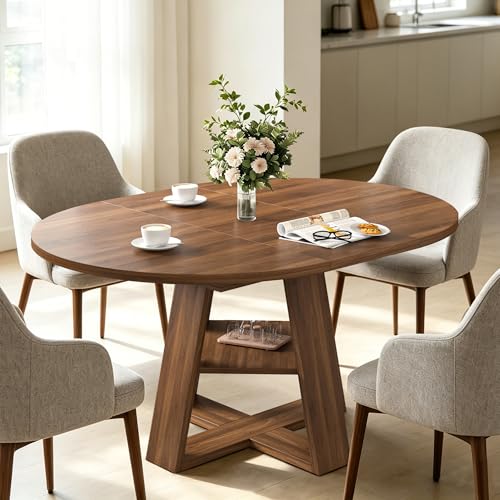
43.3"-59" Extendable Round Oval Dining Table for 4-8 with Storage Shelf | Modern Kitchen Oval Dining Table with Removable Leaves,Space Saving Extendable Table Wood Base for Kitchen Living Room Walnut
Check price on Amazon
Extendable Dining Table, Round Kitchen Dining Room Dinner Table with for 4 6 8 People, Space Saving Modern Oval Expandale Furniture with Storage and Pedestal for Kitchen Living Room (Black)
Check price on Amazon
Epecoya 59-Inch Extendable Dining Table, Kitchen Table for 4-6 People | Farmhouse Wood Space-Saving Expandable Dinner Table, Round to Oval Pedestal Dining Table, Dark Brown Walnut
Check price on Amazon
41 in-78 in Extendable Dining Room Table for 4-8, Round Expandable Kitchen Table with Fluted Base, Modern Oval Dinner Tables for Dining Room Kitchen Living Room (Black)
Check price on Amazon
41 in-78 in Extendable Dining Room Table for 4-8, Round Expandable Kitchen Table with Fluted Base, Modern Farmhouse Oval Dinner Tables for Dining Room Kitchen Living Room (Natural)
Check price on Amazon
Extendable Round Dining Table for 4-8, 39in-77in Long Large Kitchen Table with Fluted Base, Space Saving Modern Farmhouse Oval Dinner Tables for Dining Room, Kitchen, Living Room, Rustic
Check price on AmazonFrequently Asked Questions
What is a round expandable dining table?
A round expandable dining table features a circular top with a built-in mechanism that adds one or more leaves to increase seating capacity. When closed, it saves floor space; when extended, it converts to an oval shape suitable for larger gatherings.
How many people can a 60-inch round expandable table seat?
A 60-inch round table typically seats six people comfortably when closed. With one or two leaves added, it can accommodate eight to ten guests depending on the extension length and chair size. See our 60-inch round dining table overview for more detail.
What is a self-storing leaf and why does it matter?
A self-storing leaf is a table extension that folds and tucks underneath the tabletop when not in use. This eliminates the need for separate storage space and reduces the risk of damaging the leaf during storage. It is one of the most convenient mechanisms for households that extend their table often.
Which material is best for a round expandable dining table?
Solid hardwood is the most durable choice for long-term use, especially oak, maple, or walnut. Engineered wood with a veneer offers a stable mid-range option, while glass and marble tops provide a premium look but require more careful handling. Match the material to how often you host and how much maintenance you are willing to do.
How much clearance is needed around a round expandable table?
Plan for at least 36 inches of clearance from the table edge to walls or other furniture. This allows chairs to pull out comfortably and gives guests room to walk behind seated diners. Allow additional space for the extended footprint.
Can a round expandable table work in an open-plan kitchen?
Yes. The round shape reduces hard edges and improves circulation in open-plan layouts. Pair it with a consistent chair style and keep the extension path clear. If your kitchen and dining area share a footprint, browse kitchen bar seating ideas for coordinating counter stools.
Ready to Find Your Round Expandable Table?
Use the recommendations above to compare mechanisms, materials, and seating capacity. Start with your room measurements, pick a leaf type that fits your routine, and choose a market tier that matches your long-term plans.
Explore Round Expandable Options