
Island Table Guide: The Complete Kitchen Island Dining Solution
Discover how an island table transforms your kitchen into a multifunctional hub for cooking, dining, storage, and gathering. Our research-backed guide covers sizing, seating, storage, and style decisions so you can choose with confidence.
Why an island table matters: An island table is more than a piece of furniture—it is a spatial strategy. It merges prep space, dining surface, and storage into one footprint. For households researching this category, the decision usually comes down to three variables: available floor space, seating needs, and how much concealed storage you require. This guide addresses all three in practical terms.
What Is an Island Table and Who Is It For?
An island table is a freestanding or built-in kitchen unit that functions as a prep surface, a dining table, and often a storage base. Unlike a fixed kitchen island that is anchored to cabinetry, many island tables are designed to be movable or semi-permanent, giving renters and homeowners flexibility. The category includes models with drop-leaf extensions, butcher-block tops, integrated wine storage, and seating overhangs for two to four stools.
This product type suits several buyer profiles. First, open-concept homeowners who want a single surface that transitions from food prep to family meals without moving to a separate dining room. Second, apartment dwellers who need a compact dining solution that doubles as counter space. Third, homeowners with a small dining room who want to supplement or replace a traditional table with something that earns its footprint every day. Finally, entertainers who want a buffet and serving station that keeps guests close to the kitchen while keeping the formal dining area reserved for seated dinners.
Sizing an Island Table for Your Kitchen
Getting the dimensions right is the single most important decision in this category. An undersized island table feels like a floating cutting board, while an oversized one blocks circulation and makes the kitchen feel cramped. The following guidance reflects standard kitchen planning principles and applies regardless of the tier you are shopping in.
| Island Table Type | Typical Footprint | Seating Capacity | Best For |
|---|---|---|---|
| Compact prep island | 36–48 in wide × 24–30 in deep | 1–2 stools on one side | Small kitchens, apartments, galley layouts |
| Standard island table | 48–60 in wide × 30–36 in deep | 2–3 stools | Most open-concept kitchens with moderate circulation |
| Large island dining table | 60–84 in wide × 36–42 in deep | 3–4 stools plus serving space | Spacious kitchens, dual-purpose prep and dining |
| Island table with storage base | 48–72 in wide × 30–36 in deep | 2–4 stools depending on overhang | Households needing concealed storage for cookware or linens |
Two clearance rules matter more than any other measurement. First, leave at least 36 inches of walkway around the island table on any side used for passage. Second, for each stool position, plan a counter overhang of 12 to 15 inches of knee space and at least 24 inches of width per seat. If your kitchen is tight, look at a narrow dining table or a folding counter height table as alternatives before committing to a fixed island footprint.
Seating Options: Counter Height vs. Bar Height
Island tables generally come in two height standards, and the choice affects both comfort and visual flow. Counter height sits at 36 inches and pairs with 24-inch stools. It aligns naturally with standard kitchen counters, making the island feel like an extension of the prep zone. Bar height rises to 42 inches and uses 30-inch stools; it creates a stronger visual break between the kitchen and living areas and works well in open spaces where you want the island to read as a distinct zone.
If you are selecting stools separately, look for models with backs and footrests for longer meals; backless stools are easier to tuck away when not in use. Our guides to counter height bar stools with back and bar height stools with backs and arms cover ergonomic details in depth. For households that want a matched seating set, a counter stools set of 3 is a practical starting point for a two- or three-seat island overhang.
Storage: What to Look For in an Island Table Base
Storage is where island tables differentiate themselves. Entry-level models often provide open shelving or a single adjustable shelf. Mid-range models typically add drawers with soft-close hardware and a dedicated cabinet for larger items. Premium and high-end tier island tables frequently include integrated trash pull-outs, wine racks, and deep pot drawers rated for heavy cookware. When comparing options, check the following features in order of practical impact:
- Drawer glides: Full-extension ball-bearing or soft-close undermount glides are a meaningful upgrade over basic side-mounted runners, especially for daily-use drawers holding utensils and linens.
- Shelf adjustability: Adjustable or removable shelves let the base adapt to tall stockpots, small appliances, or bulk pantry items.
- Door and drawer alignment: On models with cabinet doors, confirm that hinges are adjustable and that the frame is reinforced at stress points.
- Back panel construction: A finished back panel matters if the island table is visible from a living area; unfinished backs are acceptable only when the unit sits against a wall.
- Wine and bottle storage: Dedicated slots or racks protect glassware and bottles from rolling; this feature appears most often in mid-tier and premium models.
For a focused comparison of island tables that prioritize storage and seating together, see our guide to the kitchen island with seating and storage for 2. If your priority is seating rather than storage, the broader category of kitchen bar seating covers stool and overhang configurations in more detail.
Materials, Tops, and Finish Durability
The top surface takes the most abuse in any kitchen, so material choice should follow your cooking habits. Solid wood and butcher block offer warmth and can be sanded and refinished over time, but they require periodic oiling and are vulnerable to standing water. Laminate tops are easy to clean and resist staining, though they cannot be repaired if chipped. Stone and marble tops deliver a premium look and handle heat well, but they are heavy and should be sealed against acidic spills. Stainless steel tops suit heavy-duty cooking and commercial-grade use, while painted or lacquered MDF bases are common in entry-level and mid-range models.
Construction quality matters as much as surface material. Look for corner blocks or braces at the base, reinforced leg-to-apron joints, and a top that is securely fastened rather than resting loosely. A solid build in a mid-range material will generally outlast a fragile build in a premium-looking finish. If you prefer a wood-forward kitchen, our solid wood dining table farmhouse guide explains grain, joinery, and finish expectations that apply equally to wood-top island tables.
Style Fit: Matching the Island Table to Your Kitchen
An island table should feel intentional rather than added-on. In farmhouse kitchens, a butcher-block top with a painted base and turned legs reinforces the room's character. In modern and minimalist kitchens, a waterfall-edge or slim-profile top with concealed storage keeps sightlines clean. Industrial lofts pair well with metal-framed bases and reclaimed wood tops, while coastal and light-filled kitchens benefit from white or natural finishes that reflect daylight.
Color strategy also matters. A dark island table can anchor an all-white kitchen, while a light island table keeps a black dining room palette from feeling heavy. If you are coordinating seating, a black wood bar stool or brown upholstered dining room chairs can tie the island to adjacent furniture. For households with children, consider rounded corners and wipe-clean finishes; our children's table and chairs guide covers family-friendly surface expectations.
Island Table vs. Traditional Dining Table: How to Decide
If you have a dedicated dining room, an island table is usually a supplement rather than a replacement. If your kitchen is open-concept and your meals are primarily casual, an island table can serve as the primary dining surface and free up floor area for other uses. The decision often comes down to formality: an island table excels at breakfasts, weeknight dinners, homework, and buffet service, while a traditional table with a full chair set is better suited to seated holiday dinners. Many households run both, using a dining table with 6 chairs for formal occasions and the island for daily life.
For small homes, the trade-off is sharper. A 60 seater dining table set for small space or a extendable kitchen table may deliver more seated capacity per square foot than an island table, while a kitchen table and chairs for small spaces set can be relocated when the room needs to serve another purpose. If your layout is genuinely tight, compare these options before choosing an island table.
Placement and Layout Planning
Placement determines whether an island table improves or disrupts workflow. In a galley kitchen, a narrow island table parallel to the counters creates an efficient work triangle while adding a two-seat dining zone. In an L-shaped kitchen, an island table placed opposite the long counter completes the work zone and provides a natural serving surface. In open-concept spaces, align the island table with the kitchen's primary sightline so it reads as part of the room's architecture rather than an obstacle.
Also plan electrical and lighting needs. If the island table will host small appliances, confirm outlet access before finalizing placement. Pendant lighting centered over the island improves both task visibility and ambiance; keep the bottom of pendants 30 to 36 inches above the countertop. If the island table includes a seating overhang, ensure that the stools can tuck fully under the counter when not in use to preserve walkway clearance.
Common Mistakes to Avoid
- Underestimating overhang: A seating overhang under 12 inches forces knees against the base and makes stools unusable for real meals.
- Ignoring the work triangle: An island table placed too far from the sink or range adds steps to every meal preparation.
- Choosing storage over clearance: A storage-heavy base that leaves less than 36 inches of walkway creates a daily bottleneck.
- Mismatching seat height: Bar-height stools paired with a counter-height island (or vice versa) cause uncomfortable seating and return-rate frustration.
- Skipping the finished back: An unfinished back panel is visible from living areas and undermines the island table's furniture-quality appearance.
Recommended Island Tables and Kitchen Island Dining Furniture
⚠️ AFFILIATE DISCLOSURE: This website contains affiliate links. As an affiliate Associate, we earn from qualifying purchases. If you make a purchase through these links, we may receive a small commission at no additional cost to you. Read our full affiliate policy.

GRUSIGN Kitchen Island with Storage, 41.7" Rolling Cart with Drop Leaf, Portable Island Table on Wheels, Spice Rack, Towel Rack and Drawer, White, 41.7" L x 29.5" W
Check price on Amazon
Kitchen Island with 3 Shelves, Rolling Kitchen Cart with 6 Hooks and Protective Shelf, Microwave Stand on Lockable Wheels, Bakers Rack Coffee Bar for Dining, Living Room, Outdoor, Metal Frame
Check price on Amazon
LITTLE TREE 55 Inches Kitchen Island with Storage, 3-Tier Farmhouse Wooden Stationary Island Table with Large Worktop & Leg Room, Modern Coffee Bar Table with Storage Shelf for Kitchen, Rustic Brown
Check price on Amazon
Homiflex Kitchen Island Table with Storage, 55" Large Island Table White | Moveable Kitchen Island with RGB LED Lights, Marble Dining Table with Spacious Storage, Kitchen Cabinet Rolling Kitchen Cart
Check price on Amazon
ONBRILL Kitchen Island with 2 Storage Cabinets & 4 Drawers, White | Extra-Large Imitation Marble Tabletop Dining Table with Power Outlet, Island Bar Table for Kitchen Dining Room Living Room
Check price on Amazon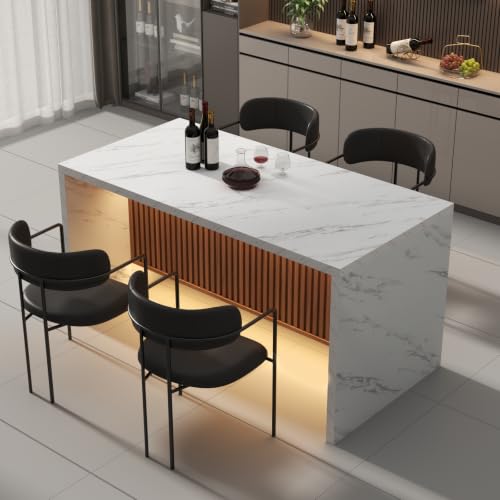
63" Large Imitation Marble Dining Table for 4-6 People, with LED Lights | Modern Kitchen Island Table, Marble Stripes Kitchen Dining Table with Grille design for Dining Room,Living Room (White)
Check price on Amazon
St.Mandyu 47”- 90” Flip-Top Kitchen Island with Extendable Dining Table, Mobile Rolling Storage Kitchen Cart with 3 Drawers & Spice Rack, Multi-Functional Bar Island Table Seats 2-4, Black
Check price on Amazon
Tribesigns 71 Inch Stationery Kitchen Island with Storage Cabinet | 35.4" Counter Height Bar Table with Inner Shelves, Farmhouse Kitchen Work Island, Brown
Check price on AmazonFrequently Asked Questions
How much clearance do I need around an island table?
Allow at least 36 inches of walkway clearance around the island. For seating areas, add 24 inches of counter overhang for each stool and keep 12 inches between the stool back and the nearest wall.
Can an island table replace a formal dining table?
Yes, for many households an island table with seating for 4 to 6 can serve as the primary dining surface. It works best in open-concept kitchens where casual meals are the norm and formal entertaining is occasional.
What height should an island table be for seating?
Standard counter height is 36 inches with 24-inch stools, while bar height is 42 inches with 30-inch stools. Counter height suits everyday meals, while bar height creates a more distinct visual separation.
Do island tables need to be anchored to the floor?
Freestanding island tables do not require anchoring, though anti-tip straps are recommended for units with drawers or doors that open fully. Built-in island tables are anchored to the floor and surrounding cabinetry during installation.
What is the best material for an island table top?
Butcher block and solid wood offer warmth and refinishability; laminate is easy to clean and stain-resistant; stone and marble handle heat but need sealing; stainless steel suits heavy-duty cooking. Choose based on cooking habits and maintenance willingness.
Ready to Choose Your Island Table?
Use the guidance above to shortlist models by footprint, seating, and storage. Then compare features side by side using our recommended product listings. Every product in the section above has been selected for relevance to the island table category, so you can move from research to a confident decision.