
Farmhouse Style Dining Table: The Complete Guide
Bring warmth, character, and timeless rustic charm to your home. Learn how to choose the perfect farmhouse dining table—from wood types and sizing to bench seating and styling—so you can gather family and friends around a table that truly feels like home.
Start Your Table JourneyWhy the farmhouse table endures: The farmhouse style dining table is more than furniture—it is the heart of the home. Its solid wood construction, generous proportions, and honest craftsmanship evoke a sense of gathering and hospitality that no other style can quite match. Whether you are furnishing a country cottage, a modern suburban home, or an urban loft, a farmhouse table instantly anchors the room with approachable elegance.
What Defines a Farmhouse Style Dining Table
A farmhouse dining table is distinguished by several signature design elements that set it apart from contemporary or formal dining furniture. Understanding these characteristics helps you recognize authentic farmhouse quality and avoid pieces that only imitate the look superficially.
Solid Wood Construction
True farmhouse tables are built from solid hardwood—typically oak, pine, or reclaimed timber. The substantial top thickness and visible joinery signal durability and honest craftsmanship.
Turned or Tapered Legs
Classic farmhouse tables feature sturdy turned legs with decorative profiles or clean tapered legs. Both styles communicate rustic simplicity while providing structural strength.
Planked or Distressed Tops
The tabletop often consists of planks joined together rather than a single slab. Distressing, whitewashing, and visible grain celebrate the wood's natural character and age gracefully.
Generous Apron and Stretcher
A thick apron beneath the top and a stretcher bar between the legs add visual weight and structural integrity—hallmarks of tables designed to last for generations.
Farmhouse style has evolved into a broader aesthetic that includes modern farmhouse dining tables, which blend these rustic roots with cleaner lines and lighter finishes. This versatility makes farmhouse tables suitable for nearly any interior, from a cozy breakfast nook to a formal dining room.
Key Buying Factors to Consider Before You Choose
Before you commit to a farmhouse table, evaluate these critical factors. Each decision influences not only how the table looks but also how it functions in your daily life for years to come.
- Room dimensions and clearance: Measure your dining space carefully. Leave at least 36 inches of clearance around the table for comfortable chair movement and walkways. For tight spaces, consider a drop-leaf dining table or an extendable dining table for small spaces.
- Seating capacity needs: Will the table primarily serve a family of four, or do you regularly host larger gatherings? An expandable dining table provides flexibility without permanently occupying excess floor space.
- Material and finish durability: Families with young children or pets should prioritize hardwoods like oak or maple with a protective topcoat. Reclaimed wood offers character but may require more careful maintenance.
- Bench vs. chair configuration: A farmhouse table with benches maximizes seating and reinforces the casual farmhouse aesthetic. Chairs offer individual comfort and back support for longer meals.
- Style integration: Ensure the table's finish and leg profile harmonize with your existing decor. A whitewashed table suits coastal farmhouse interiors, while dark stained oak anchors industrial or traditional spaces.
Tape out the table's footprint on your floor using painter's tape. Then walk around it—this simple step reveals whether the size feels right before you commit. Account for both everyday use and your largest anticipated gathering.
Farmhouse Dining Table Tiers: A Comparison Overview
Farmhouse tables span a wide spectrum of construction quality and design refinement. Use this tier comparison to understand what to expect at each level and identify which category aligns with your long-term needs. All tiers described below reflect market positioning relative to one another, not absolute numeric categories.
| Tier | Construction Highlights | Best For | Longevity Outlook |
|---|---|---|---|
| Entry-Level | Engineered wood or pine with veneer; simpler joinery; factory finishes | First apartments, occasional-use dining rooms, renters | Solid for casual use; may show wear sooner with heavy daily use |
| Mid-Range | Solid pine or rubberwood; reinforced joinery; hand-applied finishes | Family homes, everyday dining, moderate entertaining | Reliable durability; refinishable for extended life |
| Premium | Solid oak or maple; mortise-and-tenon joinery; premium catalyzed finishes | Serious entertainers, large families, design-conscious homeowners | Decades of service with proper care; heirloom potential |
| Luxury | Reclaimed or rare hardwood; handcrafted joinery; artisanal hand-rubbed oil finishes | Custom homes, collectors, those seeking a statement piece | Generational investment; each piece uniquely charactered |
A mid-range table often represents the sweet spot for most households—offering solid wood construction and refinishable surfaces without the exclusivity of the luxury tier. Premium tables justify their positioning through joinery that resists wobble and finishes that stand up to daily cleaning.
Wood and Material Selection for Your Farmhouse Table
The wood species you choose dramatically affects the table's appearance, weight, durability, and maintenance requirements. Here is how the most common farmhouse table woods compare.
Oak
Dense, heavy, and exceptionally durable. Oak's prominent grain and warm honey tones make it a quintessential farmhouse choice. It accepts stains beautifully and resists dents well. Best suited for premium and luxury tiers.
Pine
Softer than oak but rich in rustic character. Pine takes paint and whitewash exceptionally well, making it ideal for distressed farmhouse finishes. It dents more easily, which many homeowners embrace as patina. Common in mid-range tables.
Reclaimed Wood
Salvaged from old barns, factories, or homes. Reclaimed timber offers unmatched authentic character—nail holes, weathering, and varied patina. Each table is one-of-a-kind. Typically found in premium and luxury tiers.
Maple
Hard and fine-grained with a more uniform appearance than oak. Maple suits homeowners who want farmhouse durability with a cleaner, more contemporary aesthetic. Excellent for modern farmhouse tables.
Beyond the wood itself, consider the finish. A DIY dining table project allows you to experiment with milk paint, wax, or oil finishes, while factory-finished tables offer convenience and consistent results. For a truly rustic look, explore farm house tables with hand-distressed surfaces that celebrate imperfection.
Sizing Your Farmhouse Table for Comfort and Flow
Correct sizing is the difference between a table that feels welcoming and one that crowds your room. Use these guidelines to determine the right dimensions for your space.
- Width: A minimum of 36 inches is needed for comfortable dining with place settings on both sides. 40–42 inches provides more generous serving space in the center.
- Length per person: Allow approximately 24 inches of table length per seated diner. A 72-inch table seats six comfortably; 96 inches seats eight to ten.
- Clearance: Maintain at least 36 inches between the table edge and walls or other furniture to allow chairs to pull out freely.
- Extension flexibility: If your guest count varies, an extendable dining table or a dining table with leaf adapts to both intimate weeknight dinners and holiday gatherings.
For compact dining areas, a farmhouse-style round dining table and chairs can improve traffic flow while retaining rustic charm. Round tables eliminate sharp corners and encourage conversation.
Bench Seating vs. Chairs: Choosing the Right Combination
One of the most defining features of farmhouse dining is the bench. But is a bench right for your household? Consider these trade-offs.
Why Choose Benches
Benches maximize seating along the table's length, tuck neatly underneath when not in use, and reinforce the casual farmhouse aesthetic. A farm table and bench combination is especially space-efficient for narrow dining rooms. Children can slide in easily, and benches accommodate extra guests without a dedicated chair.
Why Choose Chairs
Chairs provide back support and individual adjustability—important for elderly guests or long, leisurely meals. Dining room chairs can also be mixed with a bench to create a balanced, layered look: bench on one side, chairs on the other.
A hybrid approach works beautifully: pair a farmhouse dining table with bench on the wall side and upholstered chairs on the open side. This combination balances comfort with the signature farmhouse look and keeps the room feeling open.
Styling Your Farmhouse Dining Table
Once your table is in place, styling transforms it from furniture to focal point. Farmhouse style celebrates natural textures, simple centerpieces, and a lived-in elegance.
- Centerpieces: A wooden dough bowl filled with seasonal fruit, a cluster of ceramic vases with wildflowers, or a row of simple glass candle holders all suit the farmhouse aesthetic. A fall dining table centerpiece can incorporate dried branches and pumpkins for autumn warmth.
- Table linens: Natural linen runners and cloth napkins soften the wood's visual weight. Choose earthy tones—oatmeal, sage, or terracotta—to complement the rustic palette.
- Tableware: Stoneware plates, ceramic mugs, and wooden serving boards reinforce farmhouse authenticity. A farmhouse buffet cabinet nearby provides convenient storage for these pieces.
- Lighting: A farmhouse light for dining room—such as a metal pendant or wooden chandelier—casts warm light that enhances the table's natural grain.
For a complete room look, explore farmhouse dining rooms and farmhouse dining room sets that coordinate table, seating, and storage seamlessly.
Care and Maintenance for a Lifetime of Use
Solid wood farmhouse tables are remarkably forgiving, but consistent care preserves their beauty and structural integrity for generations.
- Daily wiping: Use a soft, slightly damp cloth to wipe spills promptly. Avoid harsh chemical cleaners that can strip finishes.
- Heat and moisture protection: Always use trivets or placemats under hot dishes and coasters under drinks. Ring marks from cold glasses are preventable.
- Humidity control: Wood expands and contracts with humidity changes. Maintain indoor relative humidity between 40–50% to minimize seasonal movement and cracking.
- Periodic conditioning: Apply a quality wood conditioner or furniture wax every six to twelve months, depending on use and climate. This nourishes the wood and renews the finish.
- Felt pads: Attach felt pads to the bottom of decor items and chair legs to prevent scratches.
For more detailed guidance, including scratch repair and refinishing techniques, explore our comprehensive dining care and maintenance resources.
Ready to Bring Farmhouse Warmth Home?
Now that you understand the key considerations, you are prepared to choose a farmhouse style dining table with confidence. Explore our curated selection of farmhouse dining tables—each chosen for construction quality and authentic rustic character.
Explore Farmhouse Dining TablesRecommended Farmhouse Style Dining Tables
⚠️ AFFILIATE DISCLOSURE: This website contains affiliate links. As an affiliate Associate, we earn from qualifying purchases. If you make a purchase through these links, we may receive a small commission at no additional cost to you. Read our full affiliate policy.

Plank+Beam Classic 72 Inch Dining Table, Rectangular, Pecan Wirebrush | Non-Toxic Finishes, Versatile Design, Farmhouse Design, Elegant Details, Easy Assembly, Quick Setup, Solid Wood
Check price on Amazon
63-Inch Dining Table for 4-6 People, Rustic Farmhouse Long Kitchen Dinner Table for Dining Room, Yellowish Brown
Check price on Amazon
71-87 Inch Extendable Dining Room Table, Rustic Wooden Kitchen Table 6-10 | STHOUYN Expandable Dining Table, Farmhouse Rustic Style, Rectangular Wooden Top, Seats 6-10, Brown Kitchen or Dining Room
Check price on Amazon
IDEALHOUSE 71" Farmhouse Dining Table for 6-8, Rectangular Kitchen Table | Thick Top and Barn Style Triangular Legs, Large Wooden Dining Room Table, Dinner Table for Dining Room, Apartment, Walnut
Check price on Amazon
Garvee 71" Farmhouse Dining Table for 4-6, Kitchen Table w/Thick Tabletop, Wood Strip Base, Wider Legs, Large Rectangular Dining Room Table for Kitchen, Apartment & Family Gatherings, Walnut
Check price on Amazon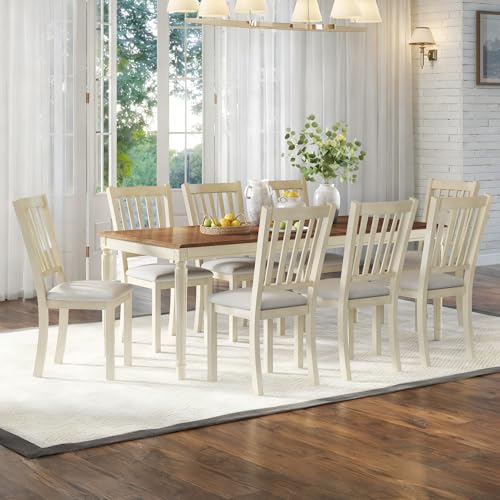
AMERLIFE 9 Piece Farmhouse Dining Table Set with 79" Table, Cream | Solid Rubberwood Frame, 8 Chairs Included, Farmhouse Design, Upholstered Seating, Rustic Cream Finish
Check price on Amazon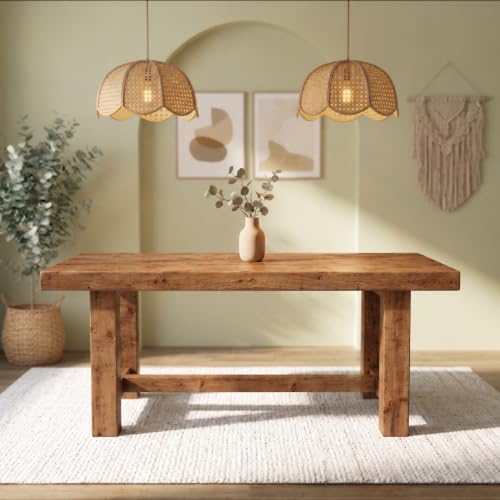
TRIBEWOOD 63-Inch Solid Wood Rectangular Dining Table for 4-6 People | Farmhouse Kitchen Table with Trestle Base, Real Wood Dining Tables for Dining Room,Apartment ,Elegant Details, Easy Assembly
Check price on Amazon
WAMPAT 74.8-inch Long Vintage Farmhouse Dining Table for 6-8 People | Weathered Wooden Textured Tabletop,Solid Wood Double Pedestal Legs with T-Shaped Feet,Non-Extendable,Dark Walnut Brown
Check price on AmazonFrequently Asked Questions
Solid oak, pine, and reclaimed wood are the most popular choices for farmhouse dining tables. Oak offers exceptional durability and prominent grain, pine provides a softer rustic character and takes paint well, and reclaimed wood delivers authentic weathered charm with a unique story. Maple is an excellent choice for a cleaner modern farmhouse look.
Allow 36 inches of clearance around the table for chair pull-out and walkways. For seating, plan 24 inches of table width per person. A 72-inch rectangular table comfortably seats six, while a 96-inch table seats eight to ten guests. For small spaces, consider a drop-leaf or extendable design.
Farmhouse tables feature distinctive design elements such as turned or tapered legs, a thick apron, planked tops, and often a distressed or whitewashed finish. They emphasize solid wood construction and casual, welcoming aesthetics compared to more formal dining tables. Farmhouse tables frequently incorporate bench seating as well.
Absolutely. Modern farmhouse style blends rustic warmth with clean lines. Choose a table with simpler leg profiles, pair it with contemporary chairs, and use a neutral color palette to bridge the gap between rustic and modern design. A lighter finish or a round farmhouse table can feel especially at home in modern interiors.
Use felt pads under all decor items, place hot dishes on trivets, wipe spills immediately with a soft cloth, and apply a quality wood conditioner every six to twelve months. Consider a custom table pad for heavy daily use. Keep indoor humidity stable to prevent wood movement and cracking.