
Kitchen Island with Drop Leaf Table: The Smart Space-Saving Centerpiece
A drop leaf kitchen island gives you a prep station, a dining surface, and extra storage in a single footprint. This guide explains how these convertible islands work, which sizes suit which kitchens, and what to check before you choose one.
Why this guide matters: A drop leaf island is one of the most versatile pieces you can add to a kitchen. The hinged leaf folds flat against the cabinet when you need floor space, then flips up to become a breakfast bar, a serving counter, or a homework spot. Below you will find sizing guidance, seating math, storage considerations, and a structured buying checklist written for shoppers who already know they want this product and need to make the right choice.
What Exactly Is a Drop Leaf Kitchen Island?
A kitchen island with a drop leaf table is a freestanding or built-in island whose countertop includes one or two hinged sections. In its closed position, the leaf hangs vertically against the island body, reducing depth to a slim prep surface. When you raise the leaf, it locks into place as a horizontal extension, creating a dining or serving area that can seat two to four people depending on the model.
The mechanism is essentially the same idea as a classic drop leaf dining table, scaled to island height. Most designs use sturdy piano hinges or heavy-duty butt hinges, with support legs or brackets that swing out to hold the leaf level. Because the leaf is part of the island, you avoid needing a separate dining table in a small kitchen, which is why this format is popular in apartments, townhomes, and galley layouts.
If you are comparing this option with a fixed island, it helps to understand the broader category of kitchen island tables and how convertible models differ from standard kitchen island dining tables. The key distinction is that a drop leaf design changes its footprint on demand, while a fixed island keeps the same dimensions at all times.
How the Drop Leaf Mechanism Works
Understanding the hardware helps you judge build quality. There are three common approaches:
- Single side leaf: One long leaf folds down along the length of the island. This is the most common configuration and typically adds 12 to 18 inches of depth when raised.
- Double side leaves: Two leaves fold down on opposite sides, roughly doubling the surface area when both are open. These models usually need more clearance around the island.
- End leaf: A shorter leaf folds down at one end, extending the island's length rather than its depth. This works well in narrow galley kitchens.
Support systems matter just as much as the hinge. Entry-level models often rely on simple folding brackets, while mid-range and premium models use gateleg supports, locking hinges, or telescoping braces. If you plan to seat people at the leaf regularly, look for a model with a swing-out leg or a reinforced bracket rated for the load. Heavy-duty hinges and solid build quality are the descriptors to watch for in product listings.
Sizing Guide: Matching the Island to Your Kitchen
Measure twice before you buy. A drop leaf island is only space-saving if it fits your room in both the closed and open positions.
Clearance is the detail most shoppers underestimate. Plan for at least 36 inches of walkway on all sides, and 42 to 48 inches on the side where the leaf opens and people sit. If your kitchen is tight, a kitchen island for small kitchen with seating layout guide can help you map traffic flow before you commit. For galley kitchens, a model with an end leaf often works better than a wide side leaf because the extension runs along the room's length instead of blocking the aisle.
If you are unsure whether your counter height matches your chairs, review the standard dimensions in this counter height table height guide. Mismatched seat-to-counter height is one of the most common reasons people end up disappointed with an island purchase.
How Many People Can Actually Sit at the Leaf?
Seating claims in product listings can be optimistic. Use this practical rule of thumb:
- Two seats: Requires roughly 24 to 30 inches of usable leaf length per person when seated side by side.
- Three seats: Usually needs a leaf at least 60 inches long, or a double-leaf configuration.
- Four seats: Generally requires a double-leaf model or a very long single leaf with backless stools tucked underneath.
Stool choice affects comfort as much as leaf size. Backless stools slide under the leaf when it is closed, which keeps the island compact. If you prefer back support, choose a model whose leaf extends far enough that the chair back clears the island edge. You can compare styles in this guide to backless stools, and if you want back support, look at bar height stools with backs.
For households that frequently host, a model in the kitchen island with seating and storage for 4 category offers a better long-term fit than a two-seat starter model, even if the extra capacity is only used occasionally.
Storage: What to Expect Beneath the Countertop
Most drop leaf islands include some form of storage, but depth and configuration vary widely by tier.
- Essential tier: Open shelves or a single adjustable shelf. Good for bowls, cutting boards, and small appliances.
- Balanced tier: A mix of drawers and cabinet doors, often with a towel bar or spice rack on one side.
- Top-tier: Soft-close drawers, adjustable shelving, wine storage, and sometimes a built-in trash pull-out or charging station.
Check the interior depth before assuming a drawer will fit your cookware. Storage depth typically tracks the closed depth of the island, so a slim 18-inch island will have shallow drawers. If generous storage is a priority, a freestanding kitchen island with storage and seating format often provides deeper cabinets than a drop leaf model at the same counter length.
Materials, Finishes, and Durability
The countertop takes the most abuse, so choose it first. Solid wood and butcher block tops are warm and repairable but need periodic conditioning. Marble and stone tops resist heat and scratches but are heavy, so the island frame must be reinforced. Laminate and engineered tops sit in the entry-level and mid-range tiers and offer the easiest cleaning.
For the base, solid wood and high-grade steel frames are the most durable. Painted finishes in light neutrals suit modern and farmhouse kitchens, while stained wood tones pair well with traditional and industrial styles. If you want to coordinate the island with other seating, this guide to matching dining room chairs and bar stools explains how to keep wood tones consistent.
Hinge quality deserves a close look. Heavy-duty hinges with a locking mechanism prevent the leaf from sagging over time. On models with painted finishes, check that the hinge hardware is rust-proof or coated, especially if the island sits near a sink or dishwasher.
Comparing Drop Leaf Islands by Tier
Instead of shopping by number, shop by tier. The table below describes what each tier generally delivers so you can decide where your priorities sit.
| Tier | Best For | Typical Build | Leaf Mechanism |
|---|---|---|---|
| Essential tier | First apartments, small kitchens, occasional seating | Engineered wood or laminate top, painted base | Simple folding brackets, single leaf |
| Balanced tier | Everyday family use, breakfast nook replacement | Solid wood top options, reinforced frame | Gateleg or locking hinge, single or double leaf |
| Premium | Frequent entertaining, open-concept kitchens | Butcher block or stone top, hardwood base | Heavy-duty hinges, self-storing support legs |
| Luxury | Design-led kitchens, long-term investment | Custom joinery, premium stone or hardwood | Concealed hardware, soft-close integrated storage |
Advantages and Trade-Offs
Where a drop leaf island shines
- Dual purpose: Prep surface and dining surface in one unit.
- Space flexibility: The footprint shrinks when the leaf is folded.
- No separate table needed: Ideal for studios and open-plan apartments.
- Serving station: The raised leaf works well for buffet-style meals and holiday spreads.
What to keep in mind
- Hinge wear: Cheaper hinges can loosen over years of daily use.
- Clearance needs: The open leaf requires more floor space than the closed island suggests.
- Limited legroom: Some models have shallow knee space under the leaf.
- Shallow storage: Slim islands trade storage depth for a compact footprint.
Buying Checklist: 10 Points to Verify Before You Order
- Measure closed and open depth against your kitchen walkway.
- Confirm counter height so your stools or chairs match.
- Check the hinge rating and whether a support leg swings out.
- Verify seating capacity using the 24-to-30-inch per-person rule.
- Inspect storage depth for your largest pots or appliances.
- Review the countertop material for heat, scratch, and stain resistance.
- Look for locking mechanisms that hold the leaf level.
- Consider mobility: locking casters help if you reposition the island often.
- Plan outlet placement if you want a charging station or small appliance use.
- Read warranty and return terms for the hinge assembly specifically.
Recommended Kitchen Island with Drop Leaf Table Products
⚠️ AFFILIATE DISCLOSURE: This website contains affiliate links. As an affiliate Associate, we earn from qualifying purchases. If you make a purchase through these links, we may receive a small commission at no additional cost to you. Read our full affiliate policy.

GRUSIGN Kitchen Island with Storage, 41.7" Rolling Cart with Drop Leaf, Portable Island Table on Wheels, Spice Rack, Towel Rack and Drawer, White, 41.7" L x 29.5" W
Check price on Amazon
VEVOR Kitchen Island Cart 35" Width Mobile Carts with Storage Cabinet | Rolling Table with Drop Leaf, Spice Rack, Towel Bar, Adjustable Shelf, Drawer, and Hooks, Portable Islands on Wheels, Black
Check price on Amazon
RALGEND Kitchen Island with Power Outlets & Drop Leaf, Kitchen Cart with Storage, Drawer and Spice Rack, Tower Rack, Island Table, Black and Rustic Brown
Check price on Amazon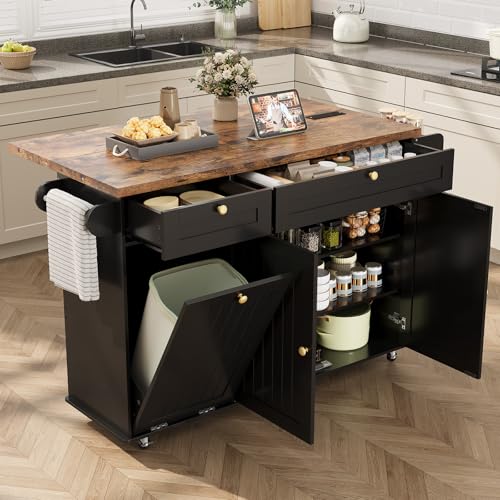
ComfyCorner 60" Rolling Large Kitchen Island on Wheels with Extendable Table, Drop Leaf & Power Outlet, Mobile Kitchen Cart with Storage Cabinet, 2 Drawers, Spice Rack, Towel & Knife Holder, Black
Check price on Amazon
IRONCK Kitchen Island Table with Storage, Rolling Kitchen Cart with Power Outlet, Storage Cabinets on Wheels with Drop Leaf, Portable for Kitchen and Dining Room, White
Check price on Amazon
Bigbiglife Kitchen Island with Drop Leaf, Island Table on Wheels with Storage Cabinet, Modern Sideboard Buffet with Doors, Rolling Kitchen Island Cart for Dinning Room,Green
Check price on Amazon
Shintenchi Kitchen Island w/Dropleaf Rolling Kitchen Table w/Seating | Kitchen Island Table with Storage, Kitchen Cabinet on Wheels with Seating Area for Kitchen, Bar Cart with Cabinet, White
Check price on AmazonRelated Island Formats Worth Considering
If a drop leaf is close to what you need but not quite right, these alternatives may fit better:
- A kitchen island extendable model uses a sliding or pull-out section instead of a hinge, which some people find sturdier.
- A kitchen island extension adds a separate attachable surface rather than a folding leaf.
- A kitchen island with chairs setup keeps a fixed counter and pairs it with dedicated seating.
- For very tight rooms, a kitchen island with storage and seating for 2 delivers similar function in a narrower frame.
- If you entertain larger groups, a kitchen island with seating for 6 and storage may be the better long-term choice.
Also worth reviewing is the broader kitchen furniture category, which covers hutches, carts, and freestanding pieces that can complement an island. For a classic sit-down dining setup nearby, the kitchen island dining table guide compares island-height dining with traditional table heights.
Ready to Choose Your Drop Leaf Island?
Use the product picks above to compare tiers side by side. Verify dimensions, hinge quality, and seating capacity against your kitchen measurements, then move forward with confidence.
View Recommended ModelsFrequently Asked Questions
What is a kitchen island with a drop leaf table?
A kitchen island with a drop leaf table is a compact island that includes a hinged extension leaf. When folded down, the island stays slim for prep work; when raised, the leaf creates a dining or serving surface for two to four people.
How much seating does a drop leaf island provide?
Most models seat two comfortably with the leaf raised, while larger mid-range and premium models seat three to four. The extended leaf typically adds 12 to 24 inches of depth, and the practical seating rule is 24 to 30 inches of leaf length per person.
Do drop leaf kitchen islands include storage?
Many models include open shelves, drawers, or cabinet doors beneath the countertop. Storage depth usually tracks the closed depth of the island, so slim models have shallower drawers. Premium models often add towel bars, spice racks, or wine storage.
How much clearance is needed around a drop leaf island?
Plan for at least 36 inches of clearance on all walkway sides and 42 to 48 inches where the leaf opens and people sit. This keeps traffic flowing and prevents chairs from blocking appliances.
Are drop leaf islands suitable for small kitchens?
Yes. A drop leaf island is one of the most space-efficient options because the leaf folds down when not in use, reducing the footprint to a narrow prep station. Entry-level models often fit kitchens as small as 8 by 10 feet.
Can I use bar stools with a drop leaf island?
Yes, provided the counter height matches the stool height. Backless stools are the most practical choice because they slide under the leaf when it is closed. Check the seat-to-counter measurement before ordering.