

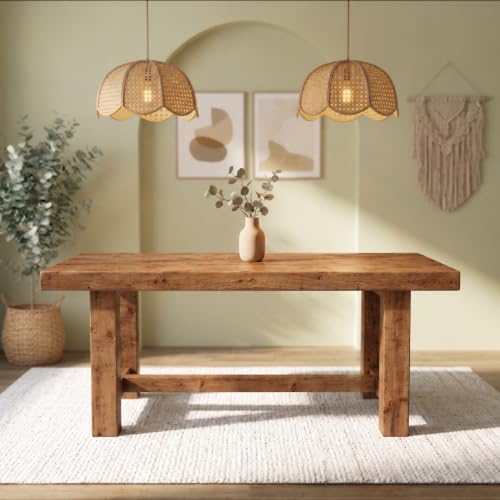
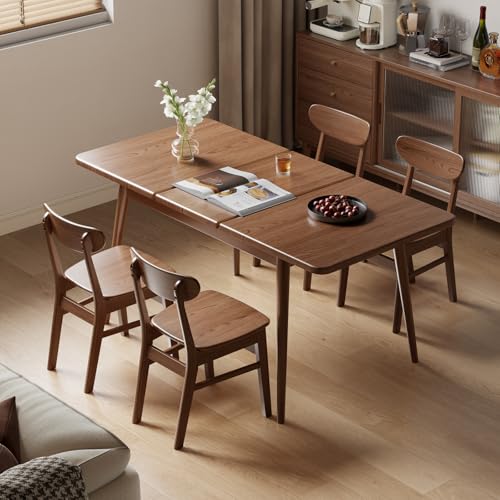


Why a Solid Wood Kitchen Table Is Worth Considering
The kitchen table is the hardest-working surface in most homes. It hosts breakfasts, homework sessions, holiday projects, and late-night conversations. That level of daily use demands a material that can take punishment and still look good. Solid wood is the only table construction that can be sanded back to a fresh surface after years of scratches and stains, which is why it remains the benchmark for durability in family kitchens.
Beyond resilience, solid timber is a natural material with genuine variation in grain and tone — no two tabletops look exactly alike. It also ages gracefully. A solid wood dining table that starts with a light finish can develop a warm patina over years of sunlight exposure, giving the piece character that manufactured surfaces simply cannot replicate.
If you are still weighing wood against other materials, it helps to understand the trade-offs. Solid wood demands more care than laminate or glass, and it reacts to humidity changes. But for families who want a table they can hand down rather than replace, it is the most reliable choice.
Wood Species: Which Timber Suits Your Kitchen?
The species you choose affects hardness, grain character, color, and how the table responds to wear. Below is a practical comparison of the most common options for kitchen tables.
| Wood Species | Character | Best For | Market Tier |
|---|---|---|---|
| Oak (solid) | Hard, prominent grain, highly durable | Busy family kitchens, farmhouse styles | Balanced tier |
| Maple | Dense, fine grain, smooth surface | Modern and minimalist kitchens | Mid-tier |
| Cherry | Medium hardness, warm tone that deepens over time | Traditional and transitional spaces | High-end tier |
| Walnut | Rich dark grain, elegant and distinctive | Statement tables, formal kitchens | Premium |
| Pine | Softer timber, rustic knotty appearance | Casual farmhouse and cottage settings | Entry-level |
| Rubberwood | Even grain, reliable durability | Everyday kitchen tables on a balanced tier | Essential tier |
For most households, oak or maple offers the best combination of hardness and versatility. Pine is a reasonable entry-level choice if the table will be lightly used or if you plan to paint it. Walnut sits at the premium end and is worth the upgrade for buyers who want the table to be a focal point. Whichever species you pick, confirm that the top is genuinely solid timber rather than a veneer over particle board — the difference shows up within a few years of daily use.
How to Verify Solid Wood Construction
- Check the end grain: Solid wood shows continuous grain running through the edge; veneer shows a thin layer over a different core.
- Look underneath: Solid tops are usually joined with visible planks or boards, sometimes with breadboard ends.
- Feel the weight: Solid wood tables are noticeably heavier than composite alternatives of the same size.
- Ask about the joinery: Quality makers will explain whether the top is a single slab, edge-glued planks, or a butcher-block style lamination.
Size and Shape: Matching the Table to Your Kitchen
Measure your space before you fall in love with a table. A common mistake is buying based on the table's footprint alone, forgetting that chairs need room to pull out and people need room to walk behind them.
A practical rule is to allow at least 36 inches of clearance between the table edge and any wall or counter, and around 24 to 30 inches of table length per seated person. Round tables work well in compact kitchens because they eliminate corners and make traffic flow easier. Rectangular tables suit longer rooms and offer more usable surface for serving dishes.
If your kitchen is tight, explore small kitchen table sets and space-saving kitchen table options that combine compact footprints with clever extensions. Drop-leaf designs are particularly practical: the table stays narrow day to day and expands when guests arrive. For a deeper comparison of these designs, see our guide to small kitchen tables with drop-leaf and chairs.
Seating capacity planning matters too. A table that seats four comfortably should not be forced to seat six unless the design is expressly built for it. If you regularly host, consider an extendable solid wood dining table so you can keep the everyday footprint modest while accommodating larger gatherings.
Finish Options and What They Mean for Maintenance
The finish determines how much upkeep your table needs and how well it resists daily accidents.
- Oil and wax finishes: Penetrate the wood and leave a natural feel. They are easy to spot-repair but require re-oiling several times a year. Good for buyers who enjoy light maintenance.
- Lacquer and polyurethane: Form a protective film on top of the wood. More resistant to spills and heat in the short term, but scratches are harder to repair invisibly.
- Conversion varnish and catalyzed finishes: Found on top-tier and professional-grade tables, these offer strong resistance to moisture and abrasion, making them a smart choice for busy kitchens.
- Soap-treated finishes: Popular on lighter woods such as ash and oak; simple to maintain with soap flakes and water, and easy to refresh.
Match the finish to your habits. Households with young children usually benefit from a film-forming finish with good moisture resistance, while buyers who value authenticity and are willing to do occasional upkeep often prefer oiled surfaces.
Styling Solid Wood Kitchen Tables
Solid wood is naturally versatile. A light oak table suits a bright, airy kitchen and pairs well with painted or spindle-back chairs. A darker walnut or stained finish anchors a moodier space and works with leather or upholstered seating. For farmhouse kitchens, a solid wood farmhouse table with a distressed or whitewashed finish fits the aesthetic beautifully.
Chairs deserve as much thought as the table itself. Light solid wood dining chairs keep the visual weight down in small rooms, while spindle chairs add texture and traditional charm. Benches are another space-efficient option for one side of the table, especially in narrow kitchens. If you need inspiration for coordinating the whole room, our collection of solid wood dining room sets shows how tables, chairs, and storage pieces work together.
Round tabletops soften hard lines and encourage conversation. A solid wood round table works well in square kitchens and breakfast nooks, while a solid wood round dining table can scale up for larger rooms.
Care and Maintenance for Longevity
Solid wood rewards consistent, simple care. Follow these habits to keep the surface healthy for decades:
- Wipe spills promptly with a soft, slightly damp cloth, then dry immediately. Standing water is the enemy of wood finishes.
- Use coasters and trivets for hot dishes and cold drinks to prevent rings and heat marks.
- Dust regularly with a microfiber cloth to prevent abrasive grit from dulling the finish.
- Control humidity — aim for a stable indoor environment, since rapid moisture swings cause timber to expand and contract.
- Keep out of direct sunlight or rotate the table periodically so the finish fades evenly.
- Re-oil or wax oiled surfaces every few months, and consider a protective table pad for heavy-use periods.
For a more detailed routine, see our care and maintenance guides. If the surface eventually shows wear, solid wood can be sanded and refinished — an option no veneer table can offer.
Choosing Between Solid Wood and Other Table Types
Solid wood is not the only option, and it helps to know when another material might serve you better. Glass and metal tables suit very contemporary kitchens and are easy to wipe clean, but they can feel cold and show fingerprints. Laminate tops resist scratches but cannot be repaired once worn. Stone tops are heavy and permanent. If you want a material that balances warmth, repairability, and durability, solid timber remains the strongest all-round answer for a kitchen table that sees daily family life.
Buyers comparing materials within the wood category should also look at solid oak dining tables, which offer some of the best hardness-to-character ratios available, and solid wood table tops if you are replacing just the surface on an existing base. For a broader overview of timber options, our solid wood furniture guide covers construction, sourcing, and quality signals.
Frequently Asked Questions
What is the best wood type for a solid wood kitchen table?
Oak, maple, and cherry are among the best choices. Oak offers exceptional durability and prominent grain, maple provides a smooth uniform surface that resists wear, and cherry develops a rich patina over time. Walnut is a premium option prized for its dark, elegant grain.
How do I protect a solid wood kitchen table from daily wear?
Use coasters and trivets for hot items, wipe spills promptly, and apply a quality wood conditioner or wax every few months. Consider a table pad for heavy-use periods and keep the table away from direct sunlight and extreme humidity.
What size solid wood kitchen table fits a small kitchen?
For compact kitchens, consider tables around 36 to 48 inches long and 30 inches wide, or round tables with a 36 to 42 inch diameter. Drop-leaf and extendable designs let you expand seating when guests arrive without permanently occupying floor space.
Is a solid wood kitchen table worth the investment?
Yes, for most households. Solid wood can be sanded, repaired, and refinished, giving it a service life measured in decades rather than years. The long-term investment is usually lower than replacing a worn composite table multiple times.
Ready to Find Your Solid Wood Kitchen Table?
Explore our curated selection of solid wood kitchen tables and compare features, sizes, and styles to match your space.
VIEW RECOMMENDED TABLES