
Stools With Backs: Comfortable Counter & Bar Seating Guide
Backed stools combine the casual convenience of counter seating with the support of a proper chair. This guide explains back styles, seat heights, frame materials, and upholstery choices so you can pick seating that stays comfortable through long meals and daily routines.
Why Stools With Backs Matter
A backless stool works for a quick breakfast, but it asks the body to hold itself upright without assistance. Over a full meal, that posture becomes tiring, especially for children, older adults, and anyone who spends a long time at a kitchen island. A stool with a back adds a contact point for the lower back and, in taller designs, the shoulders. That single structural addition changes how long people are willing to sit.
Backed stools also improve safety. A backrest discourages leaning too far forward and provides a natural cue for where the seat ends. In households where the island doubles as a homework station or a place for casual work, that support matters far more than the visual minimalism of a backless design.
The trade-off is sightline and storage. Tall backs block views across an open-plan room and may not tuck under a counter overhang. The right choice depends on how the seating is used, not on which style looks better in a showroom. If the island is a secondary perch used for coffee, a low back may be enough. If it is the main dining surface, a taller, more supportive back earns its space.
Back Styles and Support Levels
Back design is the most consequential decision on a backed stool. Four broad categories cover most of the market, and each serves a different use pattern.
Low-Back Stools
Low-back designs rise roughly 6 to 10 inches above the seat, supporting the lower lumbar region without intruding into the room's sightline. They are the most versatile option for open-plan kitchens because they visually recede when not in use. Many low-back stools still tuck under a standard counter overhang, which keeps walkways clear. The limitation is that they offer little shoulder support, so they are better suited to short sessions than to long dinners.
Mid-Back Stools
Mid-back stools extend 12 to 16 inches above the seat and reach the lower shoulder blades. This is the most balanced category for households that use the island daily. The added support makes a real difference over a 45-minute meal without dominating the room. Mid-backs are also a practical choice for older users who want more reassurance when sitting down and standing up.
High-Back Stools
High-back designs rise 18 inches or more and approach the support of a dining chair. They are the best option when the island serves as the primary dining table, and they suit people with back concerns. The trade-offs are visual bulk and clearance: high backs rarely tuck under a counter, and they can make a small kitchen feel enclosed. In a compact space, place high-back stools against a wall rather than in the middle of a walkway.
Full-Back and Barrel Designs
Some stools wrap the back around the sides in a barrel or tub shape, adding lateral support. These designs feel more like lounge seating and work well at a peninsula where people turn toward the room. Barrel backs are heavier and wider, so confirm the seat spacing before ordering a set. They also collect more dust along the curve, which is worth considering in a busy kitchen.
Seat Height and Counter Matching
Seat height is the most common source of discomfort with bar and counter stools. A stool that is too low forces the knees up; one that is too high leaves the feet dangling. Both positions strain the lower back over time. Measure the counter height first, then subtract the clearance you want between the seat and the underside of the surface.
| Counter Type | Typical Surface Height | Recommended Seat Height | Best For |
|---|---|---|---|
| Standard dining table | 30 inches | 18 inches | Standard dining chairs with backs |
| Counter-height island | 36 inches | 24 to 26 inches | Everyday kitchen seating |
| Bar-height counter | 42 inches | 28 to 30 inches | Entertaining and pub-style setups |
| Elevated breakfast bar | 44 to 46 inches | 30 to 32 inches | Standing-height social seating |
Aim for 9 to 12 inches of clearance between the top of the seat and the underside of the counter. That range allows the thighs to rest comfortably and keeps the forearms at a natural angle. If the stool has a thick cushion, measure from the compressed seat surface rather than the frame, because foam settles under weight.
Footrest height deserves equal attention. The footrest should sit roughly 8 to 12 inches below the seat so the feet rest flat with the knees bent at about 90 degrees. A well-placed footrest reduces pressure on the back of the thighs and makes a backed stool feel far more stable. If the footrest is too low, users slide forward; if it is too high, the knees rise.
Frame Materials and Build Quality
The frame determines how a stool ages. Backed stools carry more leverage than backless ones because the backrest amplifies any side-to-side movement, so joinery quality matters more here than in simpler seating.
Solid Hardwood
Solid hardwood frames, particularly oak, maple, and beech, offer the most durable construction for residential use. Look for mortise-and-tenon or doweled joints rather than staples alone. Hardwood stools can be refinished when the finish wears, which extends their service life considerably. They are heavier than metal frames and generally belong to the mid-range and premium tiers.
Engineered Wood and Veneer
Engineered frames with quality veneers are common in the entry-level and lower mid-range tiers. They can look excellent, but the joints and the veneer edges are the first places to show wear. Check that the backrest is attached with metal brackets or through-bolts rather than screws driven into the edge of a panel.
Metal Frames
Powder-coated steel and aluminum frames are common in industrial and modern designs. Steel is heavier and more stable; aluminum is lighter and easier to move. Look for welded joints rather than spot-welded tabs, and check that the powder coat is described as rust-resistant. Metal stools suit kitchens that need frequent cleaning because the frames wipe down easily.
Mixed Materials
Many contemporary stools pair a wood seat and back with a metal frame. These designs can be excellent, but the connection points between materials deserve scrutiny. A wood back bolted to a steel frame will move differently under load than a single-material stool, so the fasteners need to be robust and accessible for tightening.
Upholstery and Comfort Layers
Upholstered backs and seats add comfort, but the fabric and foam determine how that comfort holds up. In a kitchen, the stool faces spills, crumbs, and frequent wiping, so material choice matters as much as cushion depth.
Performance Fabrics
Performance fabrics are engineered to resist staining and moisture. They are the most practical choice for households with children or pets. Look for fabrics described as solution-dyed, which hold color better under cleaning. Tight weaves resist snagging better than loose basket weaves.
Leather and Faux Leather
Top-grain leather develops a patina and resists wear well, but it requires conditioning to avoid drying out. Faux leather is easier to wipe clean but can crack at flex points over time, particularly on the backrest where the material bends. In the mid-range tier, bonded leather is common but less durable than full-grain or top-grain options.
Foam Density
High-density foam holds its shape longer than low-density foam, which compresses and creates a sagging seat. A backed stool with a thin, low-density cushion may feel firm at first but lose support within a year or two of daily use. Premium tiers generally use higher-density foam and may add a memory-foam or gel layer for pressure relief.
Check the seams
Reinforced double stitching on the backrest edge is a reliable sign of better construction.
Look at the base
A upholstered back should have a solid internal frame, not just foam wrapped in fabric.
Test the return
Press the seat and back firmly; quality foam springs back quickly without leaving a dent.
Consider removable covers
If available, removable covers simplify deep cleaning and extend the stool's usable life.
Features: Swivel, Footrest, and Arms
Features add convenience but also add failure points. Decide which ones genuinely serve your routine before paying for complexity you will not use.
Swivel Mechanisms
Swivel stools let users turn between the counter and the room without pushing the seat back. That is useful in kitchens where the island faces a living area. Check that the swivel turns smoothly through a full rotation and that it has a return mechanism if you want the stool to face forward when not in use. Swivel bases add moving parts, so they belong to the mid-range tier and above when built to last.
Footrests
A footrest is not optional on a backed stool. Without one, the feet dangle and the back takes the load. Built-in footrests on metal frames are usually the most stable. Wooden stretchers work well but should be thick enough not to flex. Adjustable footrests are useful in households with users of different heights.
Arms
Arms on a counter stool can be helpful for getting in and out, but they limit how close the stool can pull to the counter and may prevent tucking. In tight spaces, armless designs are more practical. If you choose arms, confirm that they clear the counter overhang.
Backrest Adjustment
Some premium stools offer adjustable backrests or lumbar support. These are worthwhile for users with specific back needs, but the adjustment mechanism should be checked for play and locked firmly in place before each use.
Market Tier Comparison
The market divides into recognizable tiers based on construction, materials, and finish quality. Using relative tiers is more useful than focusing on any single figure, because construction quality is what determines how long a backed stool stays comfortable.
| Tier | Typical Construction | Best For | Notes |
|---|---|---|---|
| Entry-level | Engineered wood or light metal frames, basic foam, woven fabric | Occasional seating, rentals, starter kitchens | Adequate for light use; check joint fasteners |
| Mid-range | Solid hardwood or welded steel, higher-density foam, performance fabric | Everyday family use | Best balance of support and longevity for most homes |
| Premium | Hardwood with reinforced joinery, top-grain leather or premium fabric | Primary dining islands, long sessions | Refinishable frames and replaceable cushions extend life |
| Luxury | Hand-finished hardwood, full-grain leather, custom hardware | Design-led kitchens and formal entertaining | Long-term investment; verify warranty terms |
Mid-range stools are the sensible default for most households. They use materials that hold up to daily use without the hand-finished details that drive luxury pricing. Entry-level stools can work well in a second home or a low-traffic breakfast nook, provided the backrest attachment is solid. Premium and luxury tiers make sense when the island is the main dining surface and the seating is expected to last a decade or more.
Spacing and Island Planning
Backed stools take up more room than backless ones, both in width and in the depth they occupy when the back leans. Plan the island layout before choosing the number of seats.
- Width per stool: allow about 24 inches of counter width per standard stool. Wide backs or arms need closer to 26 to 28 inches.
- Overhang depth: a counter overhang of 12 inches gives knees room; 15 inches is more comfortable for backed stools with deeper seats.
- Walkway clearance: leave at least 36 inches between the back of a pulled-out stool and the nearest wall or cabinet.
- Tuck clearance: low-back stools may tuck under a 12-inch overhang; mid and high backs usually will not.
If the island sits in a narrow galley, choose low-back stools and accept that they will sit out slightly, or use a shallow overhang and fixed stools. Trying to force high-back stools into a tight walkway creates daily friction. For compact layouts, the same planning principles used for small kitchen tables and chairs for small spaces apply to island seating.
Care and Maintenance
Backed stools need less maintenance than upholstered dining chairs because the back receives less friction, but the seat and the backrest edges still collect wear.
Fabric and Leather
Vacuum fabric seats and backs weekly with a soft brush attachment. Blot spills immediately rather than rubbing, which pushes the liquid deeper into the weave. Leather should be wiped with a damp cloth and conditioned a few times a year to prevent cracking. Avoid placing leather stools directly beside a heat source.
Wood Frames
Dust wooden frames with a microfiber cloth and clean with a slightly damp cloth. Avoid silicone-based polishes, which can leave a residue that attracts dust. Check the fasteners on the backrest every few months; a backed stool takes more leverage at that joint than a backless one, and loose screws should be tightened before they enlarge the holes.
Metal Frames
Powder-coated metal wipes clean easily. Inspect the joints and footrest welds for cracks, particularly if the stool is used by children who may lean back on the rear legs. Touch up any chips in the powder coat promptly to prevent rust from spreading beneath the finish.
Cushions
Rotate the stools regularly if the set is used unevenly; the stool nearest the cooking zone often takes the most wear. If the cushion is removable, check the foam for compression and replace it when it no longer returns to shape. Replacing a cushion is far less involved than replacing the stool.
Frequently Asked Questions
Recommended Stools With Backs
⚠️ AFFILIATE DISCLOSURE: This website contains affiliate links. As an affiliate Associate, we earn from qualifying purchases. If you make a purchase through these links, we may receive a small commission at no additional cost to you. Read our full affiliate policy.

Nalupatio Modern Bar Stools Set of 2, Adjustable Faux Leather Upholstered Swivel Bar Stools, Counter Height Bar Chairs with Back for Kitchen Island, Black
Check price on Amazon
GRUSIGN Bar Stools Set of 2, Modern Swivel Adjustable Bar Chairs, Faux Leather Upholstered Counter Height Bar Stools with Backrest, Comfort Barstools for Kitchen Island, Home Bar, Black
Check price on Amazon
HOOBRO Bar Stools, Set of 2 Bar Stools with PU Upholstered, Bar Chairs with Footrest and Back, 26" Barstools for Kitchen Island, Dining Room, Easy to Assemble, Black BK31BY01G2
Check price on Amazon
Brick Attic Drafting Chair with Backrest – Adjustable Foot Rest Rolling Stool with Wheels, PU Leather Swivel Stool for Office Spa Studio Lab Counter Salon Home Work Bar Kitchen Shop(Black)
Check price on Amazon
HOOBRO Bar Stools, Bar Stools Set of 2 with PU Upholstered, Bar Chairs with Footrest and Back, 26" Bar Stools for Kitchen Island, Dining Room, Easy to Assemble, Rustic Brown and Black BF31BY01G2
Check price on Amazon
Shop Stool, Garage Stool with Backrest, Mechanic Chair for Workshop, Black | Workbench stool with extra back, 360° swivel height adjustable shop chair for kitchen salon tattoo auto repair
Check price on Amazon
Wee's Beyond Cushioned Padded Folding Stool
Check price on Amazon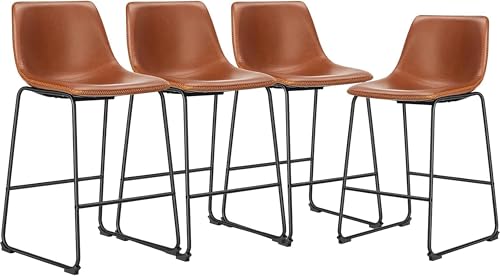
DUMOS Counter Height Bar Stools Set of 4, Faux Leather Metal Bar Chairs | Barstools with Back, Leg, Armless, Upholstered, Kitchen Island, Modern Design, 26 Inch, Brown
Check price on AmazonReady to Choose Your Backed Stools?
Use the recommended picks above to compare back styles, seat heights, and materials. Confirm the counter height and spacing before ordering, and check the return policy on upholstered designs.
Explore Recommended Stools