
Table and Chair Set: The Complete Buying Guide
Everything you need to know before choosing a dining table and chair set — sizing, materials, comfort, and style — so you can buy with confidence and create a dining space that works for years.
EXPLORE RECOMMENDED SETSWhy a table and chair set is a long-term decision. A dining table and chair set is one of the most-used purchases in any home. It anchors daily meals, homework sessions, holiday gatherings, and everything in between. Choosing well means balancing room dimensions, seating count, material durability, and the way the set fits your daily routine — not just how it looks in a showroom.
This guide walks you through the decision points that matter most, in the order most shoppers actually face them: first the space, then the size, then the material, then the chairs, and finally the style. By the end, you will know exactly which specifications to look for and which trade-offs are reasonable for your household.
Start With the Room, Not the Set
The most common mistake buyers make is falling in love with a set before measuring the room. A dining set needs breathing room: roughly 36 inches of clearance between the table edge and any wall or large furniture piece so chairs can slide out and people can walk behind seated guests. In tighter rooms, that can drop to about 30 inches, but anything less turns the dining area into an obstacle course.
Measure the length and width of your dining zone, then subtract the clearance on all open sides. What remains is your maximum table footprint. Also note doorways, radiator placement, and traffic paths to the kitchen — a set that blocks the main walkway will be regretted within a week, no matter how good it looks.
Quick reference for seating capacity
- Two people: a small bistro or round set, ideal for apartments and breakfast corners.
- Four people: the most common household size; a rectangular set around 60 inches long or a round table around 48 inches in diameter works well.
- Six people: typically a 72-inch rectangular table or a 60-inch round table.
- Eight or more: requires at least 96 inches of table length, or an extendable design for occasional large gatherings.
If your space is genuinely tight, consider a kitchen table with chairs that fit underneath — a design that keeps the footprint compact when the set is not in use.
Choosing the Right Size and Shape
Shape drives how a room feels and how many people can sit comfortably. Each shape has a clear use case:
Rectangular tables
The default for most dining rooms. Rectangular sets use wall space efficiently and seat more people per square foot than round or oval tables. A wooden rectangle dining table in a mid-range tier is a versatile anchor for family homes. For larger households, a dining room table and chairs set for 8 provides generous seating without an awkward footprint.
Round tables
Round sets encourage conversation and have no corners to navigate, making them excellent for small rooms and homes with young children. A round dining table set with upholstered chairs pairs a softer silhouette with comfortable seating. Smaller options like a round table with four chairs fit neatly into breakfast nooks.
Square tables
Square sets are space-efficient in compact rooms and work well as a bridge between rectangular and round. A square dining table for 4 is a practical choice for apartments and smaller dining zones.
Extendable tables
If you host occasionally but live with a small table day-to-day, an extendable rectangular dining table gives you the best of both footprints. Look for a smooth, sturdy extension mechanism — mid-range and premium models typically offer more refined leaf systems than entry-level designs.
Seating tier comparison
| Tier | Best For | Typical Characteristics |
|---|---|---|
| Entry-level | First apartments, casual daily use | Simpler joinery, laminate or veneer tops, basic chair frames |
| Mid-range | Family homes, everyday dining plus hosting | Solid wood or quality veneer, reinforced joints, upholstered seat options |
| Premium | Long-term use, design-conscious homes | Solid hardwood construction, refined finishes, ergonomic chair design |
| Luxury | Formal dining rooms, heirloom purchases | Hardwood and stone tops, hand-finished detailing, commercial-grade durability |
Use these tiers as a relative guide. A well-built mid-range set often outperforms an entry-level set with decorative styling, especially in joint quality and finish durability.
Materials: What Actually Matters
Material determines how the set wears, how much care it needs, and how it ages. Here is how the main options compare.
Solid wood
Oak, walnut, mahogany, and similar hardwoods offer the most durable construction for daily use. Wood moves with humidity, so expect minor seasonal changes in a solid wood top. A oak dining table and chairs set is a balanced mid-range choice for busy households; a walnut table top brings a warmer, more premium look with rich grain. If character matters, a reclaimed wooden dining table adds texture and a story while remaining structurally solid. For a traditional feel, a mahogany dining room table is a classic high-end option.
Glass tops
Glass reflects light and makes small rooms feel larger, but it shows fingerprints and requires regular cleaning. A glass dining room table set works well in modern interiors, especially with a wood base for structural stability — see a rectangular glass dining table with wood base for a balanced combination of visual lightness and structural rigidity.
Stone and marble
Stone tops are heavy, durable, and easy to wipe down, but require care with hot items and acidic spills. An oval marble dining table offers a premium look in a softer silhouette; stone sets sit at the high-end tier and are usually a long-term investment.
Metal frames
Steel and aluminum frames are common in industrial and outdoor styles. Look for rust-proof finishes and reinforced joints on chairs, since these take the most stress. Quality of coating matters more than the base metal in most cases.
The Chairs Make or Break the Set
Chairs take more daily abuse than tables — they are moved, leaned on, and slid in and out constantly. When comparing sets, look at chair construction first.
- Seat height: standard dining chairs sit at about 18 inches from floor to seat, paired with tables around 30 inches high. Counter-height sets run about 24 inches and 36 inches respectively — never mix the two.
- Joint quality: corner blocks, dowels, and screws at stress points separate durable chairs from wobbly ones. Mid-range and above should have reinforced joinery.
- Seat comfort: upholstered seats add comfort but need care. A upholstery kitchen chair is easy to wipe down and a good middle ground for households with children. If you want extra comfort for long dinners, upholstered dining chairs with arms provide support for the arms and back.
- Arms or armless: armless chairs tuck fully under the table and save space; armed chairs are more comfortable for long meals but need more clearance.
- Materials on frames: solid wood frames last longest; metal frames suit industrial styles; rattan and wicker bring texture — see a rattan wicker chair for a lightweight, visually warm option.
If you prefer to build your set from separate pieces rather than a matched bundle, buying chairs individually gives more control. For a coordinated look without a full set purchase, a modern dining chairs set of 4 pairs well with many table styles.
Bench seating is a practical alternative on one side of a table, especially in narrow rooms: a wood dining table with bench seats more people in the same footprint and keeps the walkway clear. A upholstered storage bench adds hidden storage for linens or board games.
Style, Finish, and Room Cohesion
The set should feel intentional within the room, not like a separate purchase dropped into it. A few reliable directions:
Mid-century modern
Tapered legs, warm wood tones, and clean lines. A mid-century modern dining table and 6 chairs set is a coherent choice for open-plan living areas.
Rustic and farmhouse
Heavier proportions, visible grain, and warmer finishes. A rustic dining table set anchors a farmhouse or cabin-style room. Pair with benches or ladder-back chairs for the full look.
Classic white and bright
White finishes keep small rooms bright and read as clean and modern. A white dining table paired with white dining table chairs creates a crisp, unified look; a white tulip table adds a sculptural silhouette in a compact footprint.
Traditional wood tones
Warmer woods suit formal and family dining rooms alike. A Amish dining table represents the high-end tier of traditional solid-wood construction, while a round wood dinette table offers a compact traditional option for kitchens.
Finish choice matters for maintenance: matte and satin finishes hide scratches better than high-gloss, and lighter stains show dust less than dark espresso tones. Match the table finish to your flooring undertone — warm floors pair best with warm woods.
Matching the Set to Your Household
Rather than shopping by a number, shop by how the set will be used. The tier you need should follow the intensity of use, not the other way around.
In every tier, prioritize chairs and joinery over decorative details. A set with modest styling but solid construction will outlast a more decorative set with weaker joints. For very small spaces, a kitchenette table set or narrow dining set (for covered outdoor areas) can solve a layout problem that no standard-size set can.
Final Buying Checklist
Run through this list before you check out. It catches the majority of post-purchase regrets.
- Measured clearance: at least 36 inches on open sides, 30 inches minimum in tight rooms.
- Seating count vs. daily reality: buy for everyday use and use an extender or folding chairs for the occasional crowd.
- Chair joint inspection: check corner blocks, screws, and wobble at stress points; sit and lean back in the chair.
- Table edge and corner safety: rounded edges matter in homes with toddlers.
- Finish care plan: know what cleaner the manufacturer recommends, especially for stone and veneer tops.
- Assembly reality: larger sets ship flat; confirm you have the tools and space, and check whether assembly service is offered.
- Warranty terms: frame warranties and finish warranties are usually separate; read both.
- Delivery path: measure doorways and stairwells — a large table that will not fit through the door is a costly mistake.
If you are still choosing between shapes, compare a 6-piece dining set against an oval kitchen table in your actual room dimensions. The oval softens traffic flow in narrow rooms, while the rectangular set generally seats more people in the same area.
Frequently Asked Questions
How much space do I need around a table and chair set?
Aim for 36 inches of clearance between the table edge and any wall or furniture so chairs can slide out and people can walk behind seated guests. In compact rooms, 30 inches is the practical minimum.
Is a round or rectangular table better for a small dining room?
Round tables use corner space more efficiently and have no sharp edges, making them ideal for tight rooms and homes with children. Rectangular tables generally seat more people in the same footprint and align neatly with walls.
How do I know if a chair set is well built?
Check the joints first: look for corner blocks, dowels, and screws at stress points. Sit in the chair and lean back gently — a well-built chair will not creak or wobble. Solid wood frames and reinforced joinery indicate durable construction.
Should I buy a matching set or mix and match?
Matching sets are simpler to coordinate and often offer a consistent finish across the table and chairs. Mixing lets you prioritize chair comfort and table quality separately; a neutral table with accent chairs is a common approach in design-led homes.
What seat height should dining chairs be?
Standard dining chairs sit about 18 inches from floor to seat, paired with tables around 30 inches high. Counter-height sets use roughly 24-inch seats and 36-inch tables. Keep the two heights consistent across the set.
How many people can a 72-inch rectangular table seat?
Typically six people comfortably — three per side — with room at the ends if the table is not against a wall. For eight or more, a table of at least 96 inches or an extendable design is a better fit.
Recommended Table and Chair Sets
⚠️ AFFILIATE DISCLOSURE: This website contains affiliate links. As an affiliate Associate, we earn from qualifying purchases. If you make a purchase through these links, we may receive a small commission at no additional cost to you. Read our full affiliate policy.

Dining Table Set for 4,Kitchen Table and Chairs for 4, Round Dining Room Table with Upholstered Chairs, 5 Piece Space Saving Circle Wood Kitchen & Dining Room Dinner Dinette Table Set (Vintage, 42In)
Check price on Amazon
IRONCK Dining Table Set for 4, Grey | Wood Kitchen Table with Upholstered Chairs for Kitchen Room and Small Spaces
Check price on Amazon
IRONCK Dining Table Set for 4, Extendable Kitchen Table Chairs Set of 4 | Dining Room Table with 4 Upholstered Chairs, Folding for Small Space, Apartment, Walnut
Check price on Amazon
FAVSH Dining Table Set for 4, Kitchen Table with 2 Benchs, Grey | Modern Functional 3 Piece Space-Saving Dining Room Table Set for Apartment, Breakfast Nook, Small Space
Check price on Amazon
DUMOS Dining Chairs Set of 6, PU Leather Kitchen Chairs for Living Room | Upholstered, Wooden Legs, Padded Seat, High Back, Armless, Modern Accent, Dining Room, Restaurant, Brown
Check price on Amazon
JUMMICO 3-Piece Wooden Round Table & Chair Set (Walnut/Black) | Kitchen Breakfast Nook Wood Grain Tabletop with Metal Frame and Built-in Wine Rack for Kitchen, Dining Room
Check price on Amazon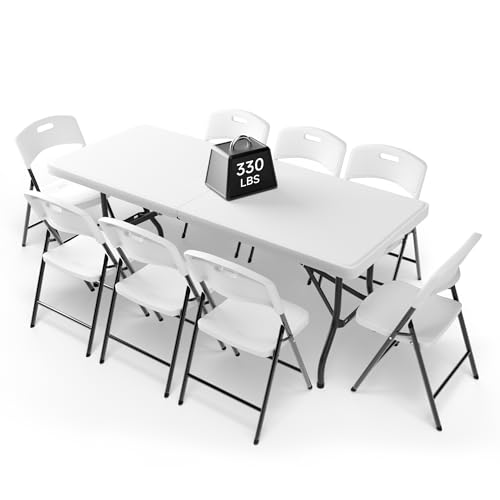
Ortus Collective 6FT Folding Table Set with 8 Folding Chairs, Heavy Duty 330 lbs Table & 600 lbs Chairs, Portable Folding Furniture Bundle for Camping, Party, Indoor & Outdoor Use
Check price on Amazon