
Traditional Dining Room Table: A Complete Buying & Style Guide
Learn how to choose a timeless traditional dining table — from wood species and leg styles to sizing, finishes, and decor pairings — so your dining room feels elegant, warm, and built to last for generations.
Why this guide matters: A traditional dining room table is more than furniture — it is the anchor of your formal dining space and the setting for holidays, family dinners, and memorable gatherings. This guide walks you through every decision point so you can buy with confidence and avoid costly mistakes.
What Makes a Dining Table "Traditional"?
A traditional dining room table is defined by its formal silhouette, rich materials, and ornamental detailing. Unlike minimalist or industrial designs, traditional tables embrace craftsmanship cues that date back centuries. Understanding these hallmarks helps you recognize quality and choose a piece that fits your home's architecture.
- Turned or carved legs: Look for spindle, cabriole, or fluted legs — a signature of classic design.
- Rich wood tones: Cherry, mahogany, walnut, and oak with warm stains are traditional staples.
- Formal proportions: Thicker aprons, substantial table tops, and balanced pedestal or trestle bases.
- Decorative edges: Beveled, ogee, or scalloped edges add a refined finish.
- Extendable design: Many traditional tables include leaves to seat extended family.
If you want to explore specific silhouettes, our guide to traditional dining tables breaks down the most popular styles in detail. For a broader look at leg construction, the turned-leg dining table reference is a helpful companion.
Choosing the Right Wood for a Traditional Table
Wood choice affects durability, appearance, and how well the table accepts ornate detailing. Here is how the most common traditional woods compare:
| Wood Type | Character | Best For | Market Tier |
|---|---|---|---|
| Mahogany | Deep reddish-brown, fine grain, excellent for carving | Formal dining rooms, heirloom pieces | Premium |
| Cherry | Warm reddish tone that deepens with age | Classic American traditional interiors | Premium |
| Walnut | Dark chocolate-brown, dense and stable | High-end traditional and transitional rooms | Luxury |
| Oak | Strong grain, very durable, lighter tone | Farmhouse-traditional hybrids, family homes | Balanced |
| Pine / Rubberwood | Lighter, softer, easier to shape | Entry-level traditional-look tables | Essential |
Solid hardwood is the long-term investment choice: it resists warping, holds detailed carving, and can be refinished decades later. If sustainability matters to you, our guide to sustainable wood explains which species and certifications to look for.
Sizing Your Traditional Dining Table Correctly
A traditional table needs breathing room to look its best. Oversizing a formal table in a small room makes the space feel cramped, while undersizing leaves the room feeling unfinished. Use these guidelines:
- Seating per side: Allow about 24 inches of table width per person.
- Clearance: Leave 36 inches between the table edge and walls or other furniture for chair pull-out and walkways.
- Room size: For a 6-seat table (roughly 72 inches long), aim for a dining room at least 10 x 12 feet.
- Extension leaves: If you host holidays, choose a table with leaves and confirm the extended footprint fits your room.
If your formal dining room is compact, explore tables for small spaces for traditional-inspired options that still feel elegant. For larger gatherings, a table with leaf gives you flexibility without a permanent footprint.
Mark the table's footprint on your floor with painter's tape, then place your chairs around it. Walk the perimeter — if you can move comfortably without brushing the chairs, your sizing is right.
Leg Styles and Base Designs
The base of a traditional table carries much of its visual character. Common traditional options include:
Turned Legs
Spindle and turned legs are the most recognizable traditional detail. They add visual rhythm and pair beautifully with upholstered chairs. See our turned-leg dining table guide for style variations.
Pedestal Bases
A single or double pedestal base improves legroom and gives a formal, hotel-dining feel. Pedestal tables often include extension leaves and suit round or oval tops.
Trestle Bases
Trestle bases blend traditional and rustic cues. They are sturdy, seat more people without corner legs, and work well in farmhouse-traditional rooms. Explore trestle dining tables for this look.
Cabriole Legs
Curved, tapered legs with a decorative foot — the hallmark of Queen Anne and French-inspired traditional design. These pair best with formal, carved chair backs.
Finishes That Define the Traditional Look
Finish choice affects both appearance and maintenance. Traditional tables typically use one of these finishes:
- Hand-rubbed oil: Warm, natural, and easy to spot-repair; requires periodic re-oiling.
- Lacquer: Durable, glossy, and resistant to spills — common on formal tables.
- Polyurethane: Highly protective, good for family use, available in matte to high-gloss.
- Distressed / antiqued: Adds character and hides wear — popular in farmhouse-traditional hybrids.
Regardless of finish, protect the surface with a quality table pad and coasters. Our guides to table pads and trivets explain how to prevent heat and water rings without hiding the wood's beauty.
Pairing a Traditional Table with Decor
A traditional table is a strong focal point, so surrounding decor should support rather than compete. Consider these pairing strategies:
- Chairs: Upholstered chairs with nailhead trim or carved backs reinforce the formal look. For a mixed-style approach, pair with simpler upholstered chairs.
- Lighting: A chandelier centered above the table is classic. See traditional crystal chandeliers for inspiration.
- Linens: Crisp white or ivory tablecloths and cloth napkins elevate the formal feel.
- Storage: A matching traditional china cabinet or buffet completes the room.
- Table settings: Formal place settings with chargers and stemware reinforce the traditional mood. Learn the fundamentals in our table place setting guide.
For a full room design approach, our article on traditional formal dining room decorating ideas walks through color palettes, window treatments, and layout.
To keep a traditional table from feeling dated in a modern home, pair it with a neutral rug, minimal wall art, and a contemporary light fixture. The contrast lets the table's craftsmanship stand out as the room's centerpiece.
Caring for a Traditional Wood Dining Table
A traditional wood table is a long-term investment, and proper care keeps it looking refined for decades. Key habits include:
- Dust weekly with a soft microfiber cloth to prevent surface scratches.
- Use coasters and trivets for hot or wet items to protect the finish.
- Avoid direct sunlight, which can fade or unevenly darken the wood.
- Re-oil oil-finished tables every few months; wipe lacquered tables with a damp cloth only.
- Address scratches early — light scratches can often be blended with a wood touch-up marker.
For detailed routines, see our table and chairs care overview and the table pads guide for surface protection.
Traditional Dining Table Tiers at a Glance
To compare options without focusing on figures, think in terms of market tier. Each tier reflects construction quality, material grade, and detailing level — not a specific number.
| Tier | Typical Construction | Best For | Longevity |
|---|---|---|---|
| Essential | Veneer over engineered wood, simplified detailing | First apartments, occasional formal use | Good for several years with care |
| Balanced | Solid wood top with mixed hardwood base, moderate carving | Family homes, regular entertaining | Durable; refinishable |
| Premium | All solid hardwood, intricate turned legs, hand-applied finish | Formal dining rooms, heirloom intent | Decades with proper care |
| Luxury | Premium species (walnut, mahogany), hand-carved detailing, artisan finish | High-end traditional interiors, statement pieces | Generational investment |
For most households, the balanced and premium tiers offer the best mix of craftsmanship and practicality. Essential-tier pieces are a sensible starting point if your dining room sees occasional formal use.
Ready to Choose Your Traditional Dining Table?
Browse our curated selection of traditional dining tables and compare features, wood types, and styles side by side.
Explore Traditional TablesRecommended Traditional Dining Room Tables & Coordinating Pieces
⚠️ AFFILIATE DISCLOSURE: This website contains affiliate links. As an affiliate Associate, we earn from qualifying purchases. If you make a purchase through these links, we may receive a small commission at no additional cost to you. Read our full affiliate policy.

Signature Design by Ashley Basinger Dining Table, 86 Inch, Medium Brown | Seats 8 with 25.88-inch legroom, Hardwood solids and mango wood veneer, Rustic turned legs, Farmhouse design
Check price on Amazon
First of a Kind Traditional Dining Table 9 Piece Set - 18 Inch Extension Leaf, Double Pedestal Base, Decorative Apron Edge & Corner Details, Brown Cherry Finish - Dining Room Furniture
Check price on Amazon
Kitchen Furniture 10-Piece Dining Set Include 1 Dining Extension Table, 6 Side Chairs, 2 Arm Chairs and 1 Buffet & Hutch (Espresso Fabric)
Check price on Amazon
Liberty Furniture Americana Farmhouse Rectangular Leg Table Traditional Kitchen Dining Room 18" Self Storing Leaf - Dusty Taupe Oak Wood
Check price on Amazon
TRIBEWOOD Solid Wood Dining Table for 4-6 People, 63" Kitchen Table | Farmhouse Rectangle Diamond Parquetry Top and S-Scroll Legs, Large Rustic Wooden Kitchen & Dining Room Furniture, Walnut
Check price on Amazon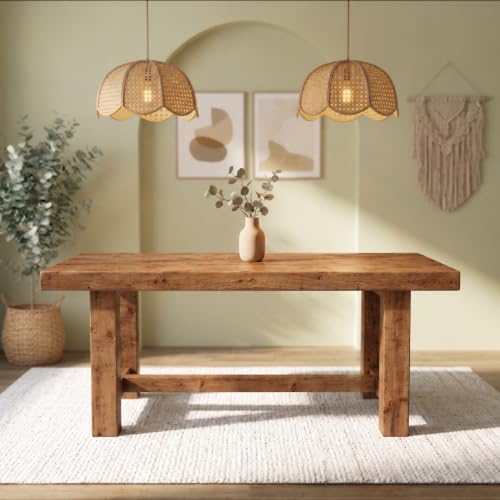
TRIBEWOOD 63-Inch Solid Wood Rectangular Dining Table for 4-6 People | Farmhouse Kitchen Table with Trestle Base, Real Wood Dining Tables for Dining Room,Apartment ,Elegant Details, Easy Assembly
Check price on Amazon
East West Furniture KET-ESP-TP Kenley Dining Room Table - an Oval Solid Wood Table Top with Butterfly Leaf & Pedestal Base, 42x60 Inch, Espresso
Check price on Amazon
Furniture of America Evangelyn Round Dining Table
Check price on AmazonFrequently Asked Questions
What defines a traditional dining room table?
A traditional dining room table typically features rich wood construction, ornate turned or carved legs, a formal silhouette, and a warm finish such as cherry, mahogany, or walnut. It is designed to anchor a formal dining space and often pairs with upholstered chairs and classic decor.
What wood is best for a traditional dining table?
Solid hardwood options such as mahogany, cherry, walnut, and oak are classic choices. These woods accept rich stains beautifully, develop character over time, and support ornate carving and turned-leg detailing that define the traditional look.
How much space do I need around a traditional dining table?
Allow roughly 36 inches of clearance on all sides of the table for comfortable chair pull-out and walkway space. In tighter rooms, 30 inches can work, but 36 inches is the standard recommendation for a formal traditional dining setup.
Can a traditional dining table work in a modern home?
Yes. A traditional table can be styled in a modern home by pairing it with simplified chairs, a neutral rug, and minimal decor. This mixed-style approach lets the table serve as a warm focal point without making the room feel dated.
How do I protect a traditional wood table from daily wear?
Use coasters, trivets, and a fitted table pad during meals. Dust weekly, avoid direct sunlight, and re-oil oil-finished surfaces periodically. For detailed care steps, review our guides to table pads and trivets.