
Extendable Kitchen Tables: The Complete Buying Guide
Everything you need to know about extendable kitchen tables — leaf mechanisms, materials, sizing, and how to match a flexible table to your kitchen layout and hosting needs.
Explore Table MechanismsWhy extendable tables matter: An extendable kitchen table is the single most practical dining investment for homes that balance everyday meals with occasional hosting. This guide walks you through how extension mechanisms work, which materials hold up best, and how to size a table so it serves both a quiet weekday breakfast and a full holiday gathering without permanently crowding your kitchen.
What Makes an Extendable Kitchen Table Different
An extendable kitchen table uses a built-in mechanism to increase its usable surface when extra seating is needed. In its compact form it seats two to four people comfortably, and after one or two leaves are deployed it can accommodate six, eight, or more. The appeal is obvious: a smaller footprint during the week, a larger table when guests arrive. Unlike a folding table, an extendable table is a permanent piece of furniture with a stable frame and a finished surface, so it works as the everyday centerpiece of the kitchen rather than a temporary accessory. If your kitchen doubles as a dining room, this is the format to understand first — the wider expandable dining table for small spaces guide covers the same logic from a room-planning angle.
The defining variable is the extension mechanism. A table's mechanism determines how easy it is to open, how much storage the leaves require, how stable the expanded surface feels, and how much of the table's internal structure is exposed to wear over time. Before comparing finishes or leg styles, decide which mechanism suits your household. The next section breaks them down.
Extension Mechanisms Compared
There are four common ways an extendable kitchen table grows. Each trades off convenience against storage, stability, and moving parts. Use the comparison table below as a quick reference, then read the detail beneath it.
| Mechanism | Best For | Leaf Storage | Ease of Use | Typical Tier |
|---|---|---|---|---|
| Butterfly leaf | Everyday kitchens, solo operation | Self-storing inside table | Very easy | Mid-range to premium |
| Self-storing leaf | Households that extend often | Built into the table body | Easy | Mid-tier to high-end tier |
| Separate drop-in leaf | Occasional hosting, classic designs | Stored separately | Moderate | Entry-level to mid-range |
| Gate-leg / drop-leaf | Very tight kitchens and apartments | Folded panels | Simple | Entry-level to mid-tier |
Butterfly Leaf Tables
Two half-leaves fold inward like butterfly wings and sit hidden beneath the tabletop. Pull both halves out, unfold them, and the table doubles in length in under a minute. The biggest advantage is that the leaves never leave the table, so there is no separate storage to manage. Premium butterfly mechanisms feel smooth and lock firmly; entry-level versions can feel stiff. For a direct example, see the dining table with butterfly leaf overview.
Self-Storing Leaf Tables
The extension leaf slides or folds into a compartment inside the table's apron. This is the most convenient format for households that extend the table several times a week, because there is nothing to fetch from a closet. The trade-off is a slightly deeper apron and more internal hardware. If you extend frequently, a self-storing design is a strong match; compare it against the expandable dining table with self-storing leaf format.
Separate Drop-In Leaves
A single leaf — or a pair — drops into the gap between the two halves of the tabletop. These designs are mechanically simple and tend to be very stable when seated, but the leaf must be stored somewhere else, such as a closet or a sideboard. That storage requirement is the main reason to choose one only if you extend occasionally. They pair naturally with classic wood styles and traditional dining rooms.
Gate-Leg and Drop-Leaf Tables
Instead of lengthening, these tables fold their side panels down or swing supporting legs outward. They shrink to a very narrow footprint and are ideal for apartments, breakfast corners, and kitchens where the table must tuck against a wall. The expanded surface is smaller than a butterfly-leaf table, but the compact footprint is unmatched. Explore related compact formats in the narrow dining table guide.
Materials: What Holds Up in a Working Kitchen
An extendable table sees more movement than a fixed table, so the material matters twice over: it must withstand daily use, and the extension hardware must stay aligned as the surface moves. Solid wood remains the benchmark for longevity and repairability. Hardwoods such as oak, maple, and walnut resist wear well and can be refinished if the surface dulls. Softer woods are more forgiving on the budget within the entry-level tier but show dents sooner. For a deeper look, the solid wood dining table farmhouse guide covers construction details.
Engineered and veneered tops are stable and resist warping, which is an advantage on wide extension surfaces where solid wood may be more sensitive to humidity. Marble and stone tops look striking but are heavy, so check that the extension slides and locks are rated for the added load. Glass-topped extendables brighten small kitchens but show smudges quickly. Whatever the surface, inspect the underside: reinforced steel slides and solid corner blocks separate a well-built mechanism from a lightweight one.
- Solid hardwood: best long-term investment and repairable; heavier and typically premium tier.
- Veneer over engineered core: stable and consistent; check for edge banding quality on mid-range models.
- Marble and stone: dramatic look; confirm the hardware handles the weight of the top and leaves.
- Glass: visually light and easy to clean; best in a compact kitchen with limited natural light.
Sizing: How Big Should Your Extendable Table Be
Size the table by the number of people you seat most often, not the maximum. A good rule of thumb is 24 inches of table width per seated person along each side, plus about 12 inches of clearance behind the chair for pulling it out. Leave at least 36 inches between the table edge and walls or counters in a walkway, and 30 inches in a tighter kitchen. Measure the compact footprint, the fully extended footprint, and the clearance needed to walk around the table while it is open — the last figure is the one most buyers forget.
If the table is the only dining surface in the home, plan for the extended size to seat the guests you host most often. If it is a secondary table in a kitchen that opens into a formal dining room, a compact butterfly-leaf or drop-leaf model is usually sufficient. See the dining room table for small dining room article for room-by-room sizing examples, and the expandable table guide for footprint comparisons across widths.
Two to Four Seats
Compact base tables in the 30 to 40 inch range. Ideal for couples, apartments, and breakfast corners where the table stays closed most days.
Four to Six Seats
A 40 to 55 inch base that extends to accommodate six. This is the most versatile range for a family kitchen that hosts occasionally.
Six to Eight Seats
A larger base with one or two leaves. Best when holiday hosting is routine and the kitchen has enough open floor to walk around an extended table.
Table Shapes and Extended Layouts
Rectangular tables extend most cleanly: length is added without changing the table's proportions, so the extended surface remains easy to seat and serve from. Round extendable tables can be excellent in tight, traffic-heavy kitchens because a round base leaves no sharp corners to navigate, and a round table that splits to accept leaves becomes a generously proportioned oval when open. Round formats suit corners better than rectangles, and a corner dining table can make an awkward kitchen nook feel purposeful. If you like a round silhouette, the dining room table round expandable guide explains how round leaves alter seating.
Square tables are the most compact of all, but they extend unevenly — often into a rectangle — so think about how the final shape sits relative to your walkway. Whichever shape you choose, confirm that the extension leaves are supported at the ends, not just in the middle; overhanging unsupported ends are where extendable tables develop sag over time.
Matching the Table to Your Kitchen Layout
In a galley or narrow kitchen, position the table parallel to the counter and choose a drop-leaf or narrow butterfly-leaf model so the closed footprint leaves a clear path. In a kitchen with an island, an extendable table aligned with the island's long axis creates a natural serving line; the island table guide discusses how the two surfaces can work together. In an open-plan kitchen that flows into a living area, a rectangular table with self-storing leaves lets you host without dragging leaves out of a closet, which keeps the transition between zones calm.
Seating complements an extendable table well when it stays out of the way when closed. Stackable or folding chairs make sense if the table is only opened for larger groups, while fixed upholstered chairs suit a table that is extended frequently. If you are also planning the breakfast nook, the kitchen table and chairs set page outlines matching combinations.
Recommended Extendable Kitchen Tables and Dining Products
⚠️ AFFILIATE DISCLOSURE: This website contains affiliate links. As an affiliate Associate, we earn from qualifying purchases. If you make a purchase through these links, we may receive a small commission at no additional cost to you. Read our full affiliate policy.

41 in-78 in Extendable Dining Room Table for 4-8, Round Expandable Kitchen Table with Fluted Base, Modern Farmhouse Oval Dinner Tables for Dining Room Kitchen Living Room (Walnut)
Check price on Amazon
71-87 Inch Extendable Dining Room Table, Rustic Wooden Kitchen Table 6-10 | STHOUYN Expandable Dining Table, Farmhouse Rustic Style, Rectangular Wooden Top, Seats 6-10, Brown Kitchen or Dining Room
Check price on Amazon
Extendable Dining Table with Charging Station, Convertible Folding Console Table for 6-8 People, Space-Saving Dining Table with LED Lights, Wood Rectangle Kitchen Table for Homes, Walnut (No Chairs)
Check price on Amazon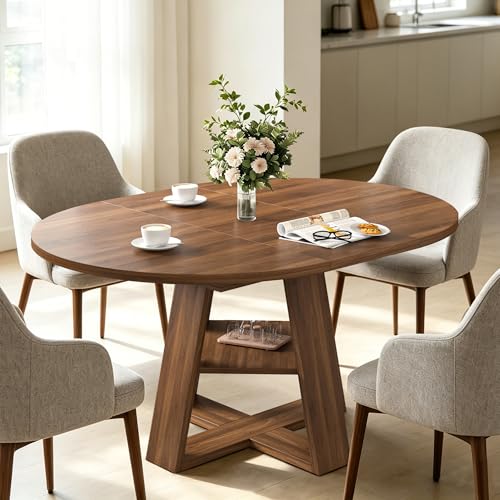
43.3"-59" Extendable Round Oval Dining Table for 4-8 with Storage Shelf | Modern Kitchen Oval Dining Table with Removable Leaves,Space Saving Extendable Table Wood Base for Kitchen Living Room Walnut
Check price on Amazon
GarveeHome 63-83" Extendable Dining Table, Industrial Rectangular Dining Room Table for 6-8 People, Expandable Kitchen Table with Heavy Duty Metal Frame for Dining Room, Kitchen & Parties, Brown
Check price on Amazon
Extendable Dining Table, Round Kitchen Dining Room Dinner Table with for 4 6 8 People, Space Saving Modern Oval Expandale Furniture with Storage and Pedestal for Kitchen Living Room (Black)
Check price on Amazon
Einhomn Extendable Dining Table for 4-6, 63" Modern Kitchen Table, Farmhouse Dining Room Tables for Dining, Kitchen, Office, Living Room, Rectangular Wooden Tables, Space Saving (Walnut)
Check price on Amazon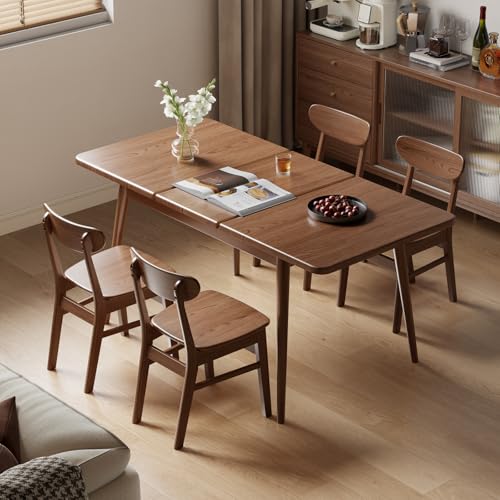
Muwuele 47"-63" Solid Wood Extendable Dining Tables for 4-8, Walnut | Compact Expandable Kitchen Table, Easy Assembly, Mid Century Modern, Dinner Table for Small Space, Dining Room, Apartment
Check price on AmazonQuality Tiers: What to Expect at Each Level
Because extendable tables vary widely in construction, it helps to think in terms of tiers rather than absolute figures. The descriptors below are relative positions in the market; they will stay useful as products change.
Starter Tier Construction
Simple manual slides and single drop-in leaves. The table is stable when closed and adequate when open, but the mechanism may require two people to extend smoothly. Good value for its tier for occasional hosting in a small kitchen. Expect veneered or softer wood surfaces.
Balanced Tier Construction
Butterfly or self-storing leaves with smoother, better-aligned hardware. Solid wood or high-quality veneer tops with reinforced aprons. This is where most buyers find the best balance of durability and convenience for a table extended several times a month.
High-End Tier Construction
Heavy-duty steel slide mechanisms, solid hardwood or genuine stone tops, and precisely fitted self-storing leaves that open and lock with one hand. These tables are a long-term investment and are built to be extended regularly without developing play in the hardware.
Flagship Tier Construction
Custom or designer mechanisms, book-matched veneers, and hand-finished surfaces. The engineering is intended to feel effortless, and the table is usually specified for a specific room. Competitive within its class for buyers who want the mechanism to disappear entirely when closed.
Buying Checklist Before You Order
- Measure twice, extend once: record the compact footprint, the extended footprint, and the walkway clearance required while open.
- Test the mechanism if possible: open and close the table yourself, or read owner reports about how smoothly the slides move.
- Confirm leaf storage: decide whether self-storing leaves are worth the deeper apron for your household, or whether you have closet space for separate leaves.
- Check the extended-end support: ensure the leaves are supported along their full length, not just at the seam.
- Match seat height: verify the table pairs with standard dining chairs; refer to dining room chair height for the correct relationship.
- Plan the closed-door seat count: a table that seats only two when closed may still be the right choice if the kitchen is very tight — but confirm that reality before ordering.
- Review the assembly and delivery terms: heavier extended tables are easier to place correctly if the delivery team can position them before assembly.
Frequently Asked Questions
Is an extendable kitchen table stable enough for everyday meals?
Butterfly leaf or separate leaf — which should I choose?
How much clearance should I leave around an extended table?
Do extendable kitchen tables work in very small kitchens?
Can I pair an extendable table with a bench?
What should I check on the extension hardware?
Ready to Choose Your Extendable Table?
Start with the mechanism that fits how often you host, then size the table by your everyday seat count. Browse the recommended models above to compare features across tiers.
Compare Features