
Sideboard Cabinet Buying Guide: Styles, Storage & Sizing
Everything you need to choose a sideboard cabinet that fits your dining room, holds what you own, and looks right for years — from storage layout and materials to placement and clearance rules.
Why a sideboard cabinet matters: A sideboard is the workhorse of the dining room. It stores dinnerware, linens, and serving pieces out of sight, provides a landing surface for dishes during meals, and anchors the room visually. This guide walks you through the decisions that actually affect daily use: storage configuration, height and depth, material durability, and how much clearance to leave before you commit to a layout.
Recommended Sideboard Cabinets for Dining Rooms
⚠️ AFFILIATE DISCLOSURE: This website contains affiliate links. As an affiliate Associate, we earn from qualifying purchases. If you make a purchase through these links, we may receive a small commission at no additional cost to you. Read our full affiliate policy.

VASAGLE Storage Cabinet, Sideboard with Adjustable Shelves | Mid-Century Modern Buffet Cabinet, 55.1 x 15.7 x 29.5 Inch, for Living Room, Walnut, MIRIANA Collection ULSC631KX01
Check price on Amazon
YITAHOME 70" TV Stand for up to 80" TVs with 4 Fluted Doors, Natural Oak | Entertainment Center with 4 Fluted Doors, for Living Room, Ample Storage, Fits up to 80 Inch TVs, Media Console
Check price on Amazon
IFGET 92.63" W Modern Arched Sideboard Buffet Cabinet with Storage, Natural | Fluted Arch Sideboard Cabinet w/Adjustable Shelves, Wooden Modular Kitchen Cabinet for Dining& Living Room, Entryway
Check price on Amazon
WLIVE 67" Large Buffet Sideboard Cabinet with Storage, Walnut Fluted Doors | Mid-Century Wood Credenza with Adjustable Shelves for Living Room, Dining Room, Kitchen & Coffee Bar, TV Stand for 75'' TVs
Check price on Amazon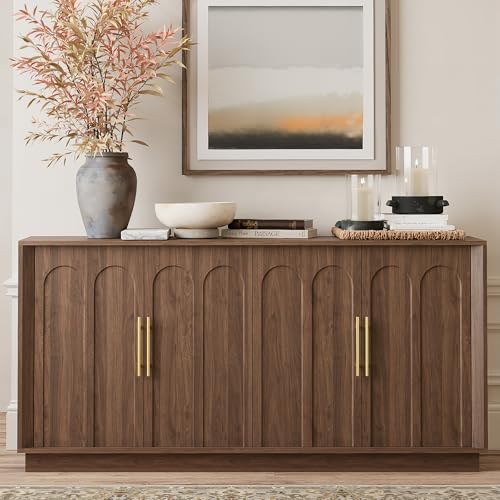
FORTUNETEC 67" Sideboard Buffet Cabinet with Storage, Arched Doors, Walnut | Mid Century Modern Accent Cabinet with Wood Gain, Modular Media Console, Credenza for Living Dining Room Kitchen Entryway
Check price on Amazon
Joaxswe Sideboard Buffet Cabinet with Storage, 46" Arc-Shaped Credenza | 3 Doors & Adjustable Shelves, Stable Leg, Mid Century Modern Coffee Bar Cabinet for Kitchen, Living Room, Entryway, Dark Wood
Check price on Amazon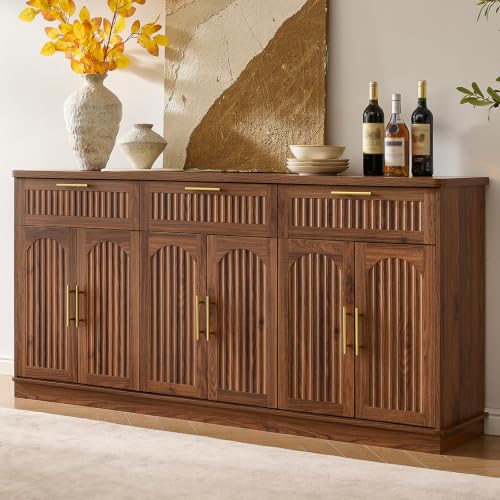
Okvnbjk 70" Modern Buffet Cabinet with 6 Doors & 3 Drawers Storage, Walnut | 3 Drawers Large Credenza, Fluted Sideboard Cabinet for Dining Room, Kitchen, Living Room
Check price on Amazon
usikey 55" Buffet Cabinet with Storage and Drawers, Large Sideboard Buffet Cabinet with Adjustable Shelves and Doors, Modern Coffee Bar for Kitchen, Living Room, White
Check price on AmazonWhat a Sideboard Cabinet Actually Does
A sideboard cabinet is a low, wide storage piece designed to sit against a dining room wall. Its two jobs are storage and service. Closed compartments — doors, drawers, and sometimes a combination of both — hold items you want out of view: dinnerware sets, serving platters, table linens, cutlery, and seasonal decor. The flat top surface acts as a serving station during meals and as a display area the rest of the time.
This dual role is why sideboard design varies so much. A piece built mainly for serving leans toward a generous flat top and shallow drawers for cutlery and napkins. A piece built mainly for storage leans toward tall doors, adjustable shelving, and sometimes a hutch above. Understanding which role you need more of is the single most useful decision you can make before shopping. If your dining room doubles as a home office or entryway, a sideboard with closed storage and a clean top will serve you better than an open-shelf design.
Sideboards also carry visual weight. A wide, low cabinet grounds a dining room the way a rug or a large artwork does, and it gives the eye a horizontal line to rest on. That is one reason a sideboard often reads as more polished than a standalone shelving unit in the same space.
Sideboard vs. Buffet vs. Credenza: What's the Difference?
These three terms overlap heavily in modern furniture retail, but the historical distinctions are still useful when you are comparing listings:
- Sideboard: A low storage cabinet placed against a wall in a dining room. The defining feature is height — most sit at or below serving height — and depth that keeps it out of the walking path.
- Buffet: Traditionally a larger serving piece, often with a wider top and sometimes a raised back. In practice, most buffets sold today are sideboards with a serving-oriented top surface.
- Credenza: Originally an office piece for storing records and documents, now used loosely for any low storage cabinet. Credenzas tend to be slightly deeper and more media-friendly.
For dining room use, the practical difference comes down to top surface area and storage layout rather than the label. If you plan to serve from the piece regularly, prioritize a wide, level top. If storage is the main goal, prioritize door and drawer configuration. You can explore broader dining storage options in our dining furniture section.
Storage Configurations: Doors, Drawers, and Combinations
The internal layout of a sideboard determines how useful it is day to day. Three configurations dominate the market, and each suits a different set of contents:
Cabinet doors with adjustable shelving
Doors hide clutter completely and protect contents from dust and light. Adjustable shelves let you set spacing for tall platters, stacked plates, or stemware. This is the most flexible configuration and the best default for most dining rooms. The trade-off is access: you need clearance in front of the doors to open them fully, which matters in narrow rooms.
Drawer-only sideboards
Drawers are ideal for flatware, napkins, placemats, and small serving tools because they keep items visible and reachable without bending. High-quality drawer slides — often described as soft-close or full-extension — make a noticeable difference in daily use. Drawer-only designs store less volume than door cabinets of the same footprint, so they suit rooms that need organized small-item storage more than bulk storage.
Combination layouts
Most mid-range and premium sideboards mix both: a bank of drawers in the center or on one side, with door cabinets flanking them. This layout covers the widest range of contents and is the safest choice if you are unsure what you will store. A sideboard with drawers in a combination layout is a common recommendation for households that entertain regularly.
If display is as important as storage, consider a sideboard with hutch, which adds open or glass-front shelving above the base cabinet. Hutches are excellent for showcasing china and glassware, but they raise the overall height and reduce the usable serving surface, so measure your wall space carefully first.
Comparing Sideboard Storage Layouts
| Layout | Best For | Trade-offs | Typical Tier |
|---|---|---|---|
| Door cabinet with adjustable shelves | Dinnerware, platters, bulk linens, dust-free storage | Needs door-swing clearance; contents less visible | Entry-level to premium |
| Drawer-only | Flatware, napkins, placemats, small serving tools | Lower total storage volume; slide quality varies | Mid-range to luxury |
| Combination doors + drawers | Mixed households; entertaining + everyday storage | Wider footprint; higher entry point for quality slides | Mid-range to top-tier |
| Sideboard with hutch | China and glassware display; formal dining rooms | Reduced serving surface; taller overall profile | Premium to luxury |
| Curved-front sideboard | Softening boxy rooms; statement focal pieces | Less internal volume per footprint; harder to pair | Mid-tier to luxury |
How to Size a Sideboard Cabinet for Your Room
Sizing is where most sideboard purchases go wrong. The piece looks right in the showroom, then crowds the dining room or floats awkwardly on a long wall. Three measurements do most of the work:
Width relative to the wall
As a starting rule, a sideboard should span roughly two-thirds to three-quarters of the wall it sits against. A piece that fills the entire wall leaves no breathing room; one that occupies less than half the wall can look undersized and unstable. On a very long open-concept wall, it is often better to choose a wider, shallower cabinet than a deep, narrow one.
Height relative to serving use
For a piece you plan to serve from, aim for a top surface at standard serving height — most dining sideboards fall in the 30 to 36 inch range. If the sideboard is purely for storage and display, you have more freedom, and a taller hutch design becomes viable.
Depth relative to traffic
Dining room sideboards typically run 15 to 20 inches deep. Deeper pieces offer more storage but intrude further into the walking path. In a narrow dining room, a shallower cabinet with a well-organized interior beats a deep one that forces people to turn sideways. Leave at least 36 inches of walking clearance in front of the piece, and add extra room if doors or drawers swing outward.
If your dining area is compact, our guide to small dining rooms covers space-saving layouts that pair a sideboard with a smaller table footprint.
Market Tiers: What Changes as You Move Up
Sideboard cabinets are sold across a wide quality range. Rather than thinking in absolute numbers, it helps to understand what actually improves as you move from one tier to the next. The descriptors below are relative positions in the market, not fixed categories.
Essential Tier
Engineered wood construction with veneer or laminate finishes. Storage layout is usually fixed or minimally adjustable. Drawer slides are basic and doors may lack soft-close hardware. Best for guest rooms, rentals, or spaces where the sideboard is not used daily.
Balanced Tier
Solid wood or thick veneer over plywood, with adjustable shelving and a mix of doors and drawers. Soft-close hinges and smoother drawer slides appear at this tier. This is where most households find the best balance of durability and flexibility for daily dining room use.
Top-Tier
Solid hardwood construction with joinery that holds up over decades. Full-extension drawer slides, dovetail drawer boxes, and hand-finished surfaces are common. Curved-front and custom-sized pieces live here. These are long-term investments that can be refinished rather than replaced.
The jump from entry-level to mid-range usually matters more than the jump from mid-range to premium for everyday use. Better hardware — hinges and slides — is what you feel every time you open the cabinet, and it is the first thing to fail on a lower-tier piece.
Materials: Solid Wood, Veneer, and Mixed Construction
The material story on a sideboard listing can be misleading. A cabinet described as "wood" may be solid hardwood, veneer over plywood, or engineered wood with a printed laminate. Each has real trade-offs:
Solid hardwood
Walnut, oak, and maple sideboards are durable and can be sanded and refinished if damaged. A walnut sideboard is a common choice for rooms that want warm, dark tones with visible grain. Solid wood responds to humidity changes, so it should not sit against a wall that receives direct sun or near a heat source. Our guide to sustainable wood covers sourcing and care considerations.
Veneer over plywood
Veneer gives you the look of a premium species at a mid-range position in the market. Modern veneers are stable and resist warping better than some solid wood panels. The key question is substrate quality: veneer over a thick plywood core outlasts veneer over thin engineered board.
Engineered wood and laminate
These cabinets are stable and resist moisture better than solid wood, which makes them a reasonable pick for humid climates. They are difficult to repair if the surface chips, so check edge banding quality before you commit.
Mixed construction — solid wood frames with veneer panels — is common at the mid-range and premium positions. It is a sound approach as long as the frame joints are reinforced and the hardware is decent.
Styles That Work in Real Dining Rooms
A sideboard should relate to the rest of the room without matching it exactly. Three style families cover most dining rooms:
Traditional and vintage
Raised panel doors, bracket feet, and decorative hardware define this family. A vintage sideboard cabinet can anchor a room with character, but check structural joints and drawer movement carefully before buying used. Antique and vintage pieces often need hardware replacement, which is straightforward but worth budgeting time for.
Mid-century modern
Tapered legs, clean horizontal lines, and a lower profile. This style pairs naturally with a mid-century modern table and reads well in open-plan rooms because it does not block sightlines. Credenza-style sideboards from this family are also popular in living rooms.
Contemporary and curved
Flat fronts, minimal hardware, and sometimes curved profiles. A curved sideboard softens rooms full of straight edges and works well as a focal point. Contemporary designs often use push-to-open doors, which removes hardware clutter but adds a small learning curve for guests.
Finish tone matters as much as shape. A walnut buffet cabinet reads warmer and more traditional than a painted or light-oak finish, and it pairs well with both neutral and earthy palettes.
Placement and Clearance Rules
Where the sideboard goes affects how usable it is. These rules hold in most dining rooms:
- Keep 36 inches of walking clearance between the sideboard front and the dining table or seating. This is the minimum for comfortable passage with a chair pulled out.
- Add 12 to 18 inches in front of any door or drawer that swings outward, so it can open fully without blocking traffic.
- Center the piece on the wall it faces, or align it with the table's centerline if the room is open-plan. Alignment makes the sideboard feel intentional rather than pushed into a corner.
- Avoid direct sunlight. Wood finishes fade and veneers can lift under sustained sun. If there is no alternative, rotate decorative items and consider a UV-filtering window film.
- Leave a small gap from the wall — about one to two inches — to allow air circulation behind the cabinet and protect the finish.
If the sideboard sits in a hallway or entry area rather than a dining room, the same clearance logic applies. A walnut buffet placed in an entryway should still leave enough room for a door to open and for people to pass with bags.
Pre-Purchase Checklist
- Measure the wall width and confirm the sideboard spans roughly two-thirds to three-quarters of it.
- Measure the depth of the walking path and confirm 36 inches of clearance remains.
- Confirm the height suits serving use if you plan to serve from the top.
- Decide whether doors, drawers, or a combination best fits what you will store.
- Check that shelves are adjustable if you own tall platters or stemware.
- Verify drawer slides and hinges — soft-close and full-extension are worth prioritizing.
- Confirm the material and finish suit your humidity and sunlight conditions.
- Measure doorways and stairwells for delivery access before ordering.
Pairing Your Sideboard With the Rest of the Room
A sideboard rarely stands alone. If you are building out a dining room, it helps to think about the pieces around it. A rectangular or extendable table sets the scale for the room, and the sideboard should not compete with it for visual weight. Our guides to rectangular dining table sets and round dining tables for six to eight seats cover table sizing in more detail.
For a coordinated look, consider how the sideboard finish relates to the table and chairs. A walnut dining chair set pairs naturally with a walnut or dark-toned sideboard, while a painted or light-oak sideboard can balance a darker table. If you are shopping for seating, our upholstered dining chairs guide covers comfort and fabric considerations.
Finally, think about lighting. A sideboard with a lamp or a pair of candlesticks on top benefits from a dining lighting plan that layers ambient and accent light rather than relying on a single chandelier.
Frequently Asked Questions
What is the difference between a sideboard and a buffet?
The terms are largely interchangeable in modern furniture retail. Traditionally, a buffet refers to a larger serving piece used to hold food during meals, while a sideboard is a lower storage cabinet placed against a wall in the dining room. Today, most sideboard cabinets serve both roles, offering closed storage plus a flat serving surface.
How tall should a sideboard cabinet be?
Most dining room sideboards sit between 30 and 36 inches high, which places the top surface at a comfortable serving height for most adults. Taller sideboard-with-hutch designs can reach 60 to 80 inches, but those function more as display storage than serving surfaces.
How much clearance should I leave around a sideboard?
Leave at least 36 inches of walking clearance between the sideboard front and the dining table or any seating area. If the sideboard has drawers or doors that swing outward, add another 12 to 18 inches so those can open fully without blocking traffic.
Can a sideboard cabinet be used outside the dining room?
Yes. Sideboard cabinets work well in entryways as console storage, in living rooms as media or display storage, and in home offices as a credenza. The same sizing and clearance rules apply regardless of the room.
Should I choose solid wood or veneer?
Solid hardwood is refinishable and develops character over time, but it responds to humidity changes. Veneer over a thick plywood core is stable and offers premium looks at a mid-range market position. In both cases, hardware quality — hinges and drawer slides — matters more for daily satisfaction than the material label alone.