
Walnut Buffet Cabinet: The Complete Buying and Design Guide
Discover how to choose a walnut buffet cabinet that balances storage, craftsmanship, and timeless style. From solid wood versus veneer to drawer configuration, finishes, and room proportions, this guide covers everything you need before you decide.
Explore Recommended CabinetsWhy a walnut buffet cabinet deserves your attention: Walnut has been a hallmark of fine furniture for centuries thanks to its deep, chocolate-toned heartwood, interlocking grain, and remarkable stability. A buffet cabinet in walnut does more than store dinnerware — it anchors the dining room, provides a serving surface for entertaining, and elevates the visual warmth of the entire space. This guide is written for homeowners who already know they want walnut and now need clear, practical answers before purchasing.
Recommended Walnut Buffet Cabinets and Sideboards
⚠️ AFFILIATE DISCLOSURE: This website contains affiliate links. As an affiliate Associate, we earn from qualifying purchases. If you make a purchase through these links, we may receive a small commission at no additional cost to you. Read our full affiliate policy.
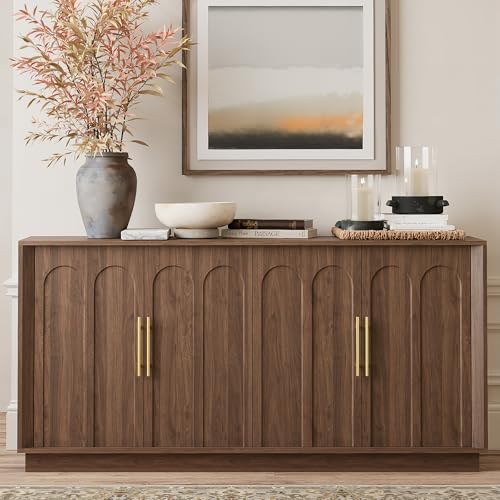
FORTUNETEC 67" Sideboard Buffet Cabinet with Storage, Arched Doors, Walnut | Mid Century Modern Accent Cabinet with Wood Gain, Modular Media Console, Credenza for Living Dining Room Kitchen Entryway
Check price on Amazon
VASAGLE Storage Cabinet, Sideboard with Adjustable Shelves | Mid-Century Modern Buffet Cabinet, 55.1 x 15.7 x 29.5 Inch, for Living Room, Walnut, MIRIANA Collection ULSC631KX01
Check price on Amazon
Bifins 31.5” Dark Walnut Sideboard Buffet Cabinet with Storage Set of 3 | Long,Deep Brown,Arched Door,Accent Cabinet,Adjustable Shelf,TV Stand,Modular Cabinet,Mid Century Modern,94.5inch Length
Check price on Amazon
Evermagin 67IN Walnut Fluted Sideboard Buffet Cabinet with Storage | Large Wood Storage Cabinet with Arched Door, Dining Room Buffet Table for Kitchen Living Room Hallway Entryway
Check price on Amazon
WLIVE 67" Large Buffet Sideboard Cabinet with Storage, Walnut Fluted Doors | Mid-Century Wood Credenza with Adjustable Shelves for Living Room, Dining Room, Kitchen & Coffee Bar, TV Stand for 75'' TVs
Check price on Amazon
OneBlis 63" Fluted Sideboard Buffet Cabinet with Sliding Door, Mid-Century Modern Wood Sideboard, Adjustable Shelf, Coffee Bar Cabinet with Storage for Kitchen, Walnut
Check price on Amazon
63" Buffet Cabinet with Faux Marble Top, Curved Sides, 4 Doors, Walnut | Mid Century Modern Sideboard Cabinet, Adjustable Shelves, Large Storage Credenza for Dining Room, Living Room, Entryway
Check price on Amazon
ONBRILL 48 Inch Buffet Cabinet with Storage, Walnut | Farmhouse Sideboard Buffet w/2 Drawers and 3 Doors, Wood Coffee Bar Cabinet with Adjustable Shelves for Kitchen, Living Room
Check price on AmazonWhat Exactly Is a Walnut Buffet Cabinet?
A buffet cabinet — sometimes called a sideboard, credenza, or server — is a low storage piece typically placed against a dining room wall. Its primary jobs are storing tableware, linens, and serving pieces while offering a flat top surface for food presentation during meals and gatherings. When that cabinet is built from walnut, the furniture becomes a design statement as much as a utility piece.
Walnut buffets generally range from compact 36-inch units suited to apartments to grand 72-inch cabinets for formal dining rooms. Most stand between 30 and 36 inches tall, which places the top surface at a comfortable serving height for standing adults. The cabinet may include drawers, adjustable shelves, glass-front doors, wine storage, or a combination of all three.
The distinction between a walnut buffet, a walnut sideboard, and a sideboard cabinet is mostly semantic. In practice, "buffet" tends to imply a piece used for serving food, while "sideboard" emphasizes storage. Either term may describe the same walnut furniture in a retailer's catalog.
Why Walnut? Understanding the Wood Before You Buy
Walnut is not simply a color choice — it is a material decision with real consequences for durability, maintenance, and long-term appearance. Before comparing specific cabinets, it helps to understand what makes walnut different from oak, ash, or pine.
Grain and Color Character
Black walnut, the species most often used in furniture, has a rich brown heartwood that shifts from honey-toned to deep chocolate depending on the cut and finish. Its grain is open and often figured with swirls, waves, or cathedral patterns. No two walnut cabinets look identical, which is part of the appeal for buyers who want a piece that feels individual rather than mass-produced.
Stability and Durability
Walnut is dimensionally stable compared with many domestic hardwoods, meaning it resists warping and cracking as humidity changes. It is also dense enough to hold screws and joinery firmly for decades. A solid walnut cabinet, properly cared for, can last generations — which is why it is often described as a long-term investment rather than a disposable purchase.
Solid Walnut vs. Walnut Veneer
This is one of the most important decisions in the buying process, and it directly affects the tier of cabinet you should be shopping for.
| Construction Type | Typical Market Tier | Best For | Key Considerations |
|---|---|---|---|
| Solid walnut throughout | Premium to luxury tier | Heirloom pieces, formal dining rooms, buyers prioritizing longevity | Heavier, can be refinished repeatedly, responds well to oil finishes |
| Walnut veneer over engineered wood | Mid-range to premium tier | Humid climates, modern interiors, buyers who want the look with lighter weight | More resistant to seasonal movement, cannot be sanded deeply, edges require careful inspection |
| Walnut veneer over solid hardwood core | Mid-tier to high-end tier | Balanced construction with real wood feel and stable panels | Check that the core is hardwood, not particleboard, for screw-holding strength |
| Walnut-stained rubberwood or ash | Entry-level to mid-tier | Starter dining rooms, rental-friendly setups, accent pieces | Color may read more uniform; grain pattern less pronounced than genuine walnut |
Buying tip: Ask the retailer whether the cabinet is "solid walnut," "walnut veneer," or "walnut finish." These three phrases describe very different products. A listing that says "walnut finish" typically means a stained wood or engineered panel, not walnut lumber. Reputable sellers state the construction clearly in the product specifications.
Storage Configuration: Matching the Cabinet to Your Dinnerware
The internal layout of a walnut buffet cabinet matters as much as its exterior. A beautiful cabinet that cannot hold your plates, platters, or glassware becomes a daily frustration. Before comparing models, take inventory of what you actually need to store.
Drawers
Drawers are ideal for flatware, napkins, placemats, and smaller serving utensils. Look for drawers with dovetail joinery and full-extension metal glides — both are markers of quality construction. Soft-close mechanisms reduce wear and noise over time. A cabinet with two or three shallow drawers above cabinet doors is a versatile configuration for most households.
Adjustable Shelves
Adjustable shelves let you reconfigure the interior as your collection changes. This is especially useful if you store tall pitchers, stacked bowls, or seasonal serveware. Fixed shelves limit flexibility, so favor cabinets with at least one or two adjustable positions.
Glass-Front Doors
Glass doors turn storage into display. If you own a coordinated dinnerware set or decorative glassware, a glass-front walnut cabinet can become a focal point. Keep in mind that glass reveals clutter — this configuration rewards organized, intentional storage.
Wine and Bar Storage
Some walnut buffets incorporate wine racks, stemware rails, or a dedicated bar compartment. If entertaining is a priority, a cabinet with integrated wine storage eliminates the need for a separate bar cart. For more ideas on pairing storage with entertaining, see our guide to wet bar setups and bar carts.
Hutch and Upper Storage
A sideboard with hutch adds vertical display and storage above the buffet surface. This is a strong option for formal dining rooms with high ceilings, but it can overwhelm compact spaces. Measure ceiling height and sightlines before committing to a hutch configuration.
Sizing and Proportion: Getting the Fit Right
A walnut buffet cabinet that is too large crowds the dining room; one that is too small looks disconnected from the table. Proportion is the difference between furniture that feels intentional and furniture that feels placed.
| Dining Room Size | Recommended Cabinet Width | Best For |
|---|---|---|
| Compact / apartment dining area | 36–48 inches | Small dining rooms, breakfast nooks, open-plan apartments |
| Standard dining room | 50–60 inches | Four- to six-seat tables, everyday family dining |
| Formal or large dining room | 60–72 inches | Eight-seat tables, holiday entertaining, statement pieces |
| Grand dining room / open concept | 72 inches and above | Large-scale rooms needing visual weight and generous storage |
As a general rule, the buffet should be roughly two-thirds the width of the dining table it accompanies, though this is a guideline rather than a strict rule. Depth matters too: most buffets are 15 to 19 inches deep. In narrow rooms, a shallower cabinet preserves walking clearance.
Allow at least 36 inches of clearance in front of the cabinet so doors and drawers can open fully and guests can serve themselves comfortably. If the cabinet sits in a traffic path, increase that clearance to 42 inches or more.
Walnut Buffet Styles: Finding the Right Aesthetic
Walnut's warm tone adapts to many design languages. The same material can read as sleek and contemporary or rustic and traditional depending on the cabinet's lines, hardware, and detailing.
Mid-Century Modern
Walnut is the signature wood of mid-century modern design. Tapered legs, clean horizontal lines, and minimal hardware define this look. A vintage mid-century credenza or sideboard in walnut remains one of the most sought-after furniture categories. Pair it with mid-century modern tables and upholstered dining chairs for a cohesive room.
Modern Minimalist
Modern walnut buffets emphasize flat fronts, integrated handles, and slim profiles. The grain becomes the primary decoration. This style works beautifully in open-concept homes where furniture needs to feel calm and architectural.
Traditional and Formal
Traditional walnut buffets may feature raised panel doors, carved details, brass hardware, and a hutch top. These pieces suit formal dining rooms with classic moldings and rich drapery. They tend to be heavier visually, so they perform best in rooms with adequate space.
Transitional
Transitional walnut cabinets blend clean lines with subtle traditional touches — think shaker-style doors with modern pulls. This is one of the most flexible styles and works in both contemporary and classic interiors.
Curved and Sculptural
For a statement piece, consider a curved sideboard. Rounded fronts and softened edges bring movement to a room and pair well with sculptural lighting. Curved walnut cabinets tend to occupy the premium tier because of the craftsmanship required.
Finishes and Hardware: The Details That Define the Piece
The finish determines how walnut's color and grain read in your room, and how the cabinet ages over time.
Oil Finishes
Hardwax oil and penetrating oil finishes leave walnut looking natural and tactile. They deepen the wood's color slightly and can be spot-repaired. Oil-finished walnut requires periodic reapplication but develops a beautiful patina. This finish is common in premium and luxury tier pieces.
Lacquer and Polyurethane
Film finishes provide a protective barrier against spills and moisture, which is practical for dining rooms. They require less maintenance than oil but can show scratches more visibly and are harder to repair locally. Mid-range cabinets frequently use these finishes.
Hardware Choices
Hardware is a small detail with an outsized visual effect. Brass and bronze warm up walnut's brown tones; matte black creates contrast and a more contemporary feel; nickel and chrome read cooler and more formal. Consider whether the hardware is solid metal or plated — solid hardware ages better and feels more substantial in daily use.
Design tip: If you plan to change hardware later, check whether the cabinet uses standard pull spacing. Custom or integrated handles limit future customization.
Placement and Styling: Making the Cabinet Work in Your Room
Where you place the cabinet and how you style it determines whether it feels integrated or merely parked against a wall.
Placement Fundamentals
- Center the cabinet on the wall it occupies, or align it with the dining table's centerline for visual balance.
- Avoid blocking windows, radiators, or traffic paths between the kitchen and dining area.
- Keep the cabinet out of direct sunlight to prevent uneven fading.
- Anchor the piece with a wall strap if it is tall, especially in households with children.
Styling the Top Surface
The buffet top is a display opportunity, but restraint matters. A common approach is to anchor the center with a large object — a mirror, artwork, or a pair of lamps — then add one or two smaller accents such as a vase or a bowl. Leave open space so the walnut grain remains visible. For dining room wall ideas that pair well with a buffet, see our guide to dining room wall hangings.
Seasonal and Entertaining Use
During holidays and dinner parties, the cabinet becomes a serving station. Clear the decorative objects and set up a buffet line with platters, stacks of plates, and glassware. Planning a seasonal table? Our summer table ideas and holiday setting guides offer practical layouts that work with a buffet-style service.
Pairing Walnut with Other Materials and Furniture
Walnut is a strong personality wood, but it cooperates well with other materials when the palette is intentional.
- Walnut and marble: A walnut cabinet paired with a marble-top dining table creates a luxurious contrast between warm wood and cool stone.
- Walnut and metal: Metal dining table legs and black metal hardware modernize walnut's traditional warmth.
- Walnut and glass: A tempered glass table top keeps a small dining room feeling open while the walnut cabinet adds weight and warmth.
- Walnut and upholstery: Upholstered dining chairs in cream, sage, or rust complement walnut without competing with it.
- Walnut dining tables: A round walnut dining table or a set of walnut tables can echo the cabinet for a cohesive room.
If you are building a coordinated dining room, our guides to walnut dining chairs and walnut bar stools offer additional matching options. For smaller spaces, a small rectangular table paired with a compact walnut buffet keeps the room balanced.
Care and Maintenance for a Long-Lasting Walnut Cabinet
Walnut is durable, but it still benefits from consistent care. A few simple habits will keep the finish and grain looking their best for decades.
Routine Care
- Dust weekly with a soft, dry microfiber cloth. Avoid abrasive pads and silicone-based polishes, which can build up and dull the finish.
- Wipe spills immediately with a slightly damp cloth, then dry the surface thoroughly.
- Apply a furniture conditioner formulated for walnut once or twice a year, following the manufacturer's instructions.
Protecting the Surface
- Use coasters under drinks and felt pads under decorative objects to prevent rings and scratches.
- Avoid placing hot dishes directly on the wood; use trivets or a serving cloth.
- Keep the cabinet away from radiators, fireplaces, and direct sunlight.
- Maintain indoor humidity between 40 and 60 percent to minimize seasonal movement.
Long-Term Maintenance
Oil-finished walnut can be refreshed with a new coat of oil every few years. Lacquered surfaces may eventually show wear at high-touch points such as drawer fronts; a professional refinish can restore them. For broader guidance on wood care, see our resources on wood polish and conditioner and sustainable wood care.
What to Check Before You Buy
Once you have narrowed your options, use this checklist to evaluate each cabinet systematically.
- Construction statement: Confirm whether the cabinet is solid walnut, walnut veneer, or a walnut finish.
- Joinery: Look for dovetail drawers, mortise-and-tenon frames, and corner blocks. These indicate durable construction.
- Drawer glides: Full-extension, soft-close metal glides are the standard in mid-range and premium cabinets.
- Shelving: At least one adjustable shelf per cabinet section adds long-term flexibility.
- Back panel: A solid or thick veneered back panel adds rigidity and prevents racking.
- Finish quality: Check for even application, smooth edges, and no drips or rough patches.
- Dimensions: Measure your wall space, walking clearance, and ceiling height before ordering.
- Delivery and assembly: Confirm whether the cabinet arrives assembled or requires assembly, and whether delivery includes placement in the room.
- Warranty and returns: Review the seller's policy before committing. Our guide to warranty and returns explains what to look for.
Understanding Market Tiers Without the Guesswork
Walnut buffets span a wide range of quality and positioning. Rather than focusing on specific figures, it helps to understand what each tier typically delivers so you can match the cabinet to your expectations and intended use.
| Market Tier | Typical Construction | Best For |
|---|---|---|
| Entry-level tier | Walnut-stained hardwood or engineered panels, basic glides, minimal internal configuration | Starter dining rooms, accent storage, rental-friendly setups |
| Mid-range tier | Walnut veneer over hardwood core, dovetail drawers, soft-close glides, adjustable shelves | Everyday family dining, balanced long-term value |
| Premium tier | Solid walnut or high-grade veneer, full-extension glides, quality hardware, refined finishing | Design-conscious buyers, formal dining rooms |
| Luxury tier | Solid walnut throughout, hand-finished details, custom hardware, heirloom construction | Statement pieces, collectors, long-term investment |
| Commercial-grade tier | Reinforced joinery, heavy-duty glides, durable finish systems | High-traffic households, hospitality settings |
Within each tier, features vary by brand and model. A mid-range cabinet from a reputable maker often delivers better long-term satisfaction than an entry-level piece with a similar appearance, because the hardware and joinery hold up better to daily use. For more on comparing options, see our splurge vs save dining guide and our tips on online furniture retailers.
Ready to Compare Walnut Buffet Cabinets?
Browse recommended models with verified construction details, storage layouts, and design styles.
View Recommended CabinetsFrequently Asked Questions
Is solid walnut better than walnut veneer for a buffet cabinet?
Solid walnut offers superior durability and can be refinished multiple times, making it a long-term investment. Walnut veneer over quality engineered wood delivers a similar look at a more accessible tier and resists warping in humid rooms, but it cannot be sanded down as aggressively. Both are valid choices depending on the tier and intended use. For formal dining rooms and heirloom ambitions, solid walnut is the stronger choice; for humid climates or lighter-weight needs, a quality veneer cabinet is a practical option.
What size walnut buffet cabinet fits a small dining room?
For compact dining rooms, look for a cabinet around 36 to 48 inches wide and 15 to 17 inches deep. Keep at least 36 inches of clearance in front of the cabinet so drawers and doors can open fully and guests can move comfortably. A shallow-depth cabinet is especially helpful in narrow rooms, and a wall-mounted or legless design can make the piece feel lighter in a small space.
How do I care for a walnut buffet cabinet?
Dust regularly with a soft microfiber cloth, keep the cabinet away from direct sunlight and heat sources, and apply a furniture conditioner formulated for walnut once or twice a year. Use coasters and felt pads to prevent rings and scratches, and maintain indoor humidity between 40 and 60 percent. Avoid silicone-based polishes and abrasive cleaners, which can damage the finish over time.
Can a walnut buffet cabinet work in a modern dining room?
Yes. Walnut's rich grain pairs well with modern interiors when the cabinet has clean lines and minimal hardware. Pair it with lighter walls, a streamlined dining table, and a few sculptural accents to keep the space balanced. A modern walnut buffet often works best when the surrounding furniture is restrained so the wood grain remains the focal point.
Should I choose a buffet with a hutch or without one?
A hutch adds vertical display and storage, which suits formal dining rooms with high ceilings and a need for china display. Without a hutch, the cabinet keeps a lower profile and works better in open-concept or compact rooms where sightlines matter. Measure ceiling height and consider how the hutch will affect the room's visual weight before deciding.