
Vintage Sideboard Cabinet: The Complete Buying & Styling Guide
Learn how to choose a timeless vintage sideboard cabinet that delivers character, storage, and a focal point your dining room deserves.
START THE GUIDEA vintage sideboard cabinet is more than a storage piece. It is the workhorse of the dining room, the surface that holds your serveware and candles, and often the first thing guests notice when they walk in. Whether you are furnishing a new home, upgrading a hand-me-down, or hunting for a statement piece that will outlast passing trends, understanding what makes a vintage sideboard worth owning is the difference between a lucky find and a long-term regret.
This guide walks you through the styles, materials, sizing rules, and practical checks that experienced buyers use before committing. By the end, you will know exactly which vintage sideboard cabinet fits your room, your routines, and your design sensibilities. If you are still exploring broader storage options, our overview of the sideboard cabinet category is a helpful companion read.
What Defines a Vintage Sideboard Cabinet
A sideboard is a low, wide storage unit traditionally placed against a dining room wall. It holds plates, glassware, linens, and serving pieces while offering a flat surface for display and food service. The vintage label refers to pieces typically made between the 1920s and the 1980s. These are not necessarily antiques in the strict sense, but they carry the design language, joinery, and materials of their era.
Buyers are drawn to vintage sideboards for three reasons. First, the wood has usually settled and stabilized, which means a solid piece today is likely to stay solid for decades. Second, the proportions and hardware details are difficult to replicate in mass-market furniture. Third, a well-chosen vintage piece keeps otherwise usable furniture out of waste streams, a point we explore in our guide to sustainable wood care.
Quick distinction: A sideboard is generally lower and wider than a buffet, and shallower than a credenza. Vintage examples of all three can overlap in function, so focus on dimensions and storage layout rather than the label on the listing.
Popular Vintage Styles & Their Signatures
Knowing the dominant styles helps you search with the right vocabulary and recognize a genuine example when you see one.
Mid-Century Modern
Tapered legs, clean horizontal lines, sliding doors, and contrasting wood tones. Walnut and teak dominate. Pieces from this era are often slim and visually light.
Art Deco
Geometric inlays, stepped profiles, high-gloss finishes, and bold hardware. Often paired with mirrored panels or lacquer fronts. Dramatic and formal.
Farmhouse & Country
Painted finishes, plank construction, cup pulls, and generous proportions. Built for daily use and usually repairable with basic woodworking skills.
Victorian & Edwardian
Carved details, turned legs, mahogany or oak, and elaborate brass hardware. These pieces are heavy, formal, and often the most space-demanding.
Scandinavian Modern
Pale woods, soft edges, minimal ornament, and functional storage. Often features adjustable shelves and removable trays inside drawers.
Industrial & Utility
Metal frames, exposed rivets, and repurposed factory elements. These pieces suit open-concept lofts and pair well with raw materials.
If mid-century lines appeal to you, our deep dive into vintage mid-century modern credenzas and sideboards covers the silhouettes, wood species, and hardware signatures to look for. For walnut lovers, the walnut sideboard guide explains why that species is so prized and how to judge its condition.
Seven Buying Criteria That Matter Most
Before you fall for a photo, run every candidate through these seven checks. They separate a piece that will serve you for twenty years from one that becomes a weekend project.
1. Structural Integrity
Open every door and drawer. Look for wobble, sagging shelves, and gaps at the joints. Press gently on the top corners to check for racking. A sideboard that moves as a unit needs glue and clamping, which is repairable but should be reflected in how you evaluate the piece.
2. Drawer and Door Action
Drawers should slide without binding and close flush. Original wooden runners can be waxed and revived. Metal slides from later eras may need lubrication or replacement. Doors should hang square with even gaps.
3. Surface Condition
Light scratches and patina are part of the charm. Deep gouges, water rings that have lifted the finish, and veneer chips are not. If the top is beyond refinishing, factor the effort into your decision. Our guide to refinishing dining tables covers many of the same techniques you would apply to a sideboard top.
4. Hardware Completeness
Original pulls, escutcheons, and keys add character and resale potential. Missing hardware can be sourced, but matching vintage pieces takes patience. Check that hinges are not bent and that lock mechanisms, if present, still function.
5. Odor and Moisture
Musty smells suggest past damp storage. Open the piece in person if possible and smell the interior. White bloom on the underside signals moisture exposure. A dry, neutral smell is what you want.
6. Pest History
Look for tiny exit holes, fine sawdust in corners, and frass beneath the piece. Fresh activity is a deal-breaker unless you are prepared to treat the item professionally.
7. Provenance and Maker's Marks
A label, stamp, or branded drawer back can confirm the maker and era. Known makers carry documentation value. Even without a mark, consistent joinery and period-correct hardware tell a story about quality.
Inspect in daylight. Photos hide finish lifting, veneer seams, and color mismatches. Whenever possible, view the piece near a window before you commit.
Materials, Construction & Quality Tiers
Vintage sideboards fall into recognizable quality tiers. Use these descriptors to compare pieces on equal footing, regardless of where you are shopping.
| Tier | Typical Construction | Best For | Longevity Outlook |
|---|---|---|---|
| Entry-level | Veneered panels over composite core, stapled or simple joints, basic hardware | Light use, staging, first apartments | Moderate; handle with care |
| Mid-range | Solid wood frame with veneered faces, doweled or mortise-and-tenon joints, branded hardware | Everyday family dining rooms | Strong; repairable with standard tools |
| Premium | Mostly solid hardwood, hand-fitted drawers, dovetail joinery, period-correct hardware | Design-conscious homes, heirloom use | Excellent; decades of service with basic care |
| Luxury / flagship tier | All-solid rare hardwood, hand-carved or inlaid details, original maker documentation | Collectors, formal dining rooms, restoration projects | Exceptional; worth professional conservation |
Wood species matter as much as construction. Walnut and mahogany resist wear well and take a rich finish. Oak is hard and forgiving. Teak is naturally moisture-resistant, which is why it appears often in Scandinavian and outdoor-adjacent pieces. Pine and other softwoods show wear quickly but are easy to repair and repaint.
For a closer look at the walnut family and why it commands attention, see the walnut buffet guide and the walnut buffet cabinet overview.
Sizing Your Sideboard to the Room
The wrong length makes a dining room feel cramped or oddly empty. Use these guidelines as a starting point, then verify with painter's tape on the floor.
Length
A sideboard should occupy roughly two-thirds of the wall it sits against, or about 60 to 75 percent of your dining table's length. If your table seats six, a 55 to 65 inch sideboard is a natural partner. For eight seats, look toward 70 inches or more.
Depth
Vintage sideboards commonly run 15 to 20 inches deep. Anything over 22 inches starts to intrude on circulation. In narrow rooms, favor the shallow end of that range and keep the surface styling vertical rather than sprawling.
Height
Standard sideboard height is 30 to 36 inches, which puts the surface at a comfortable serving height. Taller pieces like hutches add storage but visually compress small rooms. For low-profile interiors, mid-century pieces at 28 to 30 inches feel elegant.
Clearance
Leave at least 36 inches of walking space in front of the piece. If the sideboard faces a table, 42 to 48 inches is more comfortable for pulling out chairs. Account for drawer pull-out depth when the drawers are open.
Small room shortcut: A curved or rounded front softens tight circulation zones. Our curved sideboard guide shows how the silhouette changes the feel of a compact dining area.
Styling a Vintage Sideboard Like a Designer
A vintage sideboard is a stage. What you place on it determines whether the room feels curated or cluttered. These principles work across styles and budgets.
Anchor with Art or a Mirror
A large mirror or framed artwork above the sideboard grounds the composition and adds visual height. Keep the bottom edge roughly 6 to 10 inches above the surface so the styling has room to breathe. For ideas, browse our guide to wall hangings for the dining room.
Layer in Odd Numbers
Group objects in threes or fives. A lamp, a vase, and a small sculpture read as intentional. Two objects of the same size compete. Vary heights and textures within the group.
Use a Tray to Corral
A tray defines a zone for candles, a small bowl, or glassware. It also makes the surface easy to clear for serving. Our vase and bowl collection has options that suit both vintage and modern interiors.
Keep the Wood Visible
Leave at least a third of the surface uncovered. The grain and finish of a vintage piece are part of its value. Resist the urge to fill every inch.
Rotate Seasonally
Change stems, candles, and small accents with the seasons. Our summer table ideas translate easily to sideboard styling for warmer months, and the same principles apply to holiday displays.
Lighting tip: A small table lamp or a pair of candlesticks adds warmth after dark and draws the eye to the sideboard as a focal point rather than a backdrop.
Care, Repair & Long-Term Upkeep
Vintage furniture rewards consistent, gentle care. A few habits will keep a quality sideboard looking its best for decades.
- Dust weekly with a soft, dry cloth. Avoid silicone-based polishes that build up over time.
- Apply a quality furniture wax or oil two to four times a year, depending on humidity and use.
- Use coasters and trivets under drinks and hot dishes. Water rings are the most common surface damage.
- Keep the piece out of direct sunlight to prevent uneven fading. Rotate decor if the sun hits one side more.
- Maintain indoor humidity between 40 and 60 percent to reduce seasonal wood movement.
- Check screws and glue joints annually; tighten and re-glue before small issues become structural.
- Address scratches with a matching wax stick or a light touch-up before refinishing the entire surface.
For deeper repairs, our natural cleaner guide covers safe options for finished wood, and the cleaning hacks collection includes methods for hardware and interior shelves.
Ready to Bring Home a Vintage Sideboard?
Browse our curated selection of vintage-inspired sideboard cabinets and compare features, construction, and storage layouts before you decide.
Explore OptionsRecommended Vintage Sideboard Cabinets
⚠️ AFFILIATE DISCLOSURE: This website contains affiliate links. As an affiliate Associate, we earn from qualifying purchases. If you make a purchase through these links, we may receive a small commission at no additional cost to you. Read our full affiliate policy.
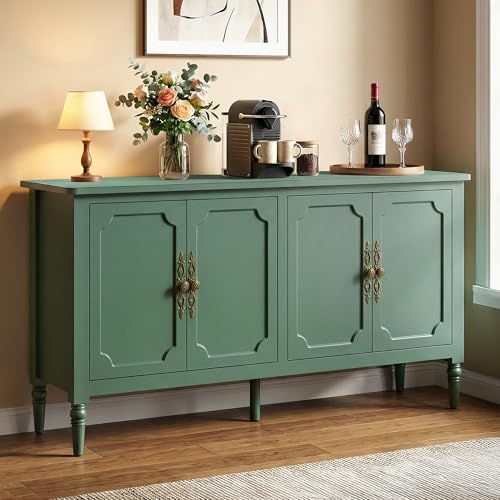
RoyalCraft Buffet Cabinet with Storage, 59" Painted Sideboard Coffee Bar | Vintage Kitchen Storage Cabinet with Adjustable Shelves, Mid Century Modern Credenza for Dining& Living Room, Entryway, Green
Check price on Amazon
SILKYDRY Buffet Cabinet, 47" Vintage Sideboard w/ Adjustable Shelves(Green) | Mid Century Credenza w/ 3 Drawers,2 Doors,Anti-tip Kits; Accent Storage Cabinet for Dining&Living Room,Entryway & Coffee Bar
Check price on Amazon
FUSUNBAO 57" Fluted Sideboard Buffet,Retro Storage Cabinet, Walnut | 3 Drawers and 4 Doors, Vintage Fluted with Scalloped Base, Organic Modern Accent Cabinet, For Dining Room
Check price on Amazon
MOIANJI 59" Vintage Sideboard Buffet Cabinet with Adjustable Shelves, Brown | Mid Century Accent Cabinet with open shelves, Credenza Storage Cabinet for Living Room, Coffee bar, TV Stand, kitchen
Check price on Amazon
JOINICE 42.5" Accent Storage Cabinet with 3 Doors for Living Room,Blue | Sideboard Buffet Cabinet for Dinning Room, Carved Wood,Solid Wood Legs, Adjustable Shelves, Easy Assembly,up to 100lbs
Check price on Amazon
ARTPOWER Vintage Buffet Cabinet with Storage, Solid Wood Veneer, Black | Sideboard Cabinet with 2 Doors, Credenza with Adjustable Shelves for Living Room, Kitchen, Entryway
Check price on Amazon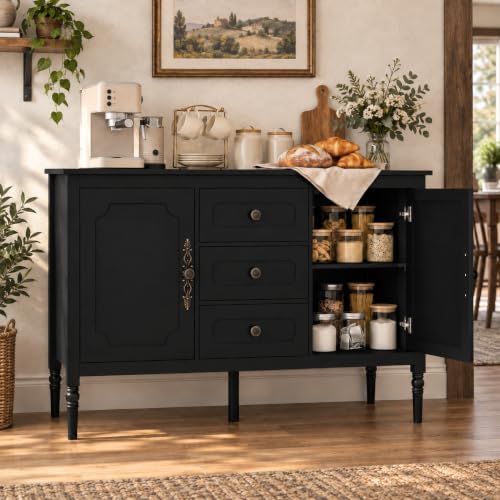
SILKYDRY Buffet Cabinet, 47" Vintage Sideboard w/ Adjustable Shelves(Black) | Mid Century Credenza w/ 3 Drawers,2 Doors,Anti-tip Kits; Accent Storage Cabinet for Dining&Living Room,Entryway & Coffee Bar
Check price on Amazon
RoyalCraft Buffet Cabinet with Storage, 59" Painted Sideboard Coffee Bar | Vintage Kitchen Storage Cabinet with Adjustable Shelves, Mid Century Modern Credenza for Dining& Living Room, Entryway, Black
Check price on AmazonFrequently Asked Questions
What is the difference between a vintage sideboard and a buffet?
The terms are often used interchangeably. A sideboard typically refers to a lower, wider storage piece used in a dining room, while a buffet can sometimes be taller and more elaborate. Vintage examples of both share the same functional purpose: storing dinnerware, linens, and serving pieces.
How can I tell if a vintage sideboard cabinet is solid wood?
Look at the edges, drawer interiors, and back panels. Solid wood shows continuous grain patterns through the thickness, while veneered pieces show a thin layer over a composite core. Check drawer joints, weight, and any labels or maker's marks for clues.
What size vintage sideboard cabinet fits a small dining room?
For compact spaces, look for sideboards around 40 to 55 inches wide with a shallow depth of 15 to 17 inches. A slim mid-century piece with tapered legs and open sightlines keeps the room feeling airy.
How do I style a vintage sideboard cabinet?
Anchor the surface with a large mirror or artwork, layer in a lamp or candlesticks, add a vase with seasonal stems, and group a few decorative objects in odd numbers. Keep clutter minimal so the wood grain and silhouette remain the focus.
Can I repaint or refinish a vintage sideboard?
Yes, but consider the piece's value first. Solid wood and documented makers deserve careful restoration rather than paint. Veneered pieces with damage are good candidates for painting. Test finishes on a hidden area before committing.