
Wooden Table Buying Guide: Choosing a Solid Wood Dining Table
A wooden table is the heart of a dining room — it anchors the space, sets the tone, and serves every meal for years. This guide walks you through wood types, construction, sizing, finishes, and styling so you can choose with confidence.
Why a Wooden Table Belongs in Your Dining Room
Wood is the most requested material for dining tables, and for good reason. It brings warmth that glass and metal cannot replicate, develops character over time, and can be refinished rather than replaced. A quality wooden table is a long-term investment: with routine care, a well-built solid wood table can serve a household for decades and even become a piece passed between generations.
Wood also adapts. A clean-lined oak table suits a modern farmhouse dining room, a walnut slab reads contemporary, and a painted white table fits a cottage or coastal scheme. Few materials transition so easily between styles, which is why a wooden table remains the safest and most rewarding anchor for a dining space — whether you are furnishing a formal dining room or a compact breakfast area.
Wood Types Compared: Hardness, Grain, and Character
The species of wood determines how a table looks, how it ages, and how well it resists dents and scratches. Hardwood species (oak, maple, walnut, cherry) are denser and more resilient than softwoods such as pine, which makes them the standard choice for dining tables that see daily use.
| Wood Type | Character | Durability | Best For |
|---|---|---|---|
| Oak | Open, prominent grain; warm honey to grey tones | Very high | Family dining, farmhouse and rustic styles |
| Maple | Fine, even grain; pale and clean | Very high | Modern and minimalist interiors |
| Walnut | Rich dark chocolate tones with flowing grain | High | Mid-century and contemporary formal dining |
| Cherry | Smooth grain; deepens to a warm reddish tone with age | High | Traditional and transitional dining rooms |
| Ash | Pronounced grain similar to oak but lighter | High | Scandinavian and light-airy schemes |
| Pine | Knotty, casual, soft | Moderate | Entry-level and cottage-style tables |
If you want a table that hides everyday wear well, oak and maple are the most forgiving. Walnut shows scratches slightly more but rewards with a depth of tone that improves with age. Pine sits at the entry-level end of the spectrum: it is softer and dents more easily, but a well-sealed pine table can still serve a small household well. Our guide to sustainable wood care explains how to source and maintain responsibly harvested timber.
Construction and Base Styles
Two tables in the same wood can differ dramatically in stability and longevity depending on how they are built. Look for kiln-dried lumber, reinforced joinery (mortise-and-tenon or doweled joints), and a base that resists wobble under daily use.
Pedestal and Trestle Bases
A rectangle pedestal dining table clears the corners so nobody straddles a leg, which makes it ideal for smaller rooms and bench seating. Trestle bases offer the same legroom with a farmhouse look and are common on extendable tables.
Four-Leg and Turned-Leg Bases
Classic four-leg bases are simple to build and easy to repair. Turned legs lean traditional; tapered legs lean modern. If you are mixing and matching components, a standalone wood table base lets you pair a specific top with the leg style you prefer.
Extendable Tables
If your household grows for holidays, an extendable design is worth prioritizing. Butterfly-leaf and self-storing leaf systems keep the extensions inside the table when not in use, while a leaf table accepts one or two separate leaves. Check that the extension mechanism is rated for your expected use — mid-range and premium tables typically use smoother, sturdier glides than starter-tier models.
Benches and Built-In Seating
Pairing a table with a bench saves floor space and seats children comfortably. A wood table with bench combination is one of the most space-efficient setups for a rectangular table in a narrow room, and a storage bench adds hidden storage for linens and games.
Wood Slab Tables vs Plank-Construction Tables
Plank tables are built from several boards joined edge-to-edge. This construction is dimensionally stable, allows wider tables without enormous single boards, and is the standard for most production dining tables. A wood slab table, by contrast, uses one thick continuous section of wood, often with live edges and natural cracks filled with resin or bowtie joints.
Slab tables are statement pieces with a premium and luxury-tier presence, but they demand more from the maker: the slab must be properly kiln-dried and the base must allow for seasonal movement. A well-made slab table is superb; a poorly made one can cup or split. If you want the slab look with more predictability, look for a table described as book-matched or a thick plank top, which offers a similar visual weight with better stability.
Sizing and Seating Guide
Fit comes before style. A table that crowds the room feels wrong every day, no matter how beautiful it looks in a showroom. Use these benchmarks when planning:
- Per-person width: allow about 24 inches of table edge per seated person for comfortable elbow room.
- Chair clearance: leave 36 inches between the table edge and the nearest wall or furniture so chairs pull out freely.
- Walkway clearance: keep at least 36 inches for main traffic paths and 44 inches where people pass behind seated diners.
- Common sizes: a 60-inch rectangular table seats six comfortably; 72 inches and above seats eight.
For tight rooms, a small wood dining table or a round wood dining table makes better use of floor space than a long rectangle. Round tables seat more people in a compact footprint and remove the awkward corner seat. A 44-inch round table is a classic solution for four in a small dining area. If you have a long narrow room, a wood rectangle dining table in a 36-inch width leaves room for benches on both sides.
Seating count matters as much as shape. A dining table that seats six is the most versatile size for average households, while a dining table and 8 chairs setup suits larger families or frequent entertainers. If you are unsure whether to go round or rectangular, read our comparison of round tables that seat 8 against their rectangular counterparts.
Finishes, Care, and Long-Term Maintenance
The finish is what protects the wood and determines how much upkeep the table needs. Three common approaches dominate the market:
- Oil finishes: penetrate the wood and leave a natural, matte look. They are easy to spot-repair but need periodic re-oiling.
- Lacquered or polyurethane finishes: form a protective film on top. They resist spills well but can chip at edges over time.
- Hardwax oil: a hybrid that offers a natural feel with better water resistance than pure oil. It sits in the balanced-to-premium tier for durability.
Routine care is simple: dust with a soft cloth, wipe spills promptly, and avoid prolonged direct sunlight, which can fade or unevenly darken wood. Use coasters and trivets to prevent heat rings. For deeper guidance, our wood care and sourcing guide covers conditioning schedules and refinishing options.
Matching a Wooden Table to Your Interior Style
The same table reads very differently depending on its surroundings. A few proven pairings:
- Farmhouse and rustic: a rustic farmhouse dining table set for 6 in oak or reclaimed pine pairs with benches, wide-plank floors, and warm textiles.
- Modern and minimalist: a mid-century modern table with tapered legs and a walnut or maple top suits clean-lined rooms and upholstered seating.
- Light and airy: a white and wood dining table keeps a small room feeling open without losing wood's warmth.
- Formal dining: a solid wood dining table in walnut or cherry anchors a more traditional room with a sideboard and a chandelier.
If you are building a complete set, consider pairing your table with matching seating from our guides to dining room chairs sets and wood dining chairs. A wood dining set bought as a coordinated package is the simplest route to a cohesive room, while a standalone wooden table gives you more freedom to mix chairs and benches to your taste.
Frequently Asked Questions
What is the best wood type for a dining table?
Oak, maple, and walnut are among the best wood types for a dining table. Oak and maple offer excellent hardness and durability for daily use, while walnut provides a rich, dark tone with strong dimensional stability. Cherry and ash are also solid choices for a warm, classic look.
How do I choose the right size wooden table for my dining room?
Allow 24 inches of table width per seated person and leave 36 inches of clearance around the table for chair pull-out. A 60-inch rectangular table comfortably seats six, while a 72-inch or larger table works well for eight. Always measure your room and walkways before ordering.
Are wood slab tables stable and durable?
Wood slab tables are durable and visually striking, but because they use a single thick section of wood, they require proper kiln drying and a quality base to prevent warping. A well-built slab table with a sealed finish can last for decades with routine care.
What is the difference between solid wood and veneer tables?
Solid wood tables are constructed from thick lumber and can be sanded and refinished multiple times. Veneer tables use a thin layer of real wood over a core panel, which keeps the table lighter and more dimensionally stable but limits refinishing. Both can be durable when made well.
Should I choose an extendable wooden table?
Choose an extendable table if you regularly host larger groups or your household size changes. Butterfly-leaf and self-storing designs keep extensions inside the table, while separate-leaf designs offer more flexibility. Check that the extension mechanism feels smooth and sturdy for your expected frequency of use.
Recommended Wooden Tables and Matching Dining Seating
⚠️ AFFILIATE DISCLOSURE: This website contains affiliate links. As an affiliate Associate, we earn from qualifying purchases. If you make a purchase through these links, we may receive a small commission at no additional cost to you. Read our full affiliate policy.

Huuger Computer Desk, 55 Inch Home Office Desk, Gaming Writing Work from Home Study Desk, Large Legroom, Sturdy Metal Frame, Modern Simple, Rustic Brown
Check price on Amazon
PayLessHere | 32 Inch Computer Desk | Brown | Sturdy Office Desk | Metal Frame, Adjustable Feet | Water-Resistant, Scratchproof Surface | Writing Table for Home Office or Study | Pack of 1
Check price on Amazon
Plank+Beam Classic 72 Inch Dining Table, Rectangular, Pecan Wirebrush | Non-Toxic Finishes, Versatile Design, Farmhouse Design, Elegant Details, Easy Assembly, Quick Setup, Solid Wood
Check price on Amazon
HOOBRO End Table with Charging Station and USB Port, Small Side Table for Small Space, 3-Tier Nightstand with Adjustable Shelf, for Living Room, Bedroom, Rustic Brown BF112BZ01
Check price on Amazon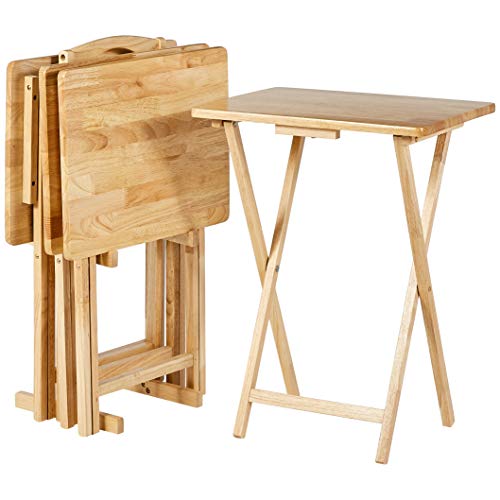
Amazon Basics Classic Foldable TV Dinner Tray Table with Storage Rack, 14.6 L x 19 W x 26 H inch, Natutral, 4-Pack
Check price on Amazon
Stakmore Classic Straight Edge Square Wood Folding Table, 32 in, Cherry | Foldable for Storage in Small Spaces, Wooden Tabletop Furniture, for Cards, Board Games, Dining, and Extra Seating
Check price on Amazon
VASAGLE Computer Desk, Steel Frame Gaming Desk for Home Office, 55.1 Inch | Office Desk, Gaming Table For Study, Work, Gaming, Writing, Bedroom, Living Room, Rustic Brown ULWD214K101
Check price on Amazon