
Extendable Glass Dining Table for Small Spaces: The Complete Buyer's Guide
Discover how a glass extendable table can transform a compact dining area into a flexible, light-filled gathering space — and learn exactly what to look for before you choose one.
Why this guide matters: If you are researching an extendable glass dining table for a small space, you already know the core challenge: you want a table that feels airy and open day-to-day, yet expands when guests arrive. This guide covers the mechanisms, glass types, frame materials, sizing rules, and practical trade-offs so you can make a confident, well-informed decision.
Why Glass Is a Smart Choice for Small Dining Spaces
Glass tops are a well-established solution for compact rooms because they visually open up a space in ways that solid wood or stone cannot. A clear glass surface lets light and sightlines pass through, so the table reads as less dense and the room feels larger. In a narrow apartment dining zone or an open-concept kitchen, this visual lightness can make the difference between a cramped corner and an inviting eating area.
Combined with an extension mechanism, a glass table becomes a genuinely dual-purpose piece: compact for everyday meals, larger for hosting. This is why the category of an extendable dining table for small spaces has grown so popular. Glass simply amplifies the benefit.
There is a practical side too. Tempered glass is easy to wipe clean, resists stains and odors, and does not absorb spills the way unfinished wood can. For households with children or frequent entertainers, that ease of maintenance is a real advantage.
How Extendable Glass Tables Work: Mechanisms Compared
The extension mechanism is the heart of any expandable table. On glass models, the engineering matters even more because the top is heavier and less forgiving than wood. Understanding the main types helps you match the table to your room and your habits.
Butterfly / Self-Storing Leaf
The leaf folds and stores inside the table body. You lift the top halves and unfold the leaf in one motion. Best for rooms with no storage space for loose leaves.
Pull-Out Leaf
A leaf slides out from a compartment beneath the top. Simple to operate and keeps the leaf protected, though the table body must be deep enough to house it.
Removable Leaf
The leaf is a separate panel you insert and remove manually. Often the simplest and most robust mechanism, but you need somewhere to store the leaf when not in use.
Drop-Leaf / Gate-Leg
Hinged side panels fold down against the frame. Ideal for very tight rooms because the table can sit nearly flat against a wall when closed.
For a deeper comparison of leaf styles, our guide to the extendable dining table with self-storing leaf explains how these mechanisms differ in daily use. If you prefer the cleanest possible look, models with self-storing leaves avoid loose panels entirely.
Glass Types: Tempered, Frosted, and Tinted
Not all glass tops are equal. The type of glass affects safety, appearance, and how the table interacts with your room's light.
Tempered Glass
Tempered glass is heat-treated for strength and is the standard for quality dining tables. If it breaks, it shatters into small, blunt fragments rather than sharp shards. Always confirm that a table uses tempered glass — this is a safety baseline, not a premium extra.
Clear Glass
Clear glass offers maximum visual openness. It reflects light and lets you see the frame and the floor beneath, which is especially effective in small rooms. The trade-off is that smudges and fingerprints show more readily, so a lint-free cloth and glass cleaner become routine.
Frosted or Acid-Etched Glass
Frosted glass diffuses light and hides smudges better than clear glass. It reads as softer and more contemporary. The downside is that it slightly reduces the "invisible table" effect that makes clear glass so effective in tight spaces.
Tinted or Smoked Glass
Tinted glass adds a moodier, more sophisticated look and can hide crumbs and smudges well. In a very small, dark room, however, a dark tint can make the table feel heavier. Use tinted glass when you want a design statement rather than maximum airiness.
Frame Materials: The Structural Backbone
On a glass table, the frame carries all the structural load, so its material and construction quality matter more than on a solid-top table. The extension mechanism also lives in the frame, which makes build quality critical.
- Powder-coated steel: The most common choice. Durable, stable, and available in many finishes. Look for reinforced joints and a rust-proof finish.
- Stainless steel: Excellent corrosion resistance and a clean modern look. Often found on higher-tier models.
- Aluminum: Lighter than steel, which helps if you need to move the table. Slightly less rigid, so check for sturdy cross-bracing.
- Solid wood or wood-veneer frames: Warmer look, but wood frames must be engineered carefully to handle glass and the extension mechanism. Check for reinforced joinery.
- Chrome or brushed metal: A polished, contemporary aesthetic. Chrome shows fingerprints, while brushed finishes are more forgiving.
Regardless of material, inspect the extension mechanism itself: smooth glides, locking latches, and a leaf that sits flush with the main top are signs of quality. A mid-range model usually offers noticeably smoother operation than an entry-level one, and a premium model should feel solid with no wobble when fully extended.
Sizing Rules for Small Spaces
Getting the dimensions right is the single most important step. A table that is even slightly too large will make a small room feel cramped, while one that is too small will frustrate you every time guests arrive.
Closed Dimensions
Measure your room and leave a clear walkway of at least 30 inches (about 76 cm) around the table on all sides where people need to pass. For a small dining nook, a closed footprint of roughly 30 to 36 inches square, or a round top of 36 to 42 inches in diameter, is a practical starting point. Round and oval glass tops are especially effective in tight corners because they eliminate sharp edges.
Extended Dimensions
Work out how many people you need to seat at maximum. As a rule of thumb, allow about 24 inches (60 cm) of table width per person along an edge. A table that extends to seat six comfortably is a common target for small-space hosts. If you regularly host larger gatherings, consider a table that extends to seat eight or more, but confirm the extended length still fits your room with usable walkways.
Height and Seating
Standard dining height is around 30 inches (76 cm). Counter-height tables are taller and pair with counter stools, which can save floor space because stools tuck underneath. Whatever height you choose, make sure the table and seating are matched. Our guide to ergonomic dining chairs covers seat height and comfort in detail.
If you are comparing compact options more broadly, our overview of the extendable kitchen table and the expandable kitchen tables category can help you see how glass models fit alongside other materials.
Table Shapes That Suit Small Rooms
Shape has as much impact on perceived space as raw dimensions. Here is how the main options behave in a compact room.
Round
No corners to bump into, and everyone can see each other. A round glass top is one of the most space-efficient shapes for small dining areas.
Square
Great for two to four people in a compact footprint. Extends well into a rectangle for guests.
Oval
Softer than a rectangle and easier to walk around in a narrow room. Good for longer, narrower spaces.
Rectangular
Best for longer rooms and larger seat counts when extended. Choose a narrower width in tight spaces.
For a round option, see our guide to the expandable round dining table with self-storing leaves. For a circular mechanism that extends in a different way, the extendable circle table is also worth comparing.
Quality Tiers: What Changes as You Move Up
Extendable glass tables span a wide range of build quality. Rather than focusing on figures, it helps to understand what each tier typically delivers so you can match the table to your needs. Our classification below uses a simple tier system applied consistently throughout this guide.
| Tier | Typical Construction | Best For |
|---|---|---|
| Essential tier | Basic tempered glass, powder-coated steel frame, simple butterfly or removable leaf. Smooth enough for occasional use. | First apartments, renters, occasional hosting. |
| Balanced mid-range | Thicker tempered glass, reinforced frame, smoother self-storing mechanism, better finish quality. | Everyday family dining with regular guests. |
| High-end tier | Premium tempered or frosted glass, precision hardware, rock-solid stability when extended, refined detailing. | Frequent entertaining and long-term use. |
| Luxury / flagship | Architectural glass, custom metalwork, near-seamless extension action, designer finishes. | Statement dining rooms and design-led interiors. |
A mid-range model usually offers a noticeably smoother extension action than an entry-level one, and the jump to the high-end tier is felt most in stability and hardware longevity. If you are comparing across materials, our extendable dining table hub and the expandable dining table overview provide useful context.
Advantages and Trade-Offs
Advantages
- Visually expands small rooms
- Flexible seating from day to day
- Easy to wipe clean and maintain
- Reflects light, brightening dark corners
- Modern, contemporary aesthetic
Trade-Offs
- Shows smudges and fingerprints
- Can feel cold without linens or placemats
- Heavier top requires sturdy frame
- Extension hardware needs care over time
- Noise transmission can be higher than wood
Most of these trade-offs are manageable with good habits: a table runner, placemats, and a quick daily wipe keep a glass top looking its best. For comfort and styling ideas, our extendable dining table set for small spaces guide pairs tables with complementary seating.
Pre-Purchase Checklist
Before you commit, run through this checklist. It will save you from the most common small-space mistakes.
- Measure twice: Record closed and extended dimensions, then check walkways at both sizes.
- Confirm tempered glass: Safety should never be optional.
- Test the mechanism in person if possible: Look for smooth glides and a flush leaf.
- Check frame stability: A fully extended table should not wobble.
- Plan leaf storage: Self-storing leaves remove the storage problem entirely.
- Match seating height: Standard, counter, or bar height — the table and chairs must agree.
- Consider maintenance: Clear glass needs frequent wiping; frosted or tinted glass hides smudges better.
- Review the warranty and return policy: Extension hardware is the most likely failure point.
For a more detailed walkthrough of measuring and placement, our measurement guide is a helpful companion. And if you are furnishing the whole room, the dining room furniture hub covers the broader picture.
Alternatives Worth Considering
Glass is not the only route to a flexible small-space dining table. Depending on your style and room, other options may suit you better.
- Extendable wood dining table — warmer and quieter, but visually heavier.
- Drop-leaf small dining table — folds almost flat against a wall.
- Extendable dining table with bench and chairs — a bench tucks away neatly in tight rooms.
- Dining table with self-storing extension leaves — the storage-free extension principle applied across materials.
- Extendable dining table that seats 12 — for hosts who occasionally need very large capacity.
If you are still exploring the category, the extendable table and extendable tables overviews show how glass fits into the wider landscape. You may also like to compare the extendable dining table set options for a coordinated room.
Best Extendable Glass Dining Tables for Small Spaces
⚠️ AFFILIATE DISCLOSURE: This website contains affiliate links. As an affiliate Associate, we earn from qualifying purchases. If you make a purchase through these links, we may receive a small commission at no additional cost to you. Read our full affiliate policy.

23.6''-118.11'' Extendable Dining Table with Sideboard for 2-10 People | This Save space Extendable table with Sideboard Storage with glass doors and fluted base Kitchen Table for parties
Check price on Amazon
23.6''-118.11'' Extendable Dining Table with Sideboard for 2-10 People | This Save space extendable table with Sideboard Storage with glass doors and fluted base Kitchen Table for parties
Check price on Amazon
23.6" to 118.1" Extendable Dining Table with Storage Cabinet (Walnut) | Modern Expandable Dining Table for 2-12 People with Outlet, Space-Saving Table with Wheels for Parties Meetings Celebrations
Check price on Amazon
23.6" to 118.1" Extendable Dining Table with Storage Cabinet (Black) | Modern Expandable Dining Table for 2-12 People with Outlet, Space-Saving Table with Wheels for Parties Meetings Celebrations
Check price on Amazon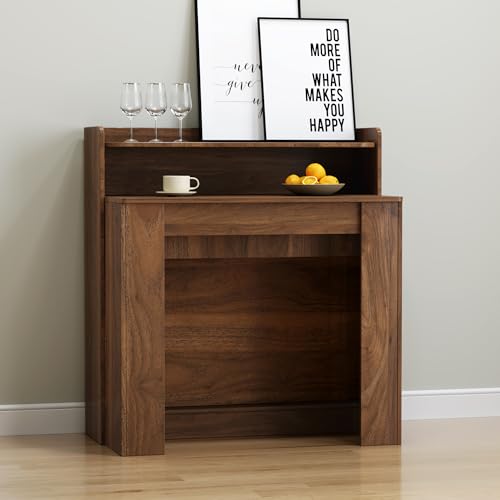
Varelynn 20"-98" Extendable Dining Table with Storage for 2-10, Walnut | Convertible Console Table with Storage, Extendable Design, Space Saving Solution, Ideal for Family Meals and Holiday Events
Check price on Amazon
ONBRILL 42"-106" Extendable Dining Table for 2-10 with Storage Legs, Walnut | Mid-Century Modern Oval Extendable Dining Table with 4 Removable Leaves, Round Dinner Table for Dining Room, Kitchen
Check price on Amazon
47"–78" Extendable Dining Table for 4–8 People, Modern Rectangular Kitchen Table with 2-Tier Side Storage Shelves for Dining Room, Kitchen and Living Room-Walnut
Check price on AmazonFrequently Asked Questions
Is a glass dining table safe around children?
Tempered glass is the safety standard: if it breaks, it shatters into small, blunt pieces. Always confirm the table uses tempered glass, and consider rounded or oval edges in a family home.
How do I keep a glass tabletop clean?
Wipe daily with a microfiber cloth and use a glass cleaner for smudges. Placemats and a table runner reduce direct contact and protect against scratches.
Will an extendable glass table wobble when extended?
Not if the frame is properly engineered. A quality mechanism with locking latches and a reinforced frame stays solid when fully extended. Test this before buying or read reviews that mention stability.
What size table fits a small dining room?
Leave at least 30 inches (76 cm) of walkway around the table. A closed footprint of about 30–36 inches square or a 36–42 inch round top is a practical starting point, extending only when needed.
Self-storing leaf or removable leaf?
Self-storing leaves are convenient because you never need storage space, while removable leaves are often simpler and more robust. Choose based on your space and how often you extend.
Can a glass extendable table work in an open-concept space?
Yes — the visual lightness of glass helps a dining zone feel distinct without blocking sightlines to the kitchen or living area. Clear glass is especially effective in open plans.
Final Thoughts
An extendable glass dining table is one of the most effective ways to get flexibility out of a small dining area. The visual openness of glass keeps the room feeling light, while the extension mechanism lets you seat guests when you need to. Focus your research on three things: tempered glass, a sturdy frame, and a mechanism that suits your space — then match the closed and extended dimensions to your room.
With those fundamentals in place, you can compare models with confidence. Browse the recommended options above to find a table that fits your space, your hosting habits, and your style.