
Vintage Mid Century Modern Credenzas and Sideboards
Your complete guide to identifying, choosing, and styling authentic mid century modern storage pieces. Learn what separates a well-made vintage credenza from a reproduction, and how to find the right sideboard for your dining room.
Browse Recommended PiecesWhy vintage mid century modern credenzas and sideboards remain in demand: These pieces combine clean geometry, honest materials, and practical storage in a way that few modern designs match. A well-preserved walnut or teak sideboard can anchor a dining room for decades, and its proportions were designed for real living rather than showroom display. This guide walks you through construction details, material choices, sizing, and styling so you can decide with confidence.
What Defines a Vintage Mid Century Modern Credenza
Mid century modern design emerged in the decades following World War II, roughly from the mid-1940s through the late 1960s. Designers of this era favored function, simplicity, and honest use of materials. A vintage credenza from this period typically shows several recognizable traits:
- Tapered legs that lift the body off the floor and create a light visual footprint.
- Clean, horizontal lines with little or no carved ornamentation.
- Sliding or hinged doors paired with drawers in a balanced layout.
- Solid wood construction in walnut, teak, rosewood, or oak, often with visible grain.
- Minimal, often recessed hardware in brass, aluminum, or wood.
- Modular or asymmetrical storage that reflects a practical, modern approach to living.
These pieces were designed to serve as dining room anchors, holding linens, serveware, and tableware while also providing a surface for display. Many vintage examples also work well in living rooms and entryways, which is why the category has remained popular across multiple rooms. If you are also considering the table itself, our guide to a mid century modern table pairs naturally with these storage pieces.
Credenza vs Sideboard: Key Differences
In everyday use, the terms credenza and sideboard are often used interchangeably. Historically, however, they had distinct roles:
| Feature | Credenza | Sideboard |
|---|---|---|
| Original use | Italian dining rooms; food staging before serving | English dining rooms; general storage and serving |
| Typical form | Lower profile, often with sliding doors | Taller body, often with drawers and cabinets |
| Legs | Often tapered, sometimes on a plinth | Variable; can be on legs or a base |
| Modern use | Dining room, living room, media console | Dining room, hallway, entryway |
For a vintage mid century modern piece, the label matters less than the construction and proportions. What matters is that the piece fits your room, stores what you need, and reflects the design language you want. If you are specifically searching for a cabinet-style piece, our overview of a sideboard cabinet covers related options, and our guide to a walnut sideboard focuses on one of the most popular wood choices of the era.
Materials and Construction to Look For
The materials used in a vintage credenza tell you a great deal about its durability and long-term behavior. Here are the key considerations:
Wood species
- Walnut is the most iconic mid century modern wood. It offers a rich, warm tone and tight grain that takes oil finishes beautifully.
- Teak is dense, naturally water-resistant, and was widely used in Scandinavian-influenced pieces. It develops a warm patina over time.
- Rosewood appears in higher-end pieces, with dramatic grain and deep color. It is heavier and often reserved for premium examples.
- Oak is sturdier and more forgiving, often used in entry-level and mid-range pieces from the era.
Joinery and hardware
Look for dovetail drawer joints, solid wood drawer sides, and mortise-and-tenon case construction. These details indicate a piece built to last. Original brass or aluminum pulls are a strong sign of authenticity. Replaced hardware is not necessarily a problem, but it should be disclosed and should match the period style.
Finishes
Original oil and lacquer finishes can be preserved with careful conditioning. Refinished pieces are common and can be perfectly sound, but the quality of the refinish matters. A well-done refinish preserves the grain and uses appropriate products; a poor one may leave uneven color or a plastic-like surface.
Construction tip: Open every door and drawer. Smooth operation, consistent gaps, and a solid feel when you press on the case are good signs. A piece that racks or wobbles when nudged may have loose joinery that is costly to repair.
Quality Tiers and What They Mean
Vintage and vintage-style credenzas fall into broad tiers based on materials, construction, and provenance. Use these descriptors to compare pieces on a level playing field without relying on numeric figures:
| Tier | Best For | Typical Characteristics |
|---|---|---|
| Entry-level | First vintage purchase, rental spaces, casual dining rooms | Veneered case, simpler joinery, later reproductions, basic hardware |
| Mid-range | Daily-use dining rooms, buyers who want original period details | Solid wood fronts, dovetail drawers, original or period-correct hardware |
| Premium | Design-conscious dining rooms, collectors of a specific maker | Solid walnut or teak, signed or labeled pieces, excellent original finish |
| Luxury | Statement pieces, curated interiors, long-term collection | Rare woods, museum-grade provenance, exceptional craftsmanship |
An entry-level piece can still be a solid choice for its tier if the construction is sound and the finish is stable. A premium piece justifies its position through materials and provenance rather than surface styling alone. For a closer look at related storage categories, see our guides to a walnut buffet and a sideboard with drawers.
Choosing the Right Size for Your Room
Proportion is the single most important factor in making a credenza or sideboard look intentional rather than crowded. Use these guidelines as a starting point:
- Length: Aim for roughly two-thirds the length of your dining table. A 72-inch table pairs well with a credenza around 48 to 54 inches wide.
- Height: A credenza top at around 30 to 32 inches works well as a serving surface. Taller sideboards can feel heavy in small rooms.
- Depth: 16 to 20 inches is typical. Deeper pieces eat into walking space, so measure your clearance carefully.
- Clearance: Leave at least 36 inches in front of the piece for chairs and foot traffic. In tight rooms, a shallower depth helps more than a shorter length.
If your dining area is compact, consider a curved sideboard or a narrower cabinet that still provides useful storage. For rooms with a strong period theme, a vintage sideboard cabinet can reinforce the look without overwhelming the space.
How to Spot Authentic Vintage Pieces
Reproductions are common, and many are perfectly good furniture. If authenticity matters to you, check these signals:
- Maker's marks: Look on the back panel, the underside of drawers, and the inside of doors for labels, stamps, or branded signatures.
- Joinery: Dovetail drawers and mortise-and-tenon joints are period-appropriate. Staples and particle board are not.
- Hardware: Original pulls often show consistent patina and match across the piece. Mismatched hardware can indicate replacement.
- Wood grain: Continuous grain across drawer fronts and doors suggests careful original construction. Printed veneers are a red flag.
- Finish wear: Wear patterns should be consistent with age. Uniform, glass-like finishes on a supposedly vintage piece may indicate a recent refinish.
None of these signals is definitive on its own. Combine several observations before drawing a conclusion, and ask sellers for provenance when possible.
Styling Your Credenza or Sideboard
A well-styled credenza balances display and function. Start with the piece itself and build outward:
On top
- Use a large anchor object, such as a lamp or a sculptural bowl, slightly off-center.
- Layer in a smaller object with contrasting height, such as a stack of books or a small vase.
- Leave breathing room. A surface that is two-thirds styled and one-third open reads as intentional.
- A vase or a pair of candlesticks can tie the piece to your table setting.
Inside
- Assign zones: linens in one area, serveware in another, and everyday items within easy reach.
- Use felt or cork liners to protect wood surfaces and reduce sliding.
- Keep the heaviest items low and centered to preserve stability.
Around the room
The credenza should relate to the rest of the dining room. If your table is a round walnut dining table, a walnut sideboard creates a cohesive material story. If you prefer contrast, a teak or oak piece can add warmth without matching exactly. For chairs, our guide to mid century modern upholstered dining chairs offers complementary silhouettes.
Care and Maintenance Basics
Vintage wood furniture benefits from consistent, gentle care. A few habits will keep your credenza or sideboard in good condition for years:
- Dust weekly with a soft, dry cloth. Avoid abrasive pads and silicone-based sprays.
- Control humidity between 40 and 60 percent. Sudden swings cause wood to expand and contract, which can loosen joinery.
- Avoid direct sunlight or use window treatments to prevent fading and drying.
- Use coasters and trivets to protect the top from heat and moisture rings.
- Condition annually with a product appropriate to the finish. Oil-finished pieces may need more frequent attention than lacquered ones.
- Address repairs early. A loose hinge or a small crack is easier to fix before it affects the surrounding wood.
If you are also caring for wooden dining tables, our guide to sustainable wood care covers finishes and long-term maintenance practices that apply to credenzas as well.
Recommended Vintage Mid Century Modern Credenzas and Sideboards
⚠️ AFFILIATE DISCLOSURE: This website contains affiliate links. As an affiliate Associate, we earn from qualifying purchases. If you make a purchase through these links, we may receive a small commission at no additional cost to you. Read our full affiliate policy.

LKTART 60" Mid Century Modern Sideboard Buffet,Credenzas Storage Cabinet | Real Walnut Veneer Sideboard Buffet with Hollow Carved Doors,Vintage Accent Cabinet Credenzas Storage with Solid Wood Legs
Check price on Amazon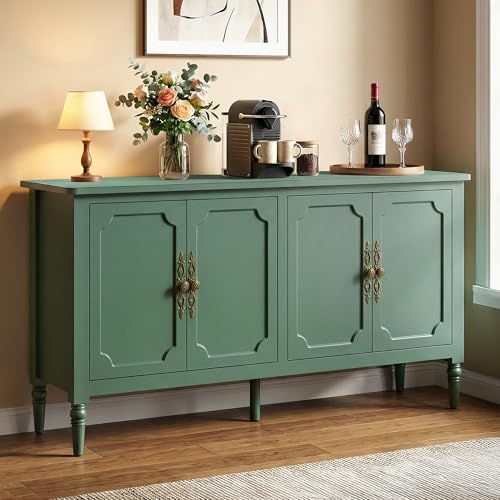
RoyalCraft Buffet Cabinet with Storage, 59" Painted Sideboard Coffee Bar | Vintage Kitchen Storage Cabinet with Adjustable Shelves, Mid Century Modern Credenza for Dining& Living Room, Entryway, Green
Check price on Amazon
RoyalCraft Buffet Cabinet with Storage, 59" Painted Sideboard Coffee Bar | Vintage Kitchen Storage Cabinet with Adjustable Shelves, Mid Century Modern Credenza for Dining& Living Room, Entryway, Black
Check price on Amazon
RoyalCraft 118" Buffet Cabinet with Storage, Vintage Sideboard with Adjustable Shelves, Mid Century Modern Painted Credenza Coffee Bar for Kitchen, Dining Room, Entryway, Living Room, Navy Blue
Check price on Amazon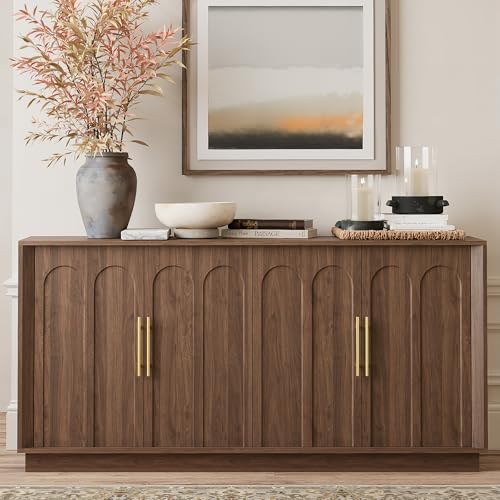
FORTUNETEC 67" Sideboard Buffet Cabinet with Storage, Arched Doors, Walnut | Mid Century Modern Accent Cabinet with Wood Gain, Modular Media Console, Credenza for Living Dining Room Kitchen Entryway
Check price on Amazon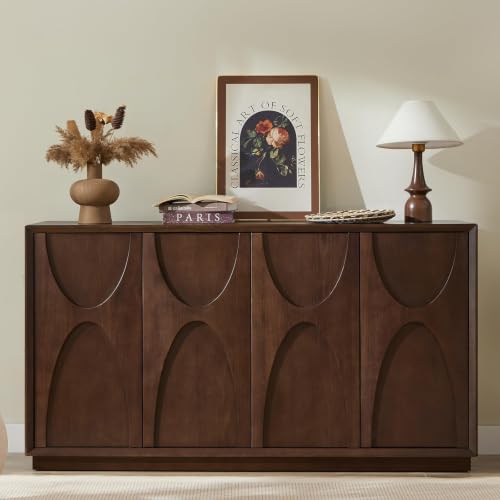
LKTART 58.5" Sideboard Buffet Cabinet, Mid-Century Modern Credenza | 4-Door Retro Storage Cabinet with Adjustable Shelves,Solid Wood Accent Cabinet for Living Room Kitchen,Walnut
Check price on Amazon
ONBRILL 63" Fluted Sideboard Buffet Cabinet with Storage (Walnut) | Credenza, Coffee Bar Cabinet, with Power Outlet, Adjustable Shelves, Vintage Mid Century Modern, for Entryway Living Room
Check price on AmazonFrequently Asked Questions
What is the difference between a credenza and a sideboard?
Historically, a credenza was a sideboard used in Italian dining rooms for holding food before serving, while a sideboard was a broader term for dining room storage. Today, the terms are used interchangeably. Mid century modern credenzas typically feature clean lines, tapered legs, and sliding doors, while vintage sideboards may include more drawers and decorative hardware.
How do I identify authentic mid century modern furniture?
Look for solid wood construction, dovetail joinery, tapered legs, and minimal ornamentation. Authentic pieces often have maker's marks, labels, or stamped signatures on the back or underside. Quality hardware, such as solid brass pulls, and the use of walnut, teak, or rosewood are also strong indicators of genuine mid century modern design.
What size credenza or sideboard fits my dining room?
A general guideline is to choose a credenza that is roughly two-thirds the length of your dining table. Allow at least 36 inches of clearance in front of the piece for comfortable movement. In smaller dining rooms, a compact sideboard under 60 inches wide works well, while larger spaces can accommodate pieces over 72 inches.
How should I care for a vintage wood credenza?
Dust regularly with a soft cloth, avoid direct sunlight, and maintain indoor humidity between 40 and 60 percent. Use a quality wood conditioner or polish formulated for the finish type. Avoid silicone-based products and place coasters under drinks to prevent ring marks. For deeper cleaning, consult a professional furniture restorer.
Next Steps
Choosing a vintage mid century modern credenza or sideboard is a balance of proportion, construction, and personal style. Once you have a clear sense of the size your room can accommodate and the tier of piece that matches your plans, the decision becomes much simpler. Compare the recommended options above, review the construction details in each listing, and check the seller's return policy before you commit.
If you are still building out the rest of the dining room, our guides to vintage mid century modern dining tables and chairs and wall hangings for the dining room can help you complete the space with pieces that feel intentional and cohesive.