
Wooden Table with Bench: The Complete Buying Guide
Everything you need to know about choosing a wooden table with bench seating — from wood types and bench styles to sizing, comfort, care, and design inspiration for your dining space.
START EXPLORINGWhy a Wooden Table with Bench? A wooden table with bench seating combines the warmth of natural timber with the communal spirit of shared meals. Benches maximize seating along one side, tuck neatly under the table when not in use, and bring a relaxed, farmhouse-inspired character to kitchens, dining rooms, and breakfast nooks. This guide walks you through every consideration — from wood species and bench construction to sizing and long-term care — so you can choose with confidence.
Why Choose a Wooden Table with Bench Set
A wooden table with bench offers a distinct combination of practicality and aesthetics that chairs alone cannot match. Understanding these advantages helps you decide whether bench seating suits your household and your space.
Space Efficiency and Flexible Seating
Benches slide completely under the table, freeing up floor space in compact dining areas. Unlike chairs with protruding backs, a bench creates a clean visual line that makes small rooms feel more open. When guests arrive, a bench comfortably seats two to three people along a single side, and children can often fit three to a standard bench.
Social and Communal Atmosphere
Bench seating encourages togetherness — diners sit shoulder to shoulder, which naturally fosters conversation and a casual, welcoming mood. This makes a wooden table with bench especially well suited to family kitchens, holiday gatherings, and open-concept living spaces where the dining area doubles as a social hub.
Design Versatility
From rustic farmhouse to modern minimalist, bench seating adapts to nearly every interior style. A wooden dining table and bench pairing can anchor a country-style kitchen, while a sleek wood table with bench in a lighter finish works beautifully in a contemporary apartment. The combination also pairs naturally with other wood furniture such as a wood buffet or wooden sideboard for a cohesive look.
Choosing the Right Wood for Your Table and Bench
The wood species determines the table's durability, grain character, color, and long-term maintenance requirements. Here is how the most common options compare.
Hardwood Options
- Oak: Dense, durable, and richly grained. Oak is a top-tier choice for high-traffic dining spaces and develops a beautiful patina over time. It resists dents well and takes stains and oils evenly.
- Maple: A fine, uniform grain that takes paint and clear finishes beautifully. Maple is hard and smooth, making it a favorite for modern and Shaker-style tables. It is slightly less resistant to moisture than oak.
- Walnut: Rich, dark chocolate tones with elegant grain patterns. Walnut sits in the premium and luxury tiers, offering a sophisticated look for formal dining rooms. It is softer than oak but still highly durable.
- Cherry: Warm reddish-brown tones that deepen with age and light exposure. Cherry is a mid-range to premium hardwood with a smooth, refined surface.
Softer and More Approachable Woods
- Pine: An entry-level and essential-tier wood with a rustic, knotty character. Pine is softer and more prone to denting, but it is easy to refinish and suits farmhouse and cottage styles.
- Rubberwood: Often used in mid-tier and balanced-tier furniture, rubberwood is a sustainable hardwood with a tight grain. It performs well when properly sealed and is a solid choice for everyday family dining.
- Acacia: A dense, weather-resistant wood with striking contrast between heartwood and sapwood. Acacia is common in mid-range to premium outdoor and indoor bench sets.
Comparing Wood Tiers at a Glance
| Wood Species | Market Tier | Best For | Durability Notes |
|---|---|---|---|
| Pine | Entry-level / essential tier | Rustic farmhouse, casual kitchens | Softer surface; dents more easily; easy to refinish |
| Rubberwood | Mid-tier / balanced tier | Everyday family dining | Solid build when sealed; good value for its tier |
| Oak | Premium / high-end tier | High-traffic dining rooms | Dense and dent-resistant; long-term investment |
| Maple | Premium / high-end tier | Modern and painted finishes | Hard, smooth surface; uniform grain |
| Walnut | Luxury / flagship tier | Formal and statement dining spaces | Rich color; premium materials; elegant grain |
For more on table construction details, see our guide to the wood table base and wood tabletop components, which explain how joinery and top thickness affect stability.
Bench Styles and Construction Types
Not all benches are created equal. The style and construction of your bench affect comfort, storage capability, and how well it integrates with the rest of your dining furniture.
Backless vs. Backed Benches
A backless bench is the most space-efficient option — it tucks fully under the table and offers a clean sightline. A backed bench provides more support for longer meals and feels closer to a chair, but it occupies more visual and physical space. For mixed seating, many homeowners pair a backless bench on one side with a set of wood dining chairs on the other.
Storage Benches
A storage bench with a lift-up seat or drawers adds practical value, especially in small dining rooms where table linens, board games, or serving pieces need a home. A wicker bench with storage offers a lighter, more textured alternative to solid wood, while a white storage bench can brighten a neutral palette.
Upholstered and Cushioned Benches
For extended seating comfort, a bench with a padded seat or tie-on cushion makes a significant difference. Look for high-density foam and removable, washable covers in family households. A cushion also softens the hard edge of a wooden bench, which matters for children and older guests.
Bench and Table Pairing Styles
- Trestle-style bench: A classic farmhouse look with angled legs and a stretcher base — pairs beautifully with a wood rectangle dining table.
- Pedestal bench: A central support column creates an airy, modern silhouette.
- Slab bench: A thick, live-edge slab top on simple legs brings organic character to a wood slab table pairing.
- Corner bench: L-shaped bench seating maximizes corner space in breakfast nooks and small kitchens.
Sizing and Proportions: Getting the Fit Right
Correct sizing is the difference between a bench that feels integrated and one that feels awkward. Use these guidelines to plan your setup.
Table Height and Bench Seat Height
A standard dining table stands 30 inches high. The matching bench seat should sit 17 to 19 inches from the floor, leaving roughly 11 to 13 inches of clearance to the table apron. For counter-height tables at 36 inches, choose a bench seat around 24 inches. For bar-height tables at 42 inches, a bench seat near 28 to 30 inches is appropriate — the same principle used for wood counter stools and wooden bar stools.
Seating Capacity by Length
- 48-inch bench: Comfortably seats two adults.
- 60-inch bench: Seats two adults and one child, or three slender adults.
- 72-inch bench: Seats three adults comfortably.
- 84-inch bench and longer: Seats three to four adults; best paired with a large dining table or a long rectangular table.
Clearance and Walkway Space
Allow at least 36 inches of clearance between the table edge and any wall or obstruction to pull the bench out comfortably. In tighter spaces, a backless bench that stays partially under the table can reduce the required clearance to around 30 inches.
Design Ideas and Styling Your Wooden Table with Bench
A wooden table with bench is a versatile canvas. Here are practical ways to style it across different interiors.
Farmhouse and Rustic Kitchens
Pair a knotty pine or reclaimed oak table with a matching trestle bench. Add a woven dining chair at each end for contrast, and top the table with a linen runner and a simple ceramic centerpiece. A wood buffet along the wall completes the farmhouse look.
Modern and Minimalist Spaces
Choose a light oak or maple table with a slim, backless bench in the same finish. Keep styling minimal — a single sculptural bowl and low-profile dinnerware. A white dining room table set can serve as an alternative reference point if you prefer a brighter palette.
Small Dining Rooms and Breakfast Nooks
An L-shaped corner bench paired with a white round table or wood oval dining room table maximizes corner usage. Use a white small table if the nook is particularly compact, and add wall-mounted lighting to keep the tabletop clear.
Mixed Material Pairings
Combining wood with other materials adds depth. A wooden table with bench in a dark walnut finish pairs well with wicker chairs indoor for texture, or with wrought iron chairs for an industrial edge. For a lighter feel, a white wood chair at the table ends breaks up the wood tones.
For more dining room inspiration, explore our guides to dining room styles and small dining rooms.
Care and Maintenance for Wooden Table and Bench
Solid wood furniture rewards consistent care with decades of service. Follow these practices to protect your investment.
Daily Habits
- Wipe spills immediately with a soft, damp cloth — moisture is the enemy of wood finishes.
- Use coasters and trivets for hot dishes and drinks to prevent heat rings and water marks.
- Place felt pads under the bench legs to prevent floor scratches and reduce noise.
Seasonal Maintenance
- Dust weekly with a microfiber cloth to remove grit that can dull the finish.
- Apply a wood conditioner or furniture wax every three to six months, depending on use.
- Keep the table and bench away from direct sunlight and heating vents to prevent drying, cracking, and uneven fading.
- Maintain indoor humidity between 35% and 55% to minimize seasonal wood movement.
Refinishing and Repair
Light scratches can often be treated with a matching wood stain marker or a blend of beeswax and oil. Deeper scratches may require sanding and refinishing. For comprehensive guidance, see our wood polish and conditioner and scratch repair tips.
Recommended Wooden Table with Bench Products
⚠️ AFFILIATE DISCLOSURE: This website contains affiliate links. As an affiliate Associate, we earn from qualifying purchases. If you make a purchase through these links, we may receive a small commission at no additional cost to you. Read our full affiliate policy.

Feonase 5-Piece Dining Table Set for 4-8 People, 63" Extendable Kitchen Table with 2 Benches and 2 Square Stools, Mid-Century Modern Wooden Dining Room Table, Space-Saving, Walnut
Check price on Amazon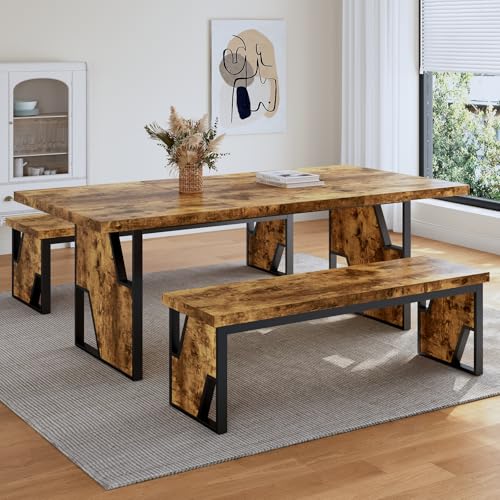
HIPIHOM 70.8" Wooden Dining Table with 2 Benches Kitchen Table and Chairs | Modern Table and Chairs set for 4-6 person, Thickened MDF Wooden Table with Dining Bench, for Living Dining Room, Office
Check price on Amazon
HUAHUU 63" Farmhouse Dining Table Set for 4-6, Kitchen Table with 2 Benches, Space Saving 3-Piece Rectangle Wooden Dinette Table Set for Dining Room, Breakfast Nook, Small Space, Brown & White
Check price on Amazon
6 Person Circular Outdoor Wooden Picnic Table for Patio, Backyard, Garden | Picnic Tables with 3 Built-in Benches, Outdoor Dining Table and Chairs Set with Umbrella Hole for Garden, Walnut Brown
Check price on Amazon
HOOBRO 39.3'' Bamboo Dining Bench, Farmhouse Kitchen Table Bench, Kitchen & Living Room Furniture, Easy to Assemble, Sturdy and Stable, Mocha MA03CD01G2
Check price on Amazon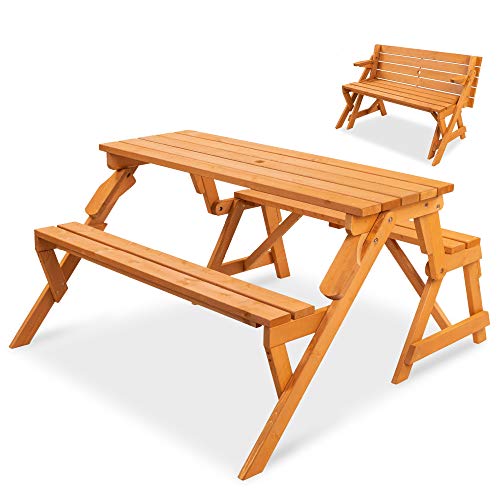
Best Choice Products 2-in-1 Wooden Picnic Table Bench, Natural | Transform between Picnic Table or Bench with 1 Hand, Built in Umbrella Hole, Flexible Outdoor Seating for Patio, Yard, Deck
Check price on Amazon
Devoko Acacia Wood Outdoor Bench, 2-Person Garden Bench with Pull-Out Table | Sturdy Patio Bench Porch Bench, Wooden Bench Outdoor with Height-Adjustable Table for Backyard, Balcony, Patio (Log Color)
Check price on AmazonFinal Buying Checklist
Before you commit, run through this checklist to confirm your wooden table with bench meets your household's needs.
- Measure twice: Confirm table length, bench length, seat height, and walkway clearance in your actual space.
- Match wood species to use: Choose oak or maple for high-traffic family dining; pine for a casual farmhouse look; walnut for formal spaces.
- Decide on back support: A backless bench saves space; a backed bench adds comfort for long meals.
- Consider storage: A storage bench adds practical value in compact rooms.
- Check construction: Look for reinforced joinery, corner blocks, and a solid build — hallmarks of quality at every tier.
- Plan the finish: Ensure the finish is suitable for indoor use and matches your cleaning routine.
- Verify seating mix: Combine the bench with chairs at the ends for a balanced, flexible seating arrangement.
Ready to compare specific models? Browse our related guides on wooden dining table and bench sets, wood dining tables, and backless dining benches to narrow your shortlist.
Frequently Asked Questions
What is the best wood for a table with bench?
Oak, maple, and walnut are excellent choices. Oak offers exceptional durability and grain character, maple provides a smooth uniform surface ideal for painted finishes, and walnut delivers rich dark tones for a premium look. For a more approachable entry-level option, pine and rubberwood offer solid construction when properly finished.
How much seating does a bench add compared to chairs?
A standard dining bench typically seats two to three people along one side, while individual chairs seat one person each. For the same linear length, a bench often accommodates one additional person compared to chairs, making it an efficient choice for families and casual gathering spaces.
What is the ideal bench height for a dining table?
For a standard dining table with a 30-inch surface height, the bench seat should measure between 17 and 19 inches from the floor. This provides approximately 11 to 13 inches of clearance between the seat and the table apron, allowing comfortable legroom and proper posture during meals.
Can a wooden table with bench be used outdoors?
Yes, provided the wood is properly sealed and weather-resistant. Teak, acacia, and eucalyptus are naturally suited for outdoor use. Indoor wooden table and bench sets should not be placed outdoors unless they feature a marine-grade finish, as moisture and UV exposure can cause warping, cracking, and finish degradation.
Find Your Perfect Wooden Table with Bench
Explore our recommended products above, or continue reading our detailed buying guides to make a confident, informed decision for your dining space.
View Product Recommendations