
Buffet Table Buying Guide: Styles, Storage & Serving Tips
Everything you need to know before choosing a buffet table for your dining room — from size and storage to materials and serving features. Make a confident, informed decision for your home.
Explore Recommended Buffet TablesWhy a Buffet Table Matters: A buffet table is more than a piece of furniture — it is the serving hub and storage anchor of your dining room. The right buffet table keeps your tableware organized, gives you a dedicated surface for serving, and ties your dining space together visually. This guide walks you through every decision point so you can choose with confidence.
In This Guide
What Is a Buffet Table?
A buffet table is a long, low storage and serving piece designed primarily for the dining room. Its flat top provides a generous surface for displaying food during meals or entertaining, while the body below offers drawers, cabinets, and shelves for organizing dinnerware, linens, and serving pieces. In many homes, the buffet table also functions as a visual anchor against a dining room wall.
The terms buffet, sideboard, and server are often used interchangeably. In practice, a buffet table tends to emphasize serving space on top, while a sideboard leans toward storage capacity. Modern designs frequently blend both functions, which is why the categories overlap. If you are exploring storage-focused options, the buffet sideboard collection is a useful starting point. For broader storage configurations, browse buffet tables with storage.
Buffet Table Types
Buffet tables come in several configurations. Understanding the differences helps you match the piece to your room and your entertaining habits.
Standard Buffet Table
A standard buffet table is a freestanding piece, typically 36 to 72 inches wide, with a flat top and storage below. It works well in dedicated dining rooms and open-plan spaces where you want a clear serving surface. This is the most versatile category and the safest starting point for most buyers.
Buffet Sideboard
A buffet sideboard emphasizes closed storage with doors and drawers, often with a slightly deeper body. It suits households that need to store a large volume of dinnerware and linens out of sight. The buffet sideboard format is especially practical in dining rooms where visual tidiness matters.
Buffet Cabinet with Hutch
A buffet cabinet with a hutch adds open or glass-front upper shelving for displaying china, glassware, or decorative pieces. This type is ideal if you want to combine storage with display. The trade-off is height — a hutch can make a small room feel enclosed, so measure your ceiling and sightlines first. If display is a priority, compare buffet cabinets with hutches and buffet hutches.
Buffet Server
A buffet server is a lighter, often narrower piece intended primarily for serving rather than bulk storage. It suits compact dining areas or open-concept kitchens where the buffet table doubles as a transition surface between the kitchen and dining zone. Explore buffet servers if serving flexibility matters more than storage volume.
Buffet Kitchen Cabinet
A buffet kitchen cabinet adapts the buffet format to kitchen storage needs — often with adjustable shelving and durable surfaces. These work well in eat-in kitchens and breakfast areas. See buffet kitchen cabinets for kitchen-integrated options.
Antique and Vintage Buffets
Antique buffets bring character and solid wood construction, often with hand-finished details. They require more careful inspection of joints, hardware, and finish condition. If you are drawn to period pieces, review antique buffets and burl wood sideboards.
Size & Proportion Guide
Proportion is the single most common source of buffet table regret. A piece that is too large crowds the room; one that is too small looks lost. Use the following guidelines as a starting framework.
| Room Context | Suggested Width | Suggested Depth | Best For |
|---|---|---|---|
| Compact dining nook | 36–48 in | 15–18 in | Entry-level, space-conscious rooms |
| Standard dining room | 54–66 in | 18–20 in | Mid-range family dining |
| Formal dining room | 66–72 in | 20–24 in | Premium entertaining and storage |
| Open-concept transition | 48–60 in | 16–18 in | Mid-tier serving-focused layouts |
As a rule of thumb, leave at least 36 inches of clearance between the buffet table and the dining table so chairs can pull out comfortably and guests can move past. In tighter rooms, a narrower depth (15–18 inches) preserves walkway space. If your room is genuinely small, review buffet cabinets with drawers, which often pack storage into a shallower footprint.
Materials & Finishes
Material choice affects durability, maintenance, and the visual weight of the piece in your room.
Solid Wood
Solid wood buffet tables offer durable construction and can be refinished over time. Oak, walnut, and maple are common. Solid wood is a long-term investment — it ages well and holds up to daily use. Walnut variants are especially popular for their warm tone; see walnut buffet cabinets.
Wood Veneer
Veneer construction uses a thin layer of real wood over engineered panels. It delivers a consistent grain pattern and good stability at a lighter weight. Quality veneer is a solid choice for the mid-tier and offers good value for its class.
Painted and Lacquered Finishes
Painted finishes suit modern, farmhouse, and coastal interiors. Look for a factory-applied, multi-coat finish — these resist chipping better than single-coat paint. A lacquered top adds moisture resistance, which matters if the buffet table doubles as a serving surface.
Metal and Mixed Materials
Metal frames and hardware add structural rigidity and a contemporary edge. Powder-coated or rust-proof finishes are worth prioritizing for durability. Mixed-material pieces — wood bodies with metal legs or hardware — are a strong option in open-plan spaces.
Storage Features
Storage is where buffet tables earn their keep. Consider how you actually use your dining room before choosing a configuration.
- Drawers: Best for flatware, napkins, and small serving tools. Felt-lined or divided drawers are a premium touch. Browse buffet cabinets with drawers for drawer-forward layouts.
- Cabinets with adjustable shelves: Essential for stacking plates and storing larger serving pieces. Adjustable shelving lets you reconfigure as your collection changes.
- Open shelving: Good for display and quick access, but demands tidiness. Pair with baskets or bins for smaller items.
- Glass-front doors: Combine display and dust protection. Ideal for china and glassware collections.
- Wine storage: Some buffet tables integrate wine racks or a dedicated wine compartment. Useful if your dining room doubles as an entertaining hub.
If storage volume is your top priority, a buffet cabinet with storage is the most direct route. If you want a single piece that handles both storage and serving, the buffet dining room table format is worth reviewing.
Style Considerations
Style is where the buffet table either harmonizes with your room or fights it. A few practical anchors:
- Modern and minimalist: Clean lines, handleless fronts, and a low visual profile. Works best in uncluttered rooms.
- Farmhouse and rustic: Reclaimed wood, visible grain, and simple hardware. Pairs well with breakfast nooks with storage in open-plan layouts.
- Traditional and formal: Symmetrical fronts, decorative hardware, and richer wood tones. Suits dedicated dining rooms.
- Transitional: A blend of clean lines and classic details — the most forgiving choice if your room mixes styles.
Match the buffet table's wood tone or finish to your dining table and chairs where possible. If you are still selecting seating, the black dining room furniture collection and brown dining tables are useful references for tone matching.
Placement & Layout
Placement affects both function and flow. The most common layout puts the buffet table against the longest uninterrupted wall in the dining room, opposite or adjacent to the dining table. This keeps the serving surface within easy reach without blocking circulation.
In open-concept spaces, a buffet table can act as a visual divider between the dining zone and the kitchen or living area. Choose a piece with a finished back if it will be visible from multiple angles. If your dining area is part of a kitchen transition, the buffet table format pairs naturally with breakfast nook seating.
Lighting matters too. A buffet table with a lamp or a pair of lamps adds warm ambient light and makes the surface feel intentional. If you are planning lighting, the buffet table light guide covers options that sit comfortably on a serving surface.
Shopping Checklist
Before you commit, run through this checklist:
- Measure the wall and the walkway. Confirm width, depth, and clearance to the dining table.
- Decide storage vs. serving priority. Drawer-forward or cabinet-forward?
- Check the finish. Look for multi-coat, moisture-resistant tops if the surface will be used for serving.
- Inspect hardware and joinery. Dovetail drawers and reinforced joints signal durable construction.
- Confirm the back finish. A finished back matters if the piece is visible from multiple sides.
- Plan for assembly and delivery. Confirm whether the piece ships assembled or flat-packed.
- Review the warranty. A longer warranty is a reasonable proxy for confidence in build quality.
If you are comparing several pieces, the brand comparison tool can help you line up features side by side. For storage-heavy configurations, the buffet cabinet sideboard format is a strong all-rounder.
Ready to Choose Your Buffet Table?
Browse recommended buffet tables with storage, serving space, and style options that fit real dining rooms.
View Recommended Buffet TablesRecommended Buffet Tables for Dining Rooms
⚠️ AFFILIATE DISCLOSURE: This website contains affiliate links. As an affiliate Associate, we earn from qualifying purchases. If you make a purchase through these links, we may receive a small commission at no additional cost to you. Read our full affiliate policy.
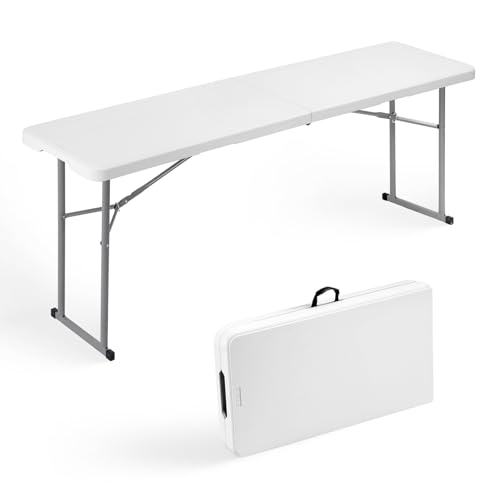
Byliable Folding Table 6FT Narrow Portable Plastic Heavy Duty Table, White | Space-Saving Foldable Design, Fold-in-Half, HDPE Tabletop, Carrying Handle, Indoor Outdoor for Training, Buffet, Party
Check price on Amazon
VINGLI 6 FT Narrow Folding Table, Tabletop Folded in Half, Premium Quality HDPE Material and Sturdy Metal Frame, Perfect for Buffet, Seminar, Party, Training, Home Work, White
Check price on Amazon
usikey 55" Buffet Cabinet with Storage and Drawers, Large Sideboard Buffet Cabinet with Adjustable Shelves and Doors, Modern Coffee Bar for Kitchen, Living Room, White
Check price on Amazon
Hoctieon Industrial Console Table, 3 Tier Entryway Table, Hallway Table, Narrow Sofa Table with Shelves, Entrance Table for Entryway, Living Room, Foyer, Office, Rustic Brown&Black
Check price on Amazon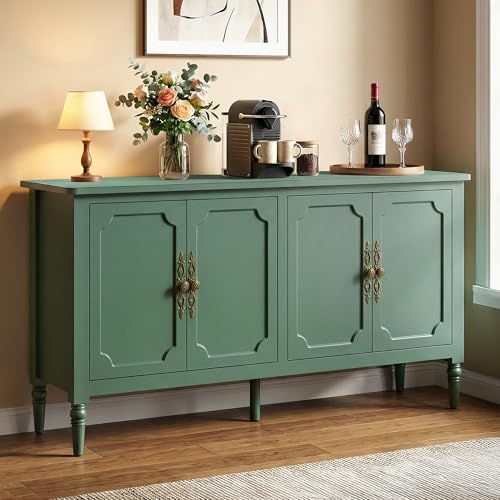
RoyalCraft Buffet Cabinet with Storage, 59" Painted Sideboard Coffee Bar | Vintage Kitchen Storage Cabinet with Adjustable Shelves, Mid Century Modern Credenza for Dining& Living Room, Entryway, Green
Check price on Amazon
HOSTACK 71"W Farmhouse Kitchen Sideboard Buffet Cabinet with Storage, Black | Large Coffee Bar Cabinet with 3 Wide Drawers, Long Buffet Table with Shelves, Kitchen Storage Cabinet for Dining Room
Check price on Amazon
VASAGLE Farmhouse Buffet Cabinet, Coffee Bar with 2 Drawers | Honey Brown Sideboard, 55.1 x 15.7 x 31.5 in, Adjustable Shelves, Honey Brown, LIRY Collection, UBBK381K01V1
Check price on Amazon
HOSTACK 60" W Sideboard Buffet Cabinet with Storage, Kitchen Cabinet, White | 36 Tall Kitchen Buffet Storage Cabinet with 4 Drawer, Large Coffee Bar Cabinet, Modern Buffet Table for Dining Living Room
Check price on AmazonFrequently Asked Questions
A buffet table is a long, low storage and serving piece typically placed in a dining room. It features a flat top for displaying food or decor and built-in storage below, such as drawers, cabinets, or shelves. It is the serving and organization hub of the dining room.
A buffet table generally ranges from 36 to 72 inches wide. The right size depends on your dining room wall length and the amount of serving and storage space you need. Leave at least 36 inches of clearance between the buffet table and the dining table for comfortable chair movement.
The terms are often used interchangeably. A buffet typically emphasizes serving space on top, while a sideboard usually emphasizes storage with doors and drawers. Many modern pieces blend both functions, so the distinction is more about emphasis than a strict category.
Yes. Choose a narrower or shorter buffet table, or consider a wall-mounted or corner model. A buffet table with drawers provides storage without taking up much floor space. A depth of 15–18 inches is usually the most practical choice in compact rooms.
Match the wood tone or finish to your dining table and chairs where possible. If your furniture is mixed, choose a transitional buffet table that bridges styles. Contrasting tones can also work well when the room has a deliberate mixed-material design.