
Sideboard Table: The Complete Dining Room Storage & Serving Guide
A sideboard table anchors your dining room with practical storage and a generous serving surface. Learn how to choose the right size, style, and material for your home before you bring one home.
START THE GUIDEWhy a sideboard table matters: A sideboard table does more than hold extra plates. It organizes linens, serves as a buffet station during gatherings, and gives a dining room visual weight and balance. Choosing well means matching the piece to your room's proportions, your storage habits, and the way you actually entertain. This guide walks you through every decision point so you can buy with confidence.
What Exactly Is a Sideboard Table?
A sideboard table is a low, wide storage furniture piece designed for dining rooms. It combines a flat serving top with cabinets, drawers, or open shelving underneath. The term overlaps with sideboards, sideboard buffets, and sideboard and buffet cabinets, and most retailers use these names interchangeably.
Historically, sideboards kept serving dishes out of the kitchen while keeping them within arm's reach of the dining table. Today the role has expanded: sideboard tables work as coffee station surfaces, display shelves for ceramics, and even media consoles in open-plan living areas. The common thread is a height around 30 to 36 inches with a depth of roughly 15 to 20 inches, giving you storage without crowding the walkway.
If your dining room is short on floor space, consider how a sideboard pairs with a compact dining setup. Guides like small dining room design and small dining room table and chairs show how to balance storage with circulation so the room still feels open.
The Main Types of Sideboard Tables
Sideboard tables come in several structural formats. Each suits a different set of storage needs and interiors. The classification below uses consistent quality tiers rather than specific figures.
Drawer-Focused Sideboard
Built around rows of drawers with a flat top. Best for storing cutlery, napkins, placemats, and small serving tools. A good match for households that want neat, hidden storage and easy labeling. See sideboard with drawers.
Cabinet + Drawer Combination
Mixes closed cabinet doors with a drawer bank. This layout handles both large platters and small items. Explore sideboard cabinet with drawers for the classic dining room format.
Glass-Door Display Sideboard
Glass panels let you display china and stemware while keeping dust off. Ideal for collectors and formal dining rooms. Review sideboard with glass doors and sideboard cabinet with glass doors.
Curved and Statement Sideboard
Rounded fronts, fluted detailing, and sculptural legs turn storage into a focal point. Suits modern and transitional interiors where the sideboard doubles as decor. See curved sideboard.
Sideboard with Hutch
Adds an upper shelving section above the base cabinet. Maximizes vertical storage in rooms with high ceilings. Useful for open shelving display plus closed lower storage. See sideboard with hutch.
Open-Shelf Sideboard Table
Skips doors and drawers in favor of open shelving. Works well for baskets, books, and styled vignettes. Lighter visual footprint for compact rooms and apartments.
Sideboard Table Buying Guide: What to Check Before You Buy
1. Measure the wall and the walking path
Start with the wall length where the sideboard will sit. Leave at least 12 to 18 inches of clearance on each side so doors can open and the piece does not look wedged in. In a narrow dining room, a piece that is too deep will block traffic. Aim for a depth that leaves at least 36 inches between the sideboard front and the dining table edge.
2. Match height to your dining table
The sideboard top should sit at or slightly above the dining table surface. Most dining tables are around 30 inches tall, so a sideboard in the 30 to 36 inch range works well. A lower height suits rooms where you plan to hang art above the sideboard. A taller counter-height model gives a more commanding presence but can visually crowd a small room.
3. Choose storage based on how you entertain
If you host buffets, prioritize a wide, uninterrupted top surface. If you store a lot of small items, prioritize drawers. If you display china, prioritize glass doors or open shelving. Consider a mix: drawers for flatware, cabinets for platters, and open shelves for cookbooks or decorative bowls.
4. Evaluate material and construction
Solid wood offers durable construction and can be refinished. Engineered wood with a quality veneer is stable and consistent. Metal frames with wood tops suit industrial interiors. Rattan and woven fronts fit coastal and rustic rooms. Check drawer glides, door hinges, and whether the back panel is reinforced. Heavier pieces with adjustable levelers sit more stably on uneven floors.
5. Match the style to your dining room
A rustic sideboard pairs well with farmhouse tables and benches. A clean-lined painted model fits coastal and Scandinavian schemes. A dark wood or fluted design anchors a moody, modern dining room. The sideboard should feel like a natural extension of the room's existing materials, not an afterthought.
6. Plan the top surface
Before buying, decide what will live on top. A lamp, a vase, a tray for drinks, and a bowl for fruit all consume surface area. A 60-inch wide sideboard can hold a lamp at each end and still leave room for a serving tray in the middle. A 40-inch sideboard may only fit one lamp and a small tray.
Sideboard Table Comparison by Tier and Use Case
| Tier | Typical Construction | Best For | Key Trade-Off |
|---|---|---|---|
| Starter tier | Engineered wood, basic hardware, open shelving | Apartments, first dining rooms, light storage | Less robust joinery; best for lighter use |
| Mid-tier | Engineered wood with veneer, soft-close drawers | Everyday family dining, mixed drawer and cabinet storage | Veneer surfaces require careful care to avoid lifting |
| Premium tier | Solid wood frames, dovetail drawers, quality hinges | Frequent entertaining, display of china, long-term use | Heavier piece; needs two people to position safely |
| High-end tier | Hardwood solids, hand-finished surfaces, custom detailing | Formal dining rooms, statement interiors, collector display | Requires more careful maintenance and placement planning |
Placement and Styling Tips
Placement affects both function and appearance. The most common mistake is pushing the sideboard flat against a wall in a way that blocks nearby door swings or leaves an awkward gap. Leave breathing room.
- Center it on the wall or align it with the dining table's centerline for a balanced look.
- Hang art or a mirror above the sideboard, keeping the bottom edge roughly 8 to 12 inches above the top surface.
- Use trays to group small items and protect the finish from spills and scratches.
- Vary heights on top: a tall lamp, a medium vase, and a low bowl create visual rhythm.
- Keep walkways clear and avoid placing the sideboard where it becomes the only path between kitchen and dining table.
For rooms that need to serve multiple purposes, a sideboard table can double as a coffee station or a homework surface. Pair it with a durable top surface and a washable runner. If your dining area is part of an open plan, choose a finish that relates to the kitchen cabinetry or the living room furniture.
Pre-Purchase Checklist
Run through these questions before you order:
- Have you measured the wall, the depth clearance, and the walking path?
- Does the sideboard height sit comfortably relative to your dining table?
- Is the storage mix right for your dishes, linens, and serving pieces?
- Have you checked drawer glides, hinges, and back panel reinforcement?
- Does the finish and material suit your room's existing palette?
- Have you planned what will sit on top so the surface does not become cluttered?
- Can you get the piece through doorways and up stairs on delivery day?
Related Dining Room Storage & Furniture Guides
If you are furnishing the whole dining room, these guides help you coordinate the sideboard with the rest of the space:
- Sideboard cabinet — closed storage formats and door styles.
- Sideboard storage cabinet — maximizing storage in compact rooms.
- White sideboard cabinet — bright, versatile finishes for airy interiors.
- Sideboards overview — the broader category and how it differs from buffets.
- Rustic sideboard — wood-forward styles for farmhouse and cabinetry-led rooms.
- Small dining room table and chairs set for 6 — pairing seating with storage.
- Small sideboard — compact options for tight dining areas.
Recommended Sideboard Tables & Dining Storage Pieces
⚠️ AFFILIATE DISCLOSURE: This website contains affiliate links. As an affiliate Associate, we earn from qualifying purchases. If you make a purchase through these links, we may receive a small commission at no additional cost to you. Read our full affiliate policy.
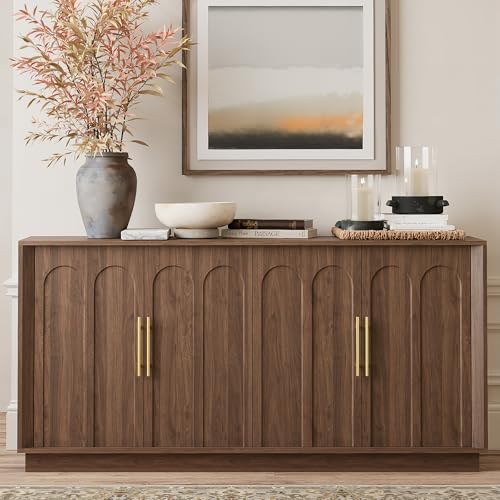
FORTUNETEC 67" Sideboard Buffet Cabinet with Storage, Arched Doors, Walnut | Mid Century Modern Accent Cabinet with Wood Gain, Modular Media Console, Credenza for Living Dining Room Kitchen Entryway
Check price on Amazon
ARTPOWER Console Table with 2 Drawers, Retro Entryway Table with 2 Door | Solid Wood Veneer Entry Table, Behind Couch Sofa Table with Open Storage Shelf for Living Room, Foyer, Hallway
Check price on Amazon
HOOBRO 29.5" Narrow Console Table with 2 Fabric Drawers, Sofa Table, Small Entryway Table with 3-Tier Storage Shelves, Behind Couch Table, for Living Room, Hallway, Rustic Brown and Black BF72XG01
Check price on Amazon
VASAGLE Storage Cabinet, Sideboard with Adjustable Shelves | Mid-Century Modern Buffet Cabinet, 55.1 x 15.7 x 29.5 Inch, for Living Room, Walnut, MIRIANA Collection ULSC631KX01
Check price on Amazon
usikey 55" Buffet Cabinet with Storage and Drawers, Large Sideboard Buffet Cabinet with Adjustable Shelves and Doors, Modern Coffee Bar for Kitchen, Living Room, White
Check price on Amazon
HOKYHOKY Reclaimed Solid Wood Console Table, 59" Long Entryway Table | Rectangular Couch Tables Behind Sofa, Farmhouse Accent Tables, Hallway, Entrance, Foyer, Living Room
Check price on Amazon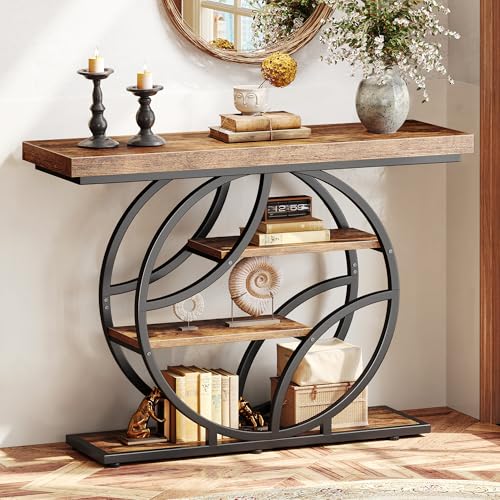
Huuger 41.3 Inch Entryway Table with Artistic Curved Metal Frame,Sofa Table | Modern Console Tables, Entrance Table for Entryway, Hallway, Entrance, Foyer, Living Room, O-Shaped Metal Frame, Rustic Brown
Check price on Amazon
SONGMICS Console Table with 3 Fabric Drawers, Narrow Entryway Furniture | Narrow Console Table with Storage, 38.9 x 11.8 x 31 inch, Storage Shelves, Rustic Brown, BELLAH Collection ULGS098K101
Check price on AmazonSideboard Table FAQ
What is the difference between a sideboard table and a buffet?
A sideboard table typically refers to a lower, longer storage piece with a flat top used in dining rooms for serving and display. A buffet is a broader term often used interchangeably, though buffets historically emphasize serving surface area. In practice, most furniture retailers use the terms sideboard, buffet, and sideboard buffet interchangeably for dining room storage furniture.
How tall should a sideboard table be?
Most sideboard tables stand between 30 and 36 inches tall, which aligns comfortably with standard dining table height and allows easy serving access. Counter-height sideboards reach around 36 inches, while lower sideboards near 30 inches suit rooms where the piece sits beneath artwork or windows.
Can a sideboard table be used outside the dining room?
Yes. Sideboard tables work well in living rooms as media consoles, in entryways as console storage, and in home offices for filing and display. Choose a model with closed storage and a durable finish if the piece will handle frequent daily use in a multi-purpose room.
What materials are best for a sideboard table?
Solid wood offers the most durable construction and can be refinished over time. Engineered wood with veneer provides stable, consistent surfaces at a mid-range tier. Metal frames and glass doors suit modern and industrial interiors, while rattan and woven accents fit coastal and rustic styles.
How much clearance should I leave around a sideboard table?
Leave at least 12 to 18 inches of clearance on each side so doors can open fully. In front, aim for at least 36 inches between the sideboard and the dining table edge to keep walkways usable. In narrow rooms, a shallower depth is more important than a wider top.
Ready to Choose Your Sideboard Table?
Use the checklist above to narrow your options, then compare materials, storage layouts, and finishes. The right sideboard table will serve your dining room for years.
EXPLORE SIDEBOARD TABLES